Wednesday, March 16, 2011

Wordless Wednesday: Spring Break!

Can't wait to get to the beach on Saturday for Spring Break with my best friend, Daphne, and her kids! Memories from last year (below)... you should have seen it in color....


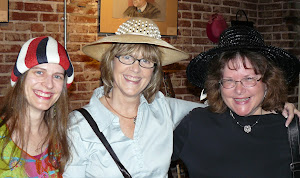
Dancing at a concert on the green in Seaside, March 10, 2010: Briana, Hallie, Me, Susan, Virginia and Zain. (Hallie is Daphne's daughter. Susan will also be at Spring Break 2011 with us!)


Daphne's "kids": Will, Simon, Ian and Hallie.


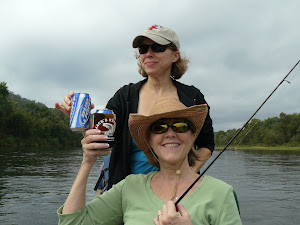
Briana, Hallie and Susan


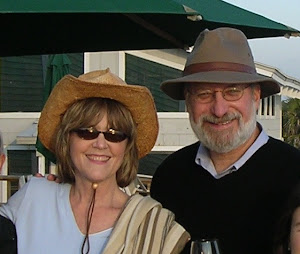
Me and Daphne

Monday, March 14, 2011

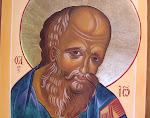
Why I’m Retiring from Iconography: A Shift from WRITING Icons to WRITING Books

Yesterday was the Sunday of Orthodoxy, which celebrates the triumph of icons over the iconoclasts, reinstating them for use in the liturgical worship of the Church. As I watched dozens of children from three different Orthodox churches here in Memphis process around the nave at Annunciation Greek Orthodox Church and heard the proclamation, “This is the Faith of the Apostles, this is the Faith of the Fathers,” I felt a strange mix of joy and sadness wash over me.

Over the past couple of years, I’ve had a number of folks ask me if I’m still doing icons on commission. And just last week I had a request from a potential student for another icon workshop. I always answer these questions with a vague reply like, “I’m not really doing iconography any more,” or “I’m not leading workshops any more,” but I never give a more specific answer. Because it’s complicated. But today I want to write about it. Maybe it’s because I’m about to “take down” my icon studio, which covers the second floor landing above the den in our home, which I’m staging to put on the market soon, possibly by summer. (We’re looking for a house for this stage of our life—fewer bedrooms, larger entertaining area, and separate office/workspaces for my husband and me.)

So, here goes. First a little background on why I began studying iconography. (And here’s a link to an article I wrote that was published in First Things back in 2007: “Icons Will Save the World,” for those who want to read more.) In the mid 1990s I went through what I call the “nun phase” of my spiritual life. Having come out of a dark time, spiritually, I threw myself into a radical, ascetic lifestyle for about five years. It was my way of going to the desert, like my patron saint, Mary of Egypt. During those years I removed myself from secular life, spending as much time as possible reading spiritual literature, praying, visiting monasteries, going to Church every day, wearing a head covering, no makeup, plain clothes, and basically withdrawing from worldly activities as much as possible. Maybe some of that was helpful in healing the wounds from my dark years, but in retrospect, I’m not sure how authentic some of those practices were. I recently heard Father Thomas Hopko speak about the “Vices and Virtues,” and he warned about using religion as a vice. He spoke about the dangers of over-emersion in religious activities, including clergy in his concerns. He spoke about dealing with our own personal histories and bringing our whole selves to be healed. And although I think that’s what I was trying to do during those years, somehow I found myself still trying to please people, rather than God.

I have always wanted to write. And paint. I’ve been drawn to abstract art all my life, and to novels. But some of the more severe Orthodox spiritual literature warns against these activities, and so I felt uncomfortable pursing secular art and writing for most of my life. Even as I began to come out of my “nun phase,” in the late 1990s, I looked for a place to pursue my art that would be “approved.” And so I began to study iconography. Painting icons is called “writing” because you are writing the life of the saint who is portrayed in the icon (or of Christ or the Mother of God, etc.) but you are writing it with color rather than with words. I studied under Russians, Romanians, Greeks and Americans over a period of years, and then I began to do commissioned icons and to teach icon classes in my home studio and workshops at St. John Orthodox Church, my parish. (Read about one of those workshops here,here, here,and here.)

I painted over 40 icons during those years, and taught dozens of students in my workshops. I gave presentations on iconography at churches, college, and schools. And yes, there was great blessing in doing this. But I also began to realize that writing icons is so tied into my spiritual life that there were even times when I felt “blocked” from writing icons. My essay, “Blocked,” which addresses this, was a finalist in the 2007 Santa Fe Writers Project’s Literary Awards.

The more I moved back “towards center” in my personal, spiritual, and emotional/psychological life, the more I realized that I had backed into iconography, doing “the approved art” rather than what I really wanted to do. And so I began to experiment with abstract art a bit, and representational art using gouache (opaque water color) but quickly realized that I didn’t have the training for it. (In order to abstract something, you must first know how to paint it classically. Picasso and most of the other great abstract painters were first classical painters.) I did enjoy a few monthly gatherings with the “Mixed Bag Ladies,” who are all serious, trained artists, but welcomed me into the fold.

And so I returned to my love for writing, which had been there all along. I started by writing a novel, in 2006. (It’s in a drawer, needing much work.) Then I began to write essays. (8 have been published.) Then memoirs (two are in drawers) and finally another novel, which is in the works now. Then blogging (Pen and Palette plus two blogs where I guest post monthly). Then organizing writing conferences and workshops. And so I’ve come to realize that I can’t do both—write books and icons. And I’m really not in a place, spiritually, to continue to write icons. Traditionally this work has been done by monastics, who focus on fasting and prayer and the strict ascetic life that lends itself to the liturgical art that iconography is. While I’m thankful for everything I learned during those years of studying and sharing this spiritual art with others, it’s time for me to leave it to others. It’s time for me to clean out my icon studio, physically, and to mentally prepare the space that iconography has taken up in my heart for the words that I long to write and to publish. I still love icons. I say my morning and evening prayers before the icons in the corner of our dining room, and I venerate the icons when I worship at church. They will always be “windows to heaven” and an important part of my spiritual life.

Friday, March 11, 2011

The Stuff of Good Creative Nonfiction

Check out Darrelyn Saloom's wonderful post, "The Best Education for Writing Memoir."

Want to learn how to write like that?

Join us for the 2011 Memphis Creative Nonfiction Workshop, September 23-25, 2011.

Thursday, March 10, 2011

Blog Crawl

Busy week for me and not much time for another blog post, so today I offer you links to several other blogs you might enjoy. Kind of a “blog crawl.” There’s lots of diversity here—some about Lent and spirituality, others about writing, others humorous—so if you don’t like something, just quit reading it and click on the next one.

My friend, River Jordan’s guest post at Psychology Today, “Reflections on Lent, Charlie Sheen and Our Possibilities.”

Another friend, Scott Cairns, the Orthodox poet and writer, has a piece at the Huffington Post today called, “Mysteries of the Jesus Prayer.”

Patricia Sprinkle’s
post over at A Good Blog is Hard to Find, “Spring and Resurrection.”

Father Steven Freeman’s post today, “The Journey Towards Love,” on his blog, Glory to God For All Things.

Jennifer Gardner’s
hilarious post at Girlfriend’s Book Club, “There Sure Are Some Monster Jobs Out There.”

Mary Demuth’s guest post on Michael Hyatt’s blog, “What Cheap Grace May Be Costing Your Organization.”

Tuesday, March 8, 2011

Cranes, Peacocks and Kindness on Rebirthday


Today is the first day of the rest of your life.
I always thought those words were cheesy. Until today.


Until my daughter told me that the Chinese believe that each life span is sixty years, and so you celebrate your 60th birthday with much pomp and then you start over.

Your rebirth begins in your 61st year.

And so this morning I awoke and pecked my way out of the sac, prying my eyes open and pushing through the messy film that surrounded me. I could hear the phone ringing on the other side of the shell. With my eyes barely open and the fog still enveloping me, I answered, and listened to the voice of my dear friend, Daphne, singing Happy Birthday to me from 135 miles away.

And then my sweet husband brought me coffee in bed, followed by more singing, a wonderful “Grey’s Anatomy” birthday card (which plays “Cosy in the Rockets” when you open it—the soundtrack from the show) The inside says, "I recommend the second, but that's just my professional opinion."


And then came the presentation of the gift Daphne had left for me when she was here this weekend, with instructions to open it on my birthday. Inside the box was a beautiful peacock lamp. The peacock—a symbol of the resurrection. Perfect. (She and I collect peacocks.)

I hope Robert Goolrick is wrong. I hope he’s wrong about how we’ll never be okay—those of us who had our childhoods stolen from us by people who were supposed to love and protect us. After reading his brilliantly dark memoir, The End of the World As We Know It, I just finished his best-selling novel, A Reliable Wife, where the darkness continues and he writes about

“… the pain and the bitterness of what happens to you when you’re small and have no defense but still know evil when it happens….” and about people who “become trapped inside the bitter walls of memories they wished they had never had.”

As Goolrick himself says, in the very last line of the novel:

“It was just a story about despair.”

I was hoping for something redemptive, and yes, it does contain elements of redemption:

“… people who hurt themselves, who wreck their own lives and then go on to wreck the lives of those around them, who cannot be helped or assuaged by love or kindness or luck or charm, who forget kindness, the feeling and practice of it, and how it can save even the worst, most misshapen life from despair.”

Kindness—the feeling and practice of it—can save even the most misshapen life from despair.


And so as I continue my rebirth, I will try very hard to feel and practice kindness. Like my husband and daughter and friends practiced kindness to me with all the gifts and celebrations this weekend, including an amazing dinner at Flight on Saturday evening...


... and a surprise party at my Goddaughter, Sophie's house on Sunday afternoon. (We didn't think to take a photo of the group until a number of people had already left. Thanks for the amazing food, wine, and kindness, Reem and Nawar!)


My daughter brought with her (from Denver) a hand-made (by her!) printer’s tray, with sixty little windows in it, each containing an element that represented something significant from those sixty years—a picture of my daughter and me on her first morning in this country from South Korea, a soccer ball to remind me of my years as her soccer mom, a Mary Chapin Carpenter album cover, a car, a paint palette, an icon—all beautiful handmade and placed inside the printer’s tray.

And then she made this beautiful little book which had an explanation about each of the 60 pieces in the tray, and a personal note and a quote to go with each, and computer art throughout the book. She hand-stitched the book together. I think my favorite quote is on page 53:

“Yes, Mother, I can see you are flawed. You have not hidden it. That is your greatest gift to me.”
Alice Walker (And my daughter didn’t know, when she included this quote in the book, that Alice Walker and I share a special bond—we both have essays coming out in an anthology on Southern women and spirituality next year. I am honored. I love her words, “Hard times require furious dancing.”)

Oh, and then there’s the “lei” that Beth made me, from 60 origami cranes (she folded them all) tied together on a string. The Japanese believe that the crane is the symbol for prosperity and good health and long life. Cranes are also said to symbolize arcane wisdom, balance, communication, independence, knowledge, solitude, and vigilance. They are often used as symbolic decorations at weddings, to bless the life of the couple being married.

I love this origami crane tattoo…. (No, that’s not me... but then again....)


My son, Jason, and his wife, See, sent me this amazing photo album filled with dozens of photographs of my two precious granddaughters, Grace and Anna Susan.

And then there’s the cancer. Ten years ago TODAY I had surgery for endometrial cancer. Yes—on my 50th birthday. And so today I celebrate ten years of being cancer free. A huge gift from the God I struggle and fight against so much.

So many blessings as I clean off the birth fluid and waddle around on my brand new feet today, listening to Carpenter sing, “Passionate Kisses” and then Jon Foreman singing “Your Love is Strong.”

So this is what it feels like to be reborn. Maybe this is better than a do-over.

Friday, March 4, 2011

(the) Help!

My monthly guest post is up at Jane Friedman's Writer's Digest blog, "There Are No Rules."

"Fact vs. Truth in Writing Fiction"

Read all about the lawsuit against my fellow native Jackson, Mississippian, Kathryn Stockett, author of The Help, in my Q & A with literary agent and intellectual properties attorney, John D. Mason, one of the faculty for the 2011 Memphis Creative Nonfiction Workshop slated for September 23-25.

As always, I love to receive COMMENTS!

Have a great weekend, everyone.

Wednesday, March 2, 2011

Wordless Wednesday: We Were Not Orphans


Okay, it's "Wordless Wednesday" again, but as usual, I can't seem to just post a picture and leave it at that. But I'll be brief. I was just made aware of Sherry Matthews' new release, We Were Not Orphans (from the University of Texas Press).

When you've got 15 minutes, grab a cup of coffee and watch this incredible video, about the children whose parents dumped them at the Waco State Home where they lived during the 1920s through 1970s. At the home they suffered physical and sexual abuse, military discipline, and plantation-style labor. Interviews with the author and survivors are riveting. (The author's brothers were left there when she was three.)

And then buy the book. It's the best way to honor these people and their stories.

Monday, February 28, 2011

CLEAN UP the Mess... and Sanctify Humanity

As I mentioned on Friday, I'm writing today about the Winter Retreat I went to this weekend at Holy Trinity Greek Orthodox Cathedral in Birmingham, Alabama for their Winter Retreat featuring Father Thomas Hopko Father Hopko spoke on “Vices and Virtues.” It was a distillation of a twelve-week course he taught at St. Vladimir’s Seminary (where he taught for 35 years) and we got three one-hour lectures. (Father Hopko has many podcasts available at Ancient Faith Radio on various subjects.)

We were told at the retreat that Fr. Hopko’s lectures would be available on the cathedral’s web site soon, but I don’t see a link to them up there today (Monday). Please bookmark the site and check back—these are some of the best lectures I’ve ever heard on healing the brokenness of man. (And for further reading, Father Hopko has written a short piece on "How Can I Know God?" This is a little different version than the one he handed out to us at the retreat, but much of the same wisdom is included here.)

I feel very inadequate to write about this weekend. It was transforming for me in many ways, but I’m still processing the treasures that Fr. Hopko shared with us. Some if it wasn’t new to me, as an Orthodox Christian:

“Our vocation is to be by grace everything that God is by nature.”

“We’re created royal from the beginning (St. Gregory the Thoelogian) and called to take care of everything in the world.”


I already knew what our calling was, but I fall so short of that calling, unable to overcome my depression, my pride, my brokenness from the abuse I have suffered, my anger at those who have hurt me (both within and without the Church). What Father Hopko said that’s “new” for me is that our tendencies to gluttony, alcoholism, sexual sins, etc., are INHERITED—they are predispositions. He spoke eloquently about our sin, which is primordial, generational and personal, and then he explained that it is essential that we understand who we are, why we are, where we are, and how our history affects our behavior:

“We have to deal with what we’ve been dealt. If you don’t vent the anger and grief over what you’ve suffered from your parents and grandparents (etc.) you’ll go crazy. You’ll become paralyzed, depressed, and isolated if you don’t get this healed. This illness especially attacks monks, priests and other spiritual people who sometimes use Church and spiritual things as a substitute for facing their stuff.”

He talked about the necessity of finding one to two people we can tell everything to, or we’ll never be at peace. He spoke about counseling, about psychological therapy, and about medication, saying that over 80% of Americans are taking some sort of medication to heal this issue in their lives, and sometimes that’s necessary.

However we find this healing, he said it’s essential to FACE YOUR TRUTH, FORGIVE YOUR PARENTS, and HEAL YOURSELF.

For those in the grips of addictions and victims of abuse, he said to GET HELP: go to a recovery program.

Speaking to the spiritual side of these issues, he emphasized that HUMILITY is essential to our healing. What is humility? TRUTH—when you live in reality as it is, you don’t make it up, you see things clearly as they really are, and then you act appropriately in the light of the truth you see.

I won’t speak to the specifics of the Eight Vices & Virtues that Fr. Hopko went into much detail about. You can read about those in John Cassian’s “On the Eight Deadly Sins.” It’s not that these aren’t important—they just weren’t the main “take away” for me, from the retreat. I was blessed to be at the retreat with the two friends to whom I can tell everything and receive wisdom, love, forgiveness, and steps towards healing. Together with them, and the professional help I am now investigating, I have hope for healing that has evaded me for most of my life.

And then what? Father Hopko says:

Every adult who gives birth or adopts and leaves behind another generation should be leaving behind a healthier, happier, more whole humanity—we should CLEAN UP THE MESS and SANCTIFY HUMANITY.


All I know is that for me, cleaning up the mess in my own broken humanity is all I can deal with for now. And the next generation is helping me. The love of my children and Godchildren is sometimes the only thing that keeps me from going into the depths of despair. When I’m in the grip of depression, I don’t want to even get out of bed, much less go to church. So, yesterday morning, my motivation for going to church was my Goddaughter, Sophie. My husband and I had planned to take her out after church to celebrate her 8th birthday. She was counting on me, and so I showed up. I was late, and I didn’t take communion, but I showed up for Sophie.

And then she brought me the first laughter and smiles I’ve felt in a long while, as we danced to the music of Memphis music legend Joyce Cobb at the jazz brunch at Bosco’s Squared in midtown.


I watched with joy as Joyce let Sophie play percussion with the band, and then as the band sang the Beatles’ song, “You Say It’s Your Birthday,” and then “Happy Birthday to You” to Sophie and the whole restaurant clapped for Sophie and she beamed.


She ordered ribeye steak and Caesar salad and ate every bite. She opened her gifts from us and hugged us and thanked us over and over. She told us, word-for-word, the story of the Bremen Town Musicians, and then the folk story that she wrote. After we took her home and were driving back to our house, I thought about how much more she is saving me than I am saving her. And yet I’m called to “clean up the mess” for Sophie and for my own children and grandchildren. And to "sanctify humanity" for the next generation. May God have mercy and help me.

Friday, February 25, 2011

Spiritual Struggles: A Whirlpool of Thoughts

Our women’s group at St. John Orthodox Church has been studying a book on the spiritual life by a twentieth century Serbian Elder, Thaddeus of Vitovnica: Our Thoughts Determine Our Lives: The Life and Teachings of Elder Thaddeus of Vitovnica


From the book cover:

Elder Thaddeus of Vitovnica was one of the most renowned spiritual guides of Serbia in the twentieth century. As a novice he lived in obedience to Elder Ambrose of Miljkovo Monastery, a disciple of the Optina Elders. From him Fr. Thaddeus learned the Prayer of the Heart and the selfless love that came to characterize his whole ministry to the suffering Serbian people. Born in 1914, Elder Thaddeus lived through all the suffering endured by Serbia in the twentieth century. Over the course of two World Wars, during the Communist takeover, and through the NATO bombings of 1999, he co-suffered with his people. He taught, counseled, and prayed for all who came to him in pain and sorrow. His words of love and hope provided spiritual balm for people from all classes of society. In 2002 Elder Thaddeus reposed, leaving behind a large collection of his teachings, preserved by his faithful spiritual children. His life, teachings, and spiritual conversations are here presented for the first time in English.

The premise of the book comes from Elder Thaddeus’ teaching on thoughts:

Our life depends on the kind of thoughts we nurture. If our thoughts are peaceful, calm, meek, and kind, then that is what our life is like. If our attention is turned to the circumstances in which we live, we are drawn into a whirlpool of thoughts and can have neither peace nor tranquility.

Recently we were reading from Chapter 10—“On Spiritual Struggle,” which includes a section about how obedience and humility bring freedom and peace:

Our life on this earth is such that we are always becoming enslaved to material things, while the angels never are. This life was given to us so that we may learn about eternal life, that we may learn how to become free, to walk freely and with a clear conscience and pure thoughts.

It’s an interesting paradox, this finding of freedom through obedience to God and through detachment from material things. I can testify that during a time in my life—about fifteen years ago—when I was more focused on spiritual things and less involved with “secular living,” I was, possibly, more at peace. But I was living a fairly insular life, and so I’m not sure how real the peace was. And I still had the same struggles I have today with addictions and depression, so I don’t know that I was any more “free” than I am now. And so I read more of what Elder Thaddeus says:

There are times when people become depressed and despondent, which is a type of pride in its own way. If a person loves the things of this world, this will invariably lead to despondency, for he will not find God in them. Each human being feels lonely at times, even when he is among people, until the moment he becomes free from the things of this world. At that point, God comes to comfort him.

The soul feels lonesome because the power of Grace diminishes in it due to its interest in the things of this world. One cannot go both ways! Unless it is humbled, the soul cannot receive the fullness of God’s Grace, for if it received Grace in its proud state it would surely result in great evil, as was the case with the fallen angels.


I have a hard time with this passage, because the Elder seems to be saying that God only comes to comfort a person “the moment he becomes free from the things of this world.” But what if a person is so depressed that he can’t free himself? Won’t God come to him in his depression? And how is that depression a type of pride? I’ve read in some of the Church fathers that it’s a form of pride because it (depression) comes from focusing on ourselves, rather than on God and others. But is it really so simple? And I’m not sure how to clearly delineate between “depression” and “despondency” or “acedia”—and which are emotional or chemical imbalances and which are more spiritual in nature, and therefore more a reflection of our spiritual state. I did a series of posts about a year ago on Kathleen Norris’ book, Acedia & Me, that address these issues.


Elder Thaddeus also says:

Chaotic thoughts are the state of fallen spirits (demons, spirits who have fallen away form God). Our mind, however, must remain concentrated, whole, and vigilant. God can only enter a mind that is whole….

Again, I wonder, how few minds God will enter if this is true, because so many of us are not “whole”—we are broken. Our lives are messy. And yes, chaos often rules. I think that might even be more true in the case of artists and writers, as Somerset Maugham says:

"I have an idea that the only thing which makes it possible to regard this world we live in without disgust is the beauty which now and then men create out of the chaos. The pictures they paint, the music they compose, the books they write, and the lives they lead. Of all these, the richest in beauty is the beautiful life. That is the perfect work of art."


With Great Lent just around the corner (it begins on March 7 for the Orthodox Church) I have a measure of anxiety about how my struggle will proceed this year. But I’m not going to begin the journey alone. This afternoon I’m traveling to Birmingham, Alabama, with two dear friends to attend a retreat at Holy Trinity Greek Orthodox Church. The speaker will be Father Thomas Hopko and the topic is “Vices & Virtues.” It’s interesting that in the list of vices included in the retreat material, “akedia” (listlessness or lethargy or a sense of futility) is a separate vice from “lype” (sadness or dejection or gloominess or ungodly grief), and “hyperephania” (pride) is another vice altogether.

I’ll be interested to see how Father Hopko explains all of this. I’m also looking forward to one of the break-out sessions on Saturday: “Addiction and Healing.” Check back on Monday and maybe I’ll have a blog post up about the retreat. And please leave a comment with your thoughts on any of these topics.

Wednesday, February 23, 2011

Wordless Wednesday: First Things First


Looking for something to read here today? Check out my latest update on the 2011 Memphis Creative Nonfiction blog: "New Faculty Member On Board!"

And the new pull-down page, "Resources/Books."


Cartoon used with permission from Debbie Ridpath Ohi. For more great writer cartoons, visit her site: Will Write For Chocolate.

Tuesday, February 22, 2011

Crowns and Dancing, Orthodox Style

My husband and I went to New Jersey and Pennsylvania this past weekend for the wedding of my Goddaughter, Julie Stanek, to Benjamin Stell. (Wedding in Princeton and reception/dinner in nearby Yardley, Pennsylvania.) It’s a second marriage for each of them, and their five grown children participated in the ceremony. It took place in a beautiful temporary chapel of the Mother of God Orthodox Church in Princeton, New Jersey. The small parish there has been using space within the former location of St. Joseph Catholic Seminary. The small basement chapel where the parish meets is lovely. (The parish has bought land and plans to build their own temple soon.)


Father Basil was honored to participate with Father John Cassar, the pastor, in the ceremony, including performing the service of “Crowning.” I wish I had a video, because the music is so beautiful. But here’s a picture of the Crowning. And here's a video that shows several examples in other Orthodox churches.

The service of the “Crowning” is the climax of the Orthodox Wedding service. The crowns are signs of the glory and honor with which God crowns the bride and groom during the Mystery, the Sacrament of Marriage. The groom and the bride are crowned as the king and queen of their own little kingdom, the home—the domestic church—which they will rule with fear of God, wisdom, justice and integrity. When the crowning takes place, the priest, takes the crowns and holds them above the couple, and says, "The servant of God (groom) is crowned to the servant of God (bride) in the name of the Father, and of the Son, and of the Holy Spirit. Amen." (three times) And then this is repeated with the bride. He moves the crowns back and forth from one of their heads to the other before placing them. They are connected by a ribbon. (In some traditions the Best Man and Maid of Honor do this.)

The crowns used in the Orthodox wedding service also refer to the crowns of martyrdom since every true marriage involves immeasurable self-sacrifice on both sides.

After the Crowning comes the Dance of Isaiah, which symbolizes the couple's first steps taken together as a married couple. In some traditions the sponsors (Man and Maid of Honor) accompany them, along with the priest(s) in this “dance.” You can watch several more examples of this tradition here. Here’s a picture of Julie and Ben in the Dance of Isaiah.

I miss Julie since she moved from Memphis in 2009, but it’s obvious that she’s right at home back up north near her roots. And I loved meeting her friends from the early years of her spiritual journey, which paralleled mine in many ways. Julie’s dear friend from Boston, Susan Kon (wife of Father Michael Kon of Holy Resurrection Orthodox Church in Boston) and I were instant soul sisters. Here we are with Julie, at the reception.

I’ll just leave a few more photos here for those who know these folks, and for others who just enjoy peeking into spiritual celebrations. Like this one, of the Bridesmaids (the daughters of bride and groom) and the Maid of Honor.


To Julie and Benjamin: May God grant you Many Years!


Here are Julie and Ben with their sponsors, at the reception/dinner later.


Friday, February 18, 2011

February Blues

For most of January and the first couple of weeks of February, I've been blue. That's what my mother would call it. Probably my deepest bout of depression in many years, or possibly ever. Just feeling sad (and yes, some of it probably was SAD--Seasonal Affective Disorder.)I've been exhausted, weepy, achy. And then the sun came out and the temps rose, and I made another trip to Jackson (Mississippi) to visit my mother, and it was 74 degrees and sunny. I went to dinner with a group of ladies in a wonderful book club in Jackson and spent the night with one of them. Jonni is a potter, and I enjoyed watching her work in her studio the next morning. My two days in Jackson definitely lifted my spirits, and hopefully I brought a bit of that sunshine back to Memphis with me. I'm bracing myself for a return to the cold as I fly to Pennsylvania this weekend for a friend's wedding.

Anyway, I thought I'd share another reflection from my work-in-progress, Sleeping With Poets: How Poetry Pimped My Prose. Here's Day 43. It's from Sharon Auberle's poem, "February Blues." Enjoy, and have a great weekend.


Enough of Everything
Day 43—Sleeping With Poets


Sharon Auberle’s wonderful poem, “February Blues,” dropped into my email inbox today (from YourDailyPoem.com) and I immediately knew it was a gift.

Enough winter,
enough of everything
buttoned up, battened down
sensible.


Even here in Memphis, we’ve had more snow in the past few weeks than in the past few winters combined. When we have snow, it isn’t the dry, fluffy stuff they have out in Colorado (where I spent a delightful New Year’s weekend at Breckenridge). Oh, no. It’s WET and it chills you through to your bones, especially if you’re old, like me. Or feeling old. Counting the days down to my 60th birthday (March 8) has felt like a dying woman checking off the squares on a calendar. And so I find myself screaming with the poet Auberle, “enough of everything”! (My exclamation mark, not hers.)

My mother’s birthday is one week before mine, and I just returned from one of my regular visits to her in the nursing home. Her Alzheimer’s continues to progress, and she really doesn’t understand what a birthday is. As I tried to explain to her that she has been alive for eighty-three years, the clouds remained over her eyes and her mind and a smile was fixed on her beautiful face. We shared a box of Pangburn’s Millionaires and I searched for things to talk about—the pansies on the patio at the nursing home, the unusual seventy-four-degree day in February—and then I thought about how beautiful she was when she was young. Her skin is still beautiful—olive, smooth, unblemished. And I thought about the romance she had with my father, over sixty years ago. I wish I had taken a poem with me to read to her (next time) like Auberle’s “February Blues.”

I want to be called Camelia
under a pink moon,
with the fragrance of apple
blossoms in the air.


I take a deep breath and close my eyes, hoping that some early spring fragrance will invade my blues-laden body, but it’s still a bit early. Because Mother doesn’t remember anyone but me now, and sometimes my father, I have to do a bit of world-building to keep a conversation going. We talk about the pansies over and over again, because she forgets that we just talked about them. And the hummingbird feeders, waiting to be filled with sweet sugar-water to welcome the hummers to the patio again this summer. Sometimes I bring coloring books and we colors pictures of flowers together, but today I only brought chocolates.

I imagine painting tulips

And so I try again to bring her back into the world of our family, because she never asks any more, “How are the children?” and because she has no concept that she has great-grandchildren.

“Mom, can you believe that you have five grandchildren and two great-grandchildren? And Beth is getting married in May?”

She stares at the pansies and up at the bright, azure sky, which is speckled with small clouds, an artist’s dream. She looks back at me and says, “You are so smart to organize all that.”

I don’t know if she thinks I organized the clouds in the sky or the grandchildren and great-grandchildren, but this is a typical comment these days. We sit silently for long periods of time now as I struggle to find things to say that she can understand. And yes, I’m anxious to return home to my writing, which is not so unlike the world-building I’m doing with my mother. Except that my readers’ minds are not erased the way Alzheimer’s is erasing the content of my mother’s life. They will understand what I say when I write about the world of art in Savannah and Atlanta. But will they enter the world of the fifth-century Egpytian prostitute, Neema? I must paint her world for them, filled with details from her life as the child of a government official in Damanhur, Egypt. I have to make them see the chiton—her morning tunic—and taste the hot raisin cakes, soaked in milk, that she eats with her fingers. And yes, I also have to make them feel the horror of the abuse she suffers at the hands of her Uncle Imad and his boss, Hasani. I have to help Neema go somewhere else in her mind when her young body is invaded. Poetry helps me imagine, as Auberle says

us, floating in a warm sea.
Or we could take tango lessons.
The net effect is the same.


The poet is escaping the winter blues through remembrance of flowers and pink moons and apple blossoms, of floating in the ocean, and yes, of tango lessons. I love that she titled the poem, “February Blues.” My mother always called depression “the blues.” Well, she would usually just say she was “feeling blue.” I’ve been feeling blue for about a month now. Like the poet,

I want your skin to smell like the sun
oranges, wild beach roses
salt and breaking waves
.

Wednesday, February 16, 2011

Announcing the 2011 Memphis Creative Nonfiction Workshop

The 2011 Memphis Creative Nonfiction (CNF) Workshop site is officially open! If you’re writing essays, memoir, travel writing, food writing or other forms of creative nonfiction, mark your calendars for September 23-25, 2011 and join us for this workshop. It's for beginning, emerging, and experienced writers.

Read all about it here.
And SUBSCRIBE to the blog to receive regular updates by email.

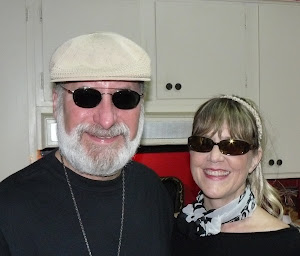
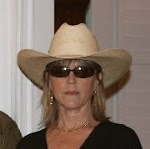
For today’s “Wordless Wednesday” post, I’ll post not one but four photos, to introduce the FACULTY for the 2011 CNF Workshop. Go to the CNF Memphis site and click on FACULTY to read more about each of them.

*drum roll*


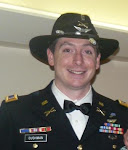
Neil White from Oxford, Mississippi


Kristen Iversen from Memphis, Tennessee


Bob Cowser, Jr. from Canton, New York
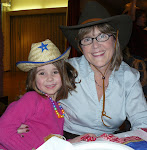


Kory Wells from Murphreesboro, Tennessee