Monday, January 11, 2010

Which Barbie Am I?

I'm really excited about my road trip this Thursday. I'll be driving over to Jefferson, Texas, with Nashville author, River Jordan, for the 10th ANNIVERSARY GIRLFRIEND WEEKEND and AUTHOR EXTRAVAGANZA.

The event is organized by Kathy Patrick, (right) owner of Beauty and the Book, the only hair salon/book store in the country!


Kathy is also the author of The Pulpwood Queen's Tiara-Wearing, Book-Sharing Guide to Life.

Some of my favorite authors will be speaking, serving on panels, and acting in skits during the weekend, including (in addition to River): Pat Conroy, Cassandra King Conroy, Elizabeth Berg, Connie May Fowler, and Ron Hall (Same Kind of Different as Me.) I can hardly breathe just thinking about being in the company of such great writers!

In addition to all the great workshops, keynote speakers, and panels, there's lot of crazy fun planned...like Friday night's "Happy 50th Birthday, Barbie!" party. I need a costume! Should I make up an original Barbie to fit my own personality, or go with one of these?

Campus Spirit Barbie (1964)


Flower Child Barbie


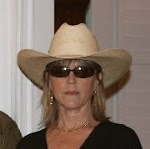
Rodeo Cowgirl Barbie (advantage to this one--I've actually got most of the clothes I'd need)


Aging Baby Boomer Barbie (I really don't see this happening....)


And you know this one is just really not a good idea, but I'll post a picture just so you can see how deep this whole Barbie world is: Let's hear it for "Burka Barbie"!


There's also an "Over the Rainbow" party Saturday night (Wizard of Oz theme) but I don't think I HAVE to have a costume for that one... although I do love me some red shoes.


Okay, I just found what I need. I just ordered this tee shirt. I can wear it with a black skirt, green leggings, and a black witch's hat and my green bracelet that says "Wicked" on it. Anyone have a black witch's hat?


If you've got suggestions for an "original" Barbie costume for me, please leave a comment, or send me an email or Facebook message. I've got all of 3 days to get this together!

Friday, January 8, 2010

Twenty Pounds in Ten Weeks?

Yesterday I went for my annual physical exam. My blood pressure was good (122/80) and although I haven’t gotten back the lab results, my lipids (total cholesterol, etc.) are usually good, by a stroke of genetic luck (I seem to line up with my mother’s side rather than my father’s, where high cholesterol, high blood pressure, stroke and heart disease have flourished.) As a cancer survivor (March, 2001) I’m hoping to get those little notes in the mail that say “normal” for the other tests that were done. And my doctor encouraged me to go for screenings that a new health care program might not give such an easy nod to in the future, so I went ahead and had a bone density test and will schedule my second screening colonoscopy soon. All of these things are important, but there’s always one other issue that looms largest in my mind at this time every year—and really, most days of my life—and that is my weight.

Although, according to the scales in my physician’s office, I’ve only gained 2 pounds this past year, the numbers were tell-tale: I have hit my all-time high, again. And the arthritis pain in my feet, knees and lower back remind me constantly that I’m carrying around at least 20 extra pounds that those bones and joints would prefer not to have to transport. [As an interesting side note, the scales in the physician’s office (fully clothed) weighed me as 12 pounds heavier than the scales in the radiology office, where I was barefoot and only wore a thin cotton gown. Could my sweater, boots and pants possibly weigh 12 pounds?]

So today I’m finally at a place where I’m ready to do something about this weight. Again. But this time, I’m willing to ask for help, and to return to an ancient practice: counting calories, and writing down everything I eat, and drink.

Asking for help from my Facebook friends, I was encouraged to hear from two relatives right off the bat, my niece in Jackson, Mississippi and my first cousin in San Antonio, Texas! (I’m feeling the love.) One said to eat only 1500 calories a day and do cardio exercise for 30 minutes at least 4 times a week. The other mentioned 4 400-calorie meals a day. And a dear friend told me about online calorie-counting sites where you can even journal your program. Thanks so much, guys!

So now I’ve got information and a goal. Oh, I haven’t mentioned the goal yet, have I? Ten weeks from tomorrow I’ll be at the beach for spring break with a friend and her family. That got me to thinking: 2 pounds a week for 10 weeks = 20 pounds. I would love to lose 20 pounds!

But instead of an online journal, I’m using a tiny notebook that fits in my purse so I can record food and drink when I’m away from the house. I’m hoping that its presence will discourage too many stops at bars and fast food restaurants. Honesty is going to be key, of course.

I have a hunch that a lot of my calories come from two sources: wine and chips. So I looked them up, and most white wines have 20-23 calories per ounce. Then I measured the amount I usually pour into two different sized glasses—a tall white wine glass, and a very small, pink “depression glass” that a friend gave me. Look at the difference in how 4 ounces (92 calories) of Pinot Grigio look in these two glasses. I think I’m going to try to only use the small glass for a while. Psychologically it feels like I’m getting more☺

So, today I begin. Here’s what I’ve had so far. Before dinner.

3 cups decaf coffee
(w 2 Splendas and 1 t. raw sugar and 1 t. fat free Half n Half each) = 55 calories
1 cup regular coffee
(w 3 t. sugar and 1 t. milk – at a friend’s house) = 55 calories
8 oz. Pinot Grigio = 204 calories
7 South of the Border tortilla chips = 140 calories
½ peanut butter & jelly sandwich (45 cal. Bread, 95 cal. Pb, 50 cal. Jelly) = 190 calories

Total by 4:30 p.m. = 604 calories

Notice that I have not had ANY fruits or vegetables today☹

So, for dinner (and any snacks and drinks before or after) tonight, I can have about 900 calories. Looks like I’m going to need to focus on vegetables and steer clear of rice, potatoes, and fats. I might figure 4 oz. of wine into the evening. This measuring and counting calories is always a big reality check. (I was happy to find this quick online calorie counter, but I think I’m going to also need to buy a small one for my purse.)

I’ve done 30 minutes on the elliptical 5 out of the past 7 days, so that’s a good start. I’m wondering if it would help to try to do 45 minutes rather than 30. (In December I worked out 16 of 31 days, but I don't want to even think about how many calories I consumed during the holidays!)

I’d love to hear from my readers—encouragement, advice, success stories, failure stories, keep-going stories, whatever! Kinda’ hard to be starting out on this at 5 pm on a Friday afternoon with the weekend (and company) coming, but I’ve found that there’s always some reason to put off anything that’s hard, and things that really matters. And often those things go hand in hand.

Wednesday, January 6, 2010

No More Delicious Numbness: Pride, Cookies and Good-Looking Men

Pat Conroy (The Prince of Tides) and his wife, Cassandra King Conroy (The Sunday Wife) made me want to write fiction. And I did. I drafted a novel back in 2006-7 called “The Sweet Carolines.” But I hadn’t studied the craft and it showed. So did the fact that I was trying to hide truth in fiction, and I wasn’t up the task, as the Conroys were.

But when I read Mary Karr’s memoirs, “The Liar’s Club” (about
her childhood) and “Cherry,” (her teenage years) I strapped my courage on and began to learn to “tell it true.” 8 published essays and two unfinished memoirs later, I’m still struggling with the long form of creative nonfiction, the memoir. So when one comes along that blows me out of the water, I find myself wanting to take every finely crafted word of it into my being, hoping that just by reading and studying its genius I will be transformed into a better writer.

“Lit”, Karr’s “sequel” to her earlier memoirs, was chosen as one of the top 5 nonfiction books of 2009 by the New York Times. And yet she begins the prologue (an open letter to her son) with these words:

“Any way I tell this story is a lie….” It’s Karr’s nod to the frailty of human recall, especially when one’s life was filled, as hers was, with so much abuse.

After I finished reading “Lit” yesterday, I looked in the back, where I had listed 27 quotes that had significance for me, and I thought, “oh, dear, This is going to be a long blog post.” So, grab a cup of coffee first and hold on for the ride.

Unlike her previous memoirs, “Lit” is written by Mary Karr, the adult. It’s still got the same gritty, small-town-Texas-girl honesty, but tempered with what I think she would call grace. It’s the story of her efforts to escape the pain of her past while raising a son as a single (divorced) mother. It’s the story of her abuse of alcohol, but it’s also the story of her recovery. And the best part, for me, is that in the process she found God and the church. (Read more about her spiritual journey in her book, “Sinners Welcome.”)

And like my favorite other memoirists—Kim Michele Richardson, Haven Kimmel, Anne Lamott, Augusten Burroughs, and Neil White—Karr writes with honesty and without anger.

Perhaps the most significant concept I gained from the book, as one who struggles with addictive behaviors, is Karr’s portrayal of one of the most devastating affects of substance abuse in a person’s life—the way drinking, in her case, numbs one to real life:

“Which insures that life gets lived in miniature. In lieu of the large feelings—sorrow, fury, joy—I had their junior counterparts—anxiety, irritation, excitement.”


My heart skipped a beat when I read those words, over and over several times, early in the book. And 100 pages later, when she writes of her feelings at her son’s birth (she was sober for her pregnancy and delivery) she says:

“Joy, it is, which I’ve never known before, only pleasure or excitement. Joy is a different thing, because its focus exists outside the self—delight in something external, not satisfaction of some inner craving.”

And this was before she found God. 100 pages later, after being incarcerated in the “Mental Marriott,” she returns to this truth:

“In my life, I sometimes knew pleasure or excitement, but rarely joy. Now a wide sky-span of quiet holds us. My head’s actually gone quiet…. as if some level in my chest has ceased its endless teetering and found its balance point.”


Although my life was no where near as crazy as Karr’s, I relate to the sexual abuse, and to having a mother who wasn’t capable of having a healthy, loving relationship with her children. And like Karr, I recognize that our mothers’ behavior wasn’t born in a vacuum:

“Drinking to handle the angst of Mother’s drinking—caused by her own angst—means our twin dipsomanias face off like a pair of mirrors, one generation offloading misery to the other through dwindling generations, back through history to when humans first fermented grapes….


“How do you get past it, I ask my shrink, when you never got that sense of acceptance and security as a kid?

“You’ve got to nurture yourself through those instants, he says, recognize the source of the misery as out of kilter with the stimulus. Realize you’re not lost. You’re an adult.”


But her inner child struggles even into sobriety. When she calls her mother to visit her while she’s in treatment, and her mother has other plans, Karr’s response is candid:

“After she hangs up, I cry because part of me still wants to drag her behind my car. But the other part still wants to crawl into her lap.”


Ah, there’s the rub. I feel it every time I visit my mother in the nursing home. But it’s fading, as I’m beginning to allow God to heal those wounds. (If you missed my post after visiting Mom in mid-November, it’s here.)

A few quips will illustrate Karr’s struggle with drinking. First, after a day
on which she lost her temper with her toddler son and lies to her husband about her drinking, she re-runs the day in her mind while taking a shower at dawn:

“I stand in a cloud of shower steam, the former night’s conviction to quit solid, though it’s daunting to face unmedicated whatever’s beyond the plastic curtain I’m scared to draw aside. By afternoon I can’t abide Mr. Rogers asking me to be my neighbor without a cocktail.”

She bares her soul and spins her story with literary finesse:

“… I’d rather drink than love.”


60 days into sobriety, she gives in to a martini, and by the end of the evening she’s drunk again:

“That inverted triangle of glass-with frost at its lip and a speared olive at its nexus—is the perfect accessory to the place…. And I don’t even consider canceling the order, since just placing it shifted some geological plates around my innards. It lends an almost sexual thrill to waiting for it. Delicious, crossing the threshold into abandon.”


But after a while, the alcohol doesn’t work:

“A drink once brought ease, a bronze warmth spreading through all my muddy regions. Now it only brings a brief respite from the bone ache of craving it, no more delicious numbness.”

A physician explains it to her:

“You’ve passed some line where it works, she says. I used to try to figure it out. Maybe it’s how the pancreas handles sugar, or some enzyme we give off when we drink that sets up a craving. But whatever line it is, you’ve crossed it. Somebody who’s crossed the line and craves liquor like you do and wants to keep drinking is like a pickle who wants to be a cucumber again. You can’t. It’s over.”

Karr writes about her first night in recovery with in-your-face clarity:

“The ferocious internal motion I’ve been praying would end finally—almost in a single nanosecond—stops. It’s a pivot point around which my entire future will ultimately swivel. That first night, kneeling before the toilet, I let go, as they say. Or call it the moment my innately serotonin-challenged brain reached level X.”

“Lit” is filled with real-life action, dialogue, and reflections on what the ride was like. Even near the end, when she writes about finding an agent and writing “The Liar’s Club,” (about her childhood) she’s terrified:

“To write the stuff down is no cakewalk, since memories from that time can ravage me. But after I get home, I start getting up mornings at four or five, praying to set down words before Dev comes down…. I unplug the phone and apply my ass to a desk chair. Some days, I actually hear my daddy telling me stories, almost like he’s risen up to ride through the pages with Mother and our whole wacky herd.”


As a new convert to the Catholic faith, Karr brings her spirituality to her work, as O’Connor did, without a smidgeon of self-righteousness. In fact, she is perhaps most honest about her spiritual journey:

“After ten months praying in a cave in Manresa, St. Ignatius received a vision that permitted him to see God in all things—the stated goal of his Spiritual exercises…. This doesn’t innately appeal to me. Despite my conversion, I don’t much care to see God in all things…. It’s not virtue that leads me to the Exercises but pain. Only a flame-thrower on my ass ever drives me to knock-knock-knock on heaven’s door. Pain, in my case, is the sole stimulus for righteous action.”

She befriends a nun, in whose presence she feels “like some slutty Catholic schoolgirl.” But after realizing that the Sister doesn’t judge her, she begins to relax into the relationship. Finally the Sister says:

“Let’s eat a cookie and pray for each other’s disordered attachments. Mine involves pride and cookies.

“Mine, I say, involves pride and good-looking men.

“Together we bow our heads.”

Saturday, January 2, 2010

"The Glasses" Published online at Southern Women's Review TODAY!

On the 9th day of Christmas (January 2) my true love gave to me… my first essay published in the new decade. For those who read my blog regularly, you’ve probably already read the “blog post” version of this essay, “The Glasses,” here.

If you really want to catch up, links to several more posts about my mother are here:

Pushing the Right Buttons January 2009. At the end of this post you can find links to the following essays:

Bingo December 2008
Long Distance Caregiving November 2008
The Purse November 2008
If Mama Ain’t Happy November 2008
HER Mother’s Keeper October 2008
My Mother’s Keeper October 2008
Unhappy Chairs September 2008
The Good Granddaughter August 2008
The Good Daughter Part II July 2008
The Good Daughter Part I June 2008
The Glasses (within the post, “The Treasure Hunt”) April 2008
She Can’t Possibly Be Eighty February 2008
Piece of Mind November 2007

Back in September, I met the editors of the Southern Women’s Review at the Southern Womens Writers Conference at Berry College in Rome, Georgia. They encouraged me to submit an essay for their creative nonfiction section, which I did. I’m thrilled to see it in the first issue of the new year. Click on the link to the current issue and scroll down to page 36 to read “The Glasses,” which is a reflection on one of my many visits with my mother in the early stages of Alzheimer’s. This story took place when she was still in an assisted living facility, about six months before she fell, broke her hip, and had to be moved to a nursing home.

I’m honored to be in such good company in this issue, with Ellen Ann Fentress, whose essays have appeared in The New York Times and the oxford g Writer prize from the ninth biennial Southern Women Writers conference. An MFA graduate of Bennington college, the Mississippi delta native writes on Southern culture and politics as a journalist and also teaches creative nonfiction at Millsaps college in Jackson. She is completing a memoir, hopefully a wry exploration of loss and revised hopes, entitled Mighty Forces of nature.” (this was her bio in the SWR) I met Ellen Ann at the Southern Women Writers, where we were both presenters. But Ellen Ann beat me out in the emerging writers contest! Her essay, “Oyster Anxiety,” appears on page 50 of the SWR.


Just this morning a friend send me an email with a link to this NPR story, “How E-Books Will Change Reading and Writing,”
by Lynn Neary. She quotes Nicholas Carr as saying that the new technology (ebooks) will cause “a retreat from the sophistication and eloquence that characterized the printed page.”

She goes on to say that Time magazine book reviewer Lev Grossman says:

"It will be incumbent on novelists to hook readers right away. You won't be allowed to do a kind of tone poem overture, you're going to want to have blood on the wall by the end of the second paragraph. And I think that's something writers will have to adapt to, and the challenge will be to use this powerfully narrative form, this pulpy kind of mode, to say important things."


I hope they are both wrong. Not because I think I am personally capable of writing with sophistication and eloquence, but I am trying to write powerful narrative, and I hope there will still be an audience for it if I ever finish my memoir. It’s not that I’m opposed to blood on the wall by the end of the second paragraph, and I know I can do pulpy, but I’m aiming for literary prose, and if my readers want to ingest it on their Kindles, I won’t be opposed to that.

But I like to picture them enjoying the book cover, smelling the ink, stroking the pages, and letting their eyes—and minds—rest on certain words and phrases for a while before moving on.

Until then, I hope you enjoy “The Glasses,” even though you have to read it online. (It might also appear in a print journal later, but I don’t know that yet. I’ll keep you posted.)


I hope you (and your 9 ladies) are dancing today! Go, Rebs! (watching the Cotton Bowl)

Thursday, December 31, 2009

Holiday Culture Clashes: The Post-Christmas Blues

On Monday—just three days after Christmas—a dear friend and fellow member at St. John Orthodox Church here in Memphis posted the following comment on Facebook:

“put away all of the Christmas decorations...trying to temper the post Christmas blues....”


Her post elicited a long stream of comments. Some were humorous:

“Wait, I thought it was traditional to keep the tree up until all of the needles fall off on their own. Not everybody does that?”

Others were attempts at chasing away the post Christmas blues:

“keep playing Christmas music and turning on the lights on the tree ’til Jan 6th and see if that helps post Christmas blues!”

“Our tree stays up until after New Year. Seems a shame to cut all the festivities short.”


One or two folks replied with comments about early Church traditions:

“Don't you know there are 12 days of Christmas?”

When the author replied to our encouragements with these words—“Post Christmas blues, for me, have to be fought with a vengeance...I was hoping being Orthodox would change that, but I'm not quite there yet….”—the subject got stuck in my mind, and has stayed there for several days.

At breakfast with a friend yesterday, we talked about the whole Orthodox tradition of fasting and preparing for the feast (Christmas) for 40 days beforehand, and then celebrating for 12 days afterwords—until the Feast of Theophany on January 6. We both agreed that it’s a huge struggle because the Orthodox approach clashes with the culture in which we live.

Our non-Orthodox friends, family, neighbors, and co-workers are celebrating the season all during December, with parties and food and drink and festivities. Our children are enmeshed in this pre-Christmas celebration in their schools. Every shopping mall is filled with shiny decorations and the tempting aromas of chocolates and roasted meats. It’s all so familiar for those of us who grew up with these non-Orthodox traditions, and many converts to Orthodoxy struggle with ambivalence during the Nativity Fast.

One friend told me that she just pretty much gave up on it this year (the Fast) … that it was just too hard to swim against the tide. So her family didn’t focus so much on fasting and didn’t avoid the pre-Christmas parties, but entered into the season with joy. She said that one reason it’s so hard to accept the Orthodox fasting-feasting practice at Christmas is because we really don’t do much “feasting” after Christmas. We deprive ourselves of the festivities going on around us during December and then really only celebrate on one day—Christmas. Often it feels like a let-down after weeks of “preparation,” to cram all the celebrating into one day. Our efforts often leave us with too much of everything: presents, food, drink, and all the stimulation that goes with it. We end up in food comas, exhausted, and yes, often depressed.

I think this was some of what my Facebook friend was expressing. If we’re going to embrace the Orthodox tradition, we need to learn to celebrate the Orthodox SEASON of the Feast of Christmas, with festivities during the 12 days following December 25.

Small parishes that are close-knit and somewhat isolated from the “outside world” probably do a better job of this. And even our parish here in a large metropolitan area offers opportunities, like Christmas caroling at St. Paul Skete the day after Christmas, which is a Feast Day for the Mother of God. And some years we’ve had a mid-week Liturgy with a pizza party following. But somehow those often don’t seem like “enough.” It may take us (converts) many years to adjust to this different rhythm of fasting and feasting.

Another Feast during this season offers an opportunity for celebration, but it
also “clashes” with the secular activities of New Year’s Eve and New Year’s Day. Tonight at St. John we’ll be having Great Vespers for the Circumcision of our Lord and for the Feast Day of Saint Basil the Great (my husband’s patron)—both commemorated on January 1 on the Orthodox calendar. Saint Basil established the first orphanage and the first Christian hospital in the world. We’ll have a potluck at church, and I’ll make the traditional Vasilopita, the “Saint Basil Bread,” in which I’ll hide a gold coin. You can read the story of the tradition here. (Be sure and click on the video of the Greek children singing!)

And I just discovered (too late for this year) that you can actually order a special Saint Basil coin for the bread, here.

You know, I’m a worldly person. I love stuff. I love food and wine and parties and music and all things festive. But I also have a passion for the Church and have struggled for over twenty years with this balance between the “Orthodox way” and the “world’s way.” I’m weary from the struggle, and like my friend expressed at coffee yesterday, I just want it to feel “normal.” But I’m not willing to give up on what the Church in her wisdom is trying to offer me.

This morning I asked God to help me learn to embrace His Feast in the way He intends for me. And then I read the following words, which comprise the quote of the day on the last page (December 31) of the 2009 Daily Lives, Miracles and Wisdom of the Saints Calendar:

“At the approach of a great feast you must watch yourself with particular care. The enemy endeavors beforehand to chill your heart towards the event being celebrated, so that you will not honor it by whole-heartedly considering its reality. He acts upon us through the weather, or through the food and drink we have taken, or through his own arrows thrown plentifully at the heart and inflaming the entire person, at which time evil, impure and blasphemous thoughts occur to us, and we feel thoroughly averse to the solemnity. We must overcome the enemy for forcing ourselves to meditate and pray devoutly.”
– St. John of Kronstadt


Finding these words this morning was truly a gift from God. As I approach this, the 7th Day of Christmas, I find myself going around the house singing, happy to still have Christmas decorations up, and joyfully looking forward to making the Vasilopita and bringing it to church tonight. Even the “young folks” who have plans for bringing in the New Year out on the town later are welcome to begin their evening with this beautiful service of Great Vespers first.

And then tomorrow—on the 8th Day of Christmas, the Feast Day of Saint Basil—my
husband and I welcome friends into our home to continue the celebration. And although we won’t be praying and singing church hymns, I think God will bless our time together watching football, eating, drinking, and playing games, because He created us to celebrate, and He is the reason for our joy.

And I know He will be watching over my daughter, who is on her way to New Orleans for the Sugar Bowl, my son, daughter-in-law and granddaughter in Denver, and my oldest son who is deployed in Afghanastan. Happy New Year’s, Beth, Jason, See, Grace and Jon!

However your family commemorates the day, I pray you will be safe and full of thankfulness for God’s abundant blessings.

And so I close another year of posts here at Pen and Palette. Thanks so much to all my faithful readers. I'd love t hear your comments on this post!

Sunday, December 27, 2009

The Scent of a ... Book

About a year ago I did a blog post called, “Support Your Local Independent Booksellers.” While I’ll admit that I do order books from Amazon.com from time to time, I really prefer to shop at Burke’s or Davis Kidd in Memphis, and at Square Books in Oxford, Mississippi, and Lemuria in Jackson, Mississippi. Why? The service, the atmosphere, the informed staff, the love of the book that permeates the air inside these literary havens.

So, tonight when I took a break from the holiday festivities to sit by the fire and open the January/February 2010 issue of Poets & Writers Magazine, I was thrilled to see that Square Books in Oxford was selected for the first of a series of profiles on indie bookstores. You can read the article, which includes Jeremiahs Chamberlin’s interview with Richard Howorth, here.

My favorite part of the interview was this part of Richard’s response to Jeremiah’s question, “With developments like the Kindle and Japanese cell-phone novels and Twitter stories, how does a bookstore stay relevant in the twenty-first century?”

“The way I see it though I think that digital technology will go on, on its own path, no matter what. But in terms of books, I maintain that a book is like a sailboat or a bicycle, in that it’s a perfect invention. I don’t care what series number of Kindle you're on, it is never going to be better than this. [Holds up a book.] … this thing is pretty wonderful—and irreplaceable.”

And so I’m off to bed with, you guessed it, a good book. Hardcover. First edition. And when no one is looking, I just might run my fingers over the pages to feel the texture, and pull the book to my nostrils to breathe in that comforting “book smell.” It’s all part of the experience. (Flannery O’Connor admitted to loving National Geographic Magazine because of how it felt and smelled.) And like Richard said, it’s irreplaceable.

Thursday, December 24, 2009

The Best Christmas (Card) Ever

There are dozens of beautiful, special, personal Christmas cards on our kitchen counter. We are so grateful to our friends and family who make the effort to connect during this time of year, and I especially love reading everyone’s Christmas newsletters and looking at the photos of everyone’s kids and grand kids. But I also love to receive a “real old-fashioned” Christmas card which also has art work and a well-written sentiment on the inside. And of course homemade cards go above and beyond the call.

So… there are only 5 cards on our mantle. This might sound un-Christmassy, but those are my “favorite” cards for the year. Not because I love the people who sent them more or because they blessed me more, but because of their creativity. Today I decided which one of the five was my favorite, and it’s this one, from Sarah and Joel Finley in Franklin, Tennessee.

Why? Sarah was one of my iconography students, and their card features an icon she did in one of my workshops. It’s called “The Mother of God, Tenderness.” It’s only the third icon she’s ever written.

I will think of her and all my students tonight and tomorrow as we celebrate the Feast of the Nativity of Christ. The Feast of His Incarnation. The reason we write icons.


Christ is Born!

Glorify Him!

Monday, December 21, 2009

The Incarnation: The Goal of Everything

As we approach the Feast of the Nativity of Christ, I have no words with which to adequately reflect on “the mystery hidden from before all ages and unknown even to the angels.” (Eph. 3:9) And so, I will share the words of others—written by theologians, painted by iconographers, and acted and sung by the children at St. John Orthodox Church.


In the winter issue of “The Burning Bush,” the monastic journal of the Dormition of the Mother of God Orthodox Monastery in Rives Junction, Michigan, there are two excellent articles, “On the Nativity of our Lord” and “On the Incarnation.” I will quote briefly from these pieces, and if you’d like to receive the journal, you can leave your email address in the comment box or send an email to the monastery at dormitionmonastery@voyager.net.

“God’s Incarnation means man’s deification. In his treatise ‘On the Incarnation of the Word,’ Saint Athanasius says that ‘god was made man that we might be made God’ (Nicene and Post Nicene Fathers, Erdmans 2nd series, pg 65)…. The image has as its goal man’s deification. The ‘icon’ tends towards its prototype. Man looks for God in many ways: in science and technology, in philosophy and art; this searching is ingrained in man’s reasonable nature, so that for the achievement of his likeness and unity with God, the Incarnation of God Himself was indispensable….

“No other religion in the world believes in a god who became man…. By taking flesh the Word of God is the expression of the Father whom we can see and touch; He was hungry and thirsty, He spoke, He walked, without losing His divinity; this is a prefiguration of how we are to be saved. The infinite takes on a human nature and human nature is united with the Infinite….

“God did not come down to earth to found religions. He came for the restoration of man; He came for His creation, not to make Orthodox or Catholics out of us. God became incarnate because he wanted to make man divine, to restore him to the same state to which He originally created him…. So the idea of the Incarnation, the idea of Christ—God becoming man—is in the center of everything, the goal of everything.”


This is why we paint icons, because God has redeemed matter through the Incarnation, allowing us to depict His Son, His Mother, and His Saints, in images that will lead us to Heaven, that will ultimately save the world.

For the past few weeks, the Orthodox iconographer, Dmitry Scholnik, and two of his helpers, having been painting icons, installing icons, repairing icons, and painting decorative borders and backgrounds in the nave and sanctuary at St. John Orthodox Church. The Gospel has truly come alive in color on the walls and ceiling of our temple. (You can see an album with more photos here.)

Our annual children’s Nativity Play was yesterday, and again the children acted out the traditional Christmas story against a backdrop designed to look like an icon of the Nativity. (The scenery was designed, constructed and painted by Nathan Elliott, who is an architect, and Julie Stanek, an artist, a few years ago.) If you’d like to see an explanation of all the parts of the Nativity Icon, click here, and then run your cursor over each part of the icon.

Again, more pictures from the play are in an album, here.

The children ended the play by singing the “Kontakion” (hymn) of Christmas, “Today the Virgin Gives Birth.”


So there you have it—theology, iconography, drama and music—all very physical means of communicating the spiritual. Because God is a spirit, but also because God became Man.

Christ is Born! Glorify Him!

Friday, December 18, 2009

I Feel So Small


Since my visit with my mother in November, I’ve been preparing for today’s visit with a little less anxiety and a little more peace and joy. It helped that I had a wonderful “lunch reunion” with three old friends from high school first, because we each shared a little bit about our journeys with our aging parents… one who lost her father to Alzheimer’s, and another whose mother AND mother-in-law have just moved in with she and her husband. A terrible consequence of my self-focused anxiety is that I rarely think about how universal our experience is. Thanks to Kit, Sharon and Sandra, (in photo with me at lunch) I arrived at Lakeland Nursing Home with an even greater sense of peace.

Of course I never know, each time I drive down here, if Mom is still going to know me or not, and thankfully, she recognized me today. (She no longer recognizes any of my children’s names or pictures in photographs, and even gets a vague, far-away look when I talk about Daddy.) But today I gave out homemade fudge (Mom’s recipe) to all the folks at the nursing home who take care of Mom, and then found her sitting in her wheel chair in the hall near one of the nurses’ stations. Her face lit up when she saw me.

I was feeling guilty (a recurring bad daughter theme) because the home was having a door decorating contest and I hadn’t done anything for her door, so I was thrilled to find this joyful snowman décor done by the activities director with help from Mom!

Mom’s taste memory came back when we shared some fudge, and she seemed happy with her new socks, slippers, and pajamas.

But later, when we were sitting in the lobby, I asked her if the new slipper-boots were comfortable and she said, “Yes. You know, a boy in one of the classes gave me these boots. I don’t remember his name, or when he gave them to me, but I said sure I’d love to have them.” This was about 15 minutes after I gave them to her. I wonder if she was thinking of one of the students she taught 50 years ago.

I just smiled and said, “I’m so glad you like them!”

We held hands and watched the sunset in the midst of the tall pine trees outside the lobby windows, which are about 20 feet tall. For a while we didn’t speak at all, which is very unusual for Mom and me. Twice she just looked and me and said, “I love you.” And more than once she said, “I really like it here.” And then she looked out the window at the trees and said, “You know, I feel so small. And when I think about dying, I think I’ll be okay if I can go to a small place.”

“You mean, like Heaven?” I asked. “You know Dad is there, waiting for us to join him some day. But I don’t think of Heaven as being a small place, do you?”

She was quiet for a minute, then struggled with her words, and finally said, “well, I think my part of it will be small, and I’ll be happy there.”

Her words reminded me of a sad but powerful conversation a friend told me about last night. The precious 28-year-old daughter of some friends of ours was in the hospital as a result of seizures she had during the day yesterday. Sara has always been one of God’s “innocents,” and she told the people with her at the hospital, “I’ll be happy to go to Heaven because I won’t have Down’s Syndrome there.” And then she died of a pulmonary embolism. Sara’s parents are dear friends of mine from Jackson, and today I’m thinking about how happy she is in Heaven, although I know her family is missing her so much. Sara fought a hard battle, psychologically and spiritually, and in her shadow I’m feeling pretty small. Her funeral will be Monday night at St. Peter Orthodox Church here in Madison, where my Goddaughter, Mary Allison Callaway's funeral was held eleven years ago. May her memory be eternal.

Tuesday, December 15, 2009

The Sons of Earth, Part II

Busy week, so I'm going to link to my post this time last year, about our church's annual Christmas caroling event at Kings Daughters & Sons Nursing Home. Please take a minute to read the post,"Born to Raise the Sons of Earth,"here.

Singing Christmas carols to the folks in a nursing home is only one way to raise the Sons of Earth during the Christmas season. It's cold here in Memphis. One day last week I put a heavy blanket in my car and drove a few blocks from where I live into an area with a fairly heavy traffic of poor and homeless folks. I saw a woman pushing a shopping cart with lots of bundles. She seemed homeless, so I pulled over and asked if she had a warm place to sleep that night.

"No, ma'am, but I'll find me a spot somewhere."

"Could you use a really warm blanket?"

Her face lit up. "Yes, ma'am! That'd be real nice!"

So I got out of the car and handed her the blanket and her eyes filled with tears, but no more than my own. We embraced, and as I was about to walk away, I turned and asked, "Have you got something to eat for supper?" It was getting dark outside, and she was about a mile from the mission where they serve meals downtown.

"Oh, I've got a little bit."


I reached in my purse and found some cash and gave it to her. More hugs.

As I turned to get back into my car, an elderly man in a wheelchair with only one leg approached me. "Ma'am? Have you got another blanket?"

My heart sank as I thought about the extra blankets in our closets and attics at the house, where we would be warm and toasty.

"No, sir, I'm sorry. I didn't bring more with me today."

He nodded and wheeled off towards a church a block away, where several people were sitting on the steps. I said a prayer that someone would help him.

When I got home, I found a couple of more blankets we don't need and put them in the trunk of my car. I'm about to head back out today on errands, and I'll be keeping an eye open for folks who might be sleeping outside tonight.

Have you got extra blankets at your house? It only takes a few minutes to find someone who needs them.... the poor and homeless... the Sons of Earth.

Friday, December 11, 2009

Icons and the Incarnation: Taking Our Humanity Seriously


As we approach the celebration of our Lord’s Incarnation—His becoming Man in the flesh—my mind immediately thinks of icons. Why icons? Because icons are incarnational art. Yes.

Two years ago this month my essay, “Icons Will Save the World,” was published by First Things: The Journal of Religion, Culture and Public Life.

You can read the entire essay here.

For those who don’t have the time (or the inclination) to read the entire essay, I’ll re-print one section here, “Incarnational Art”:

INCARNATIONAL ART


In the “First Apology of Saint John of Damascus Against Those Who Attack the Divine Images,” Saint John talked about Old Testament images like the ark of the covenant (an image of the Holy Virgin and Theotokos) and the rod of Aaron and the jar of manna. These are all visible things that aid understanding of intangible things. We read in Exodus 25–26 how God instructed Moses to use images in the tabernacle—including angels woven on the veil of the holy of holies. It’s true that later on God forbade the making of images because of idolatry—because of man’s misuse of something God intended for good. But that was before the Incarnation, as St. John explained:

It is obvious that when you contemplate God becoming man, then you may depict Him clothed in human form. When the invisible One becomes visible to flesh, you may then draw His likeness. When He who is bodiless and without form, immeasurable in the boundlessness of His own nature, existing in the form of God, empties Himself and takes the form of a servant in substance and in stature and is found in a body of flesh, then you may draw His image and show it to anyone willing to gaze upon it.


God’s Incarnation not only made it possible for us to draw and venerate his image, but also the images of men and women who have been transfigured by him—the saints and martyrs. The Seventh Ecumenical Council (787), which upheld the doctrine of the veneration of images as an inevitable result of the Incarnation, said this about icons of saints:

These holy men of all times who pleased God, whose biographies have remained in writing for our benefit and for the purpose of our salvation, have also left to the catholic Church their deeds explained in paintings, so that our mind may remember them, and so that we may be lifted up to the level of their conduct.


The icons are visions of what we can become if we allow God to penetrate every aspect of our lives. Those who attain this God-likeness to the fullest extent recognized by the Church are saints. Their lives, their stories, lift us up to be all that we can be—as we are transformed by God’s grace and love.

The Incarnation should cause us to take our humanity seriously, as Vrame says. And if we take our humanity seriously, we will not scorn the physical, material things that the Church in her wisdom has given us as aids for transforming that humanity, for restoring the image that fell in the beginning.

Tuesday, December 8, 2009

Bring Lee Back to the South!

Save the Date! Lee Gutkind, the
"Godfather of Creative Nonfiction," is returning to the South the weekend of October 22-24, 2010, for another Creative Nonfiction Conference!

I met Lee at a one-day CNF workshop at Ole Miss in September of 2007, and it was a life-changing weekend for me. I finally had words to describe what I was trying to write--personal essays and memoir are both forms of the genre known as creative nonfiction. And Lee's class that day opened my eyes to the craft in a whole new way.

That was also the weekend I met my friends, Neil White and Kathy Rhodes. I'm working with Neil and Kathy to help organize the 2010 Mid-South Creative Nonfiction Conference.

The following March, Ole Miss again hosted a CNF Conference, complete with keynote speakers, panels, pitch sessions with editors, agents, and publishers, and two critique workshops, led by Dinty Moore and Kristen Iversen. I submitted a different manuscript to each of these critique sessions, and learned so much from Dinty and Kristen and my fellow students. One of those students was Sarah Einstein. I've enjoyed staying in touch with Sarah through our blogs and email. (Sometimes I'm a huge fan of the social media!)

Check out our event page on Facebook: 2010 Mid-South Creative Nonfiction Conference, and leave an RSVP if you think you can come. Spread the word, and keep watching my blog and Facebook for more information as plans are made. Read my blog posts about the CNF Workshop in 2007 and the CNF Conference in 2008 for reflections and photos about both of those wonderful events.

Help us Bring Lee Back to the South! Um, well, not that Lee....

Sunday, December 6, 2009

Sacred Threshold

Blessed Saint Nicholas Day! It's almost midnight, so I'm getting this post in just under the wire for this special day. I've been thinking about it all weekend...about the wonderful play our teens put on at St. John last night as part of our Saint Nicholas weekend celebration. And reflecting on this feast in years gone by. But I've been too busy decorating the house and wrapping gifts to write anything today.

Here's the (tiny) tree...

I call it our "Gracie" tree in honor of our granddaughter Grace... I got these precious little Asian girl ornaments at Pier 1 last week.


And the fireplace with stockings in the process of stuffing...


Including a new stocking for our granddaughter, Grace.


And gifts waiting to be mailed or delivered.... Yes, it's definitely beginning
to look a lot like Christmas!


And here are a couple of photos of Caleb McGee and my husband hanging the outdoor lights yesterday.


No time for writing, but I'm going to link to a blog post that I saw on Facebook tonight..... it's called "Sacred Threshold." The blogger became a member of St Ignatius Orthodox Church in Franklin, Tennessee today. Her blog post is such a blessing. If you take a few minutes to read about her spiritual journey, I guarantee you will be blessed.

Holy Saint Nicholas, pray to God for us!

Friday, December 4, 2009

A Bonfire For My Vanities

When I’m angry, and don’t deal with that anger in a healthy way, it leaks out in destructive behaviors. That’s what happened a couple of times this week, when I allowed my pride to be wounded and my feelings to be hurt by unintentional slights. First I unloaded my anger on a dear friend, who received it with such tenderness that she turned my ranting into tears and softened my hardness by her embrace. Amazing what love and acceptance can do, isn’t it? And later that night my sweet husband listened patiently and offered gentle encouragement without judgment. And while I am thankful for both of these kindnesses, I knew I still needed to address my own sinfulness—the anger itself—directly.

I believe there are healthy ways to deal with anger—the most effective for me being the sacrament of Confession. And sometimes talking with the people I'm angry with can help, but not if I’m just after an apology. I’ve learned from past experience that it’s not healthy for me to try to ignore the problem, because it won’t usually resolve itself. The last time I felt this level of ire was a little over two years ago. I wrote about it here.

And I guess a good thing that came out of that struggle was my essay, “Blocked,” which was a finalist in the Santa Fe Writers Project Literary Journal's 2007 awards.

And yes, I eventually got “unblocked,” but spiritual health is not unlike physical health, in that we have to keep our souls cleaned out or they get clogged up. I was reminded of that in a beautiful way Thursday morning at our monthly women’s meeting, led by our pastor, Father John Troy Mashburn. We’ve been reading some of the writings of Saint Nikolai Velimirovich. Yesterday we read from his beautiful volume of spiritual poetry, Prayers By the Lake. (You can read many of the poems here.) Father John Troy had shared these poems with me many years ago, but I hadn’t read any of them in quite a while, until yesterday morning, when they arrived like soothing oil on a wound. First we read Saint Justin Popovich’s Introduction, which was a blessing in itself. St. Justin says, of St. Nikolai and his writing:

“He will be the hearth where those who have been frostsbitten by skepticism and lack of faith will come to thaw and warm themselves….

“He, a wonderworker of prayerful rhythms, has power over my soul. I tell myself: ‘I am locked in the senses, I think by means of the senses, but when his wonder-working prayer flows through my repentant soul, at once the senses, these shackles of the soul, are unshackled, and my soul, my wounded bird, regains her wings and flies off, diving into the sweet depths of Eternity.’ And my paralyzed heart tells me: ‘He breaks out of the cocoon of time and space which engulfs and suffocates your soul, and he dries the butterfly of our soul out into the blue expanses of infinite Eternity.'”


[Side note: When we read that part about the blue expanses of infinite Eternity, I thought about the work that our iconographer, Dmitry Shkolnik and his helpers are installing at St. John right now… and especially about the celestial effect of the new blue background in the altar. I’ll post pictures and notes about the new icons soon. A post from his last visit, in February of 2008, is here.]

We only read a few of St. Nikolai’s poems Thursday morning. St. Justin recommends that you read only one per day, and to read them slowly, and prayerfully. This volume of poems would make a wonderful Christmas gift for someone you love, or buy it for yourself and read a poem with your prayers each day. I’ll just share a few lines to show the healing power of his poetry:


"O Lord, Lord my only happiness, will You provide shelter for Your injured pilgrim?

"O Lord, my ageless youth, my eye shall bathe in You and shine more radiantly than the sun.

"You carefully collect the tears of the righteous, and with them you rejuvenate worlds."


I think the following are the words I most needed to hear today, when my self-inflicted wounds of pride and anger were so raw:

“Do not be afraid of the inextinguishable fire that He brings into you. For a long time the junk accumulated within you has been in need of a bonfire. The bonfire will last a long time, because the old junk within you has rotted.”

Oh, yes, I need a bonfire to burn up the vanities I have stored in my soul for so long. This week that bonfire comes to me in the warmth of my friends’ understanding, my husband’s loving embrace, and the healing sacraments of the Church, especially the mysteries of Confession and Communion. And it comes to me through the gifted theologian and poet, Saint Nikolai and the other saints who “know the mysteries of our Orthodox soul, they know how the rebellious and Christ-fighting … soul can be molded into a Christlike soul.”

Holy Saint Nikolai, pray to God for us.