





















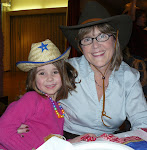

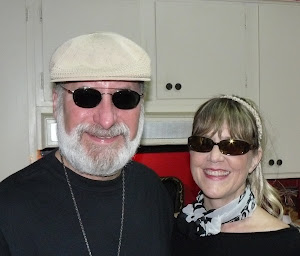





 Today is my daughter, Beth's 29th birthday. But November 4, 1985 was the day she came from South Korea to be our daughter, just a few weeks before her third birthday. This is Beth and me the first morning she was with us. I'm so thankful for the 27 birthdays we've been able to celebrate with Beth, and I miss being with her today, since she's living in Denver. Happy Birthday, Beth! I love you.
Wednesday, November 30, 2011
Wordless Wednesday: Happy Birthday, Beth!
Today is my daughter, Beth's 29th birthday. But November 4, 1985 was the day she came from South Korea to be our daughter, just a few weeks before her third birthday. This is Beth and me the first morning she was with us. I'm so thankful for the 27 birthdays we've been able to celebrate with Beth, and I miss being with her today, since she's living in Denver. Happy Birthday, Beth! I love you.


Monday, November 28, 2011
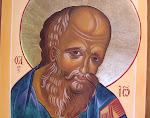
Icon Workshops in 2012
 Back in March I did a post to explain why I was retiring from iconography. Since then I've received a few inquiries about future workshops, including someone in Memphis who contacted me on Facebook today.
I recommended a few other workshops to the inquirer, and she shared information with me about one, so I decided to share a little bit about them here. If you've never taken an icon workshop, these are some that I'm aware of for 2012:
March 5-9, 2012 in Nashville is only $495, including materials. It’s acrylics rather than egg tempera, but the instructor studied under Ksenia Pokrovsky, an excellent egg tempera instructor. The workshop is at an Episcopal Cathedral.
Ksenia Pokrovsky is teaching several workshops in 2012. She’s known as one of the best instructors in the U.S. It’s egg tempera.
Irene Perez-Omer is leading a workshop in Dallas in March and also in San Antonio in March, and in Houston in April and May. (and also one in Italy in October!) A former student of mine has taken several of her workshops, and really likes her. Her style is similar to the Prosopon School.
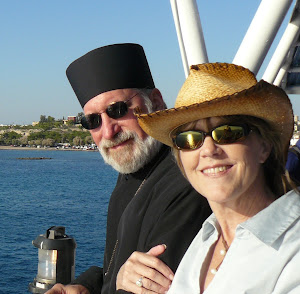
Holy Dormition Monastery in Rives Junction, Michigan offers an acrylic class every year taught by Mother Olympia (in photo with me). I’ve never taken acrylics, but if I was going to take another class it would be hers, simply for the joy of being with her and the nuns at the monastery. The monastery may also still host an egg tempera class each year, but I’m not sure. They haven’t announced their dates for 2012 yet.

I hope everyone had a wonderful Thanksgiving. Some of my family came down here to the beach to spend the weekend with me, which is why I didn't do a blog post last Friday. In the picture, back row: Tod, Bill and Jon Cushman (brother-in-law, husband, son); bottom row: Brenda, Sierra and Susan Cushman (sister-in-law, great niece and me).
 Today is the last day of my month-long writing retreat at Seagrove Beach, and I'm sad to be leaving tomorrow. I didn't quite finish my novel, but the end is in sight and I hope to finish it by Christmas.
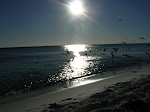
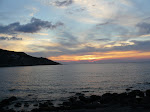
 Meanwhile, the sun is shining on the beach as I pack to drive through Mississippi tomorrow, where SNOW is expected! I will miss so many things about my time here, but most of all, the sunsets.
Wednesday, November 23, 2011
Thankful People
 “As Orthodox Christians this gratefulness to God is something we share with all who celebrate this day. It is also an attitude and manner of life that is presented in our worship and in our relationships with others.”
This is a short excerpt from Archbishop Demetrios’ encyclical for Thanksgiving Day, 2011. Father Gabriel Bultz read it from the pulpit at Saints Markella and Demetrios Greek Orthodox Church in Mary Esther, Florida, where I visited again this past Sunday. Then he made a few comments about how important it is that our faith is lived out in our actions towards others, and how that starts with being thankful. He said that thankful people reach out to others.
As simple as those words may sound, it’s amazing how often we don’t relate to others with this attitude. I was blessed by these words on Sunday, and by Father Gabriel’s genuine call (he was close to tears) to his people to embrace this American holiday, especially as he spoke with his lovely Romanian accent.
I love that Archbishop Demetrios says in his encyclical that we (Orthodox Christians) share an attitude of gratefulness “with all who celebrate this day.” I guess that means all Americans. Of all faiths and ethnic backgrounds and political leanings.
This week I’m thankful for many things. For being able to spend a month writing here at this beautiful beach. For healthy children, grandchildren, Godchildren, nieces, nephews, and great nieces and nephews. For friends who show me what thankfulness is by the way they love me unconditionally.
As Archbishop Demetrios says, “Is your life a witness of thanksgiving, bringing blessings and strength to others?”
 I’m posting the day before Thanksgiving because my oldest son, Jon, is arriving from Savannah today, and my husband flies down from Memphis tonight to spend the weekend with us. On Saturday my brother-in-law and sister-in-law and their granddaughter will drive down from Atlanta. It’s been several years since this particular group of our family has been together. What a treat. (Although I miss my Denver babies very much, I look forward to visiting them for New Year’s.)
Happy Thanksgiving. Let’ all be thankful people.
P. S. You can read Archbishop Demetrios’ letter here.
P. S. S. I'm especially thankful for sunsets.
Monday, November 21, 2011
With Apologies to Aunt Barbara Jo
When I packed for my month-long writing retreat here at Seagrove Beach, I included some things I didn't bring last year, including the recipe for Aunt Barbara Jo's dressing. The plan was that I would quit writing TODAY, (after 3 weeks) and spend Tuesday and Wednesday grocery shopping, cooking, and setting up for a home-cooked Thanksgiving meal here at the beach. My husband and oldest son will be here, and I hoped my brother-in-law, sister-in-law and their granddaughter would be joining us from Atlanta, but they can't make it until Friday. So, it will be just us three for Thanksgiving Day. Who would eat all that food? And besides, I'm into the final 2-3 chapters of the book now, so I don't want to stop writing.
So, how did my son and husband take the news? They are both thrilled... and here's why. Check out the Thanksgiving Day menu at Cafe Thirty-A! We've got reservations at noon, which leaves the morning and afternoon free to enjoy the beach (or football watching) with no clean up.
I promise to make dressing for Christmas.

So, how did my son and husband take the news? They are both thrilled... and here's why. Check out the Thanksgiving Day menu at Cafe Thirty-A! We've got reservations at noon, which leaves the morning and afternoon free to enjoy the beach (or football watching) with no clean up.
I promise to make dressing for Christmas.

Friday, November 18, 2011
Inside Out Like a Rosebud
What an exhilarating day! I've never been in actual labor (my three fabulous kids are all adopted) until today. The pain is excruciating (especially without drugs, which I managed to forgo until 4:45 p.m. when I finally gave in to a glass of Oyster Bay at sunset)... but (and I know, I know, this sounds cliché) it's a good kind of pain.
Like the pain that my brilliant massage therapist puts on me twice a month when I'm back home in Memphis. (I miss you, Tammy!)
Like the pain that you feel when you're pushing yourself to exercise just a little harder or just a little longer than yesterday. (I miss my elliptical. Well, not really. I love walking on the beach.)
So, today I read more about the glorious begetting (thanks for the reminder, David Lyons) that happened in the Old Testament, as I continued reading The Red Tent, which I bought at Sundog Books in Seaside earlier this week (yes, Stacy, I bought it from an indie store). (WHO KNEW there was so much begetting in the Old Testament? I hadn't read it for many years....)
And then I shut myself up inside the Red Tent for hours and I PUSHED. This baby is getting ready to bust out of the womb. Yes. But to calm down my breathing during the contractions, I read some of Beth Ann Fennelly's poetry (if you haven't read Tender Hooks, Great With Child, and Unmentionables, get them NOW) to help me through a difficult transition:
 “And Lord did I push, for thee more hours
I pushed, I pushed so hard I shat,
Pushed so hard blood vessels burst
in my neck and in my chest, pushed so hard my asshole turned inside-out like a rosebud.”
Isn't that a brilliant image? (I warned you that things get messy inside the Red Tent, didn't I?)
So, even though I deleted about 500 words from the work-in-progress today, I added another 1500 or so. But mainly, I figured out how the little bugger is going to get out of the birth canal. Head first. Hell yeah.
A good day in the tent. I might even sneak out tonight and go over to Rosemary Beach for an art show. Have a great weekend, everyone.
Like the pain that my brilliant massage therapist puts on me twice a month when I'm back home in Memphis. (I miss you, Tammy!)
Like the pain that you feel when you're pushing yourself to exercise just a little harder or just a little longer than yesterday. (I miss my elliptical. Well, not really. I love walking on the beach.)
So, today I read more about the glorious begetting (thanks for the reminder, David Lyons) that happened in the Old Testament, as I continued reading The Red Tent, which I bought at Sundog Books in Seaside earlier this week (yes, Stacy, I bought it from an indie store). (WHO KNEW there was so much begetting in the Old Testament? I hadn't read it for many years....)
And then I shut myself up inside the Red Tent for hours and I PUSHED. This baby is getting ready to bust out of the womb. Yes. But to calm down my breathing during the contractions, I read some of Beth Ann Fennelly's poetry (if you haven't read Tender Hooks, Great With Child, and Unmentionables, get them NOW) to help me through a difficult transition:
 “And Lord did I push, for thee more hours
I pushed, I pushed so hard I shat,
Pushed so hard blood vessels burst
in my neck and in my chest, pushed so hard my asshole turned inside-out like a rosebud.”
Isn't that a brilliant image? (I warned you that things get messy inside the Red Tent, didn't I?)
So, even though I deleted about 500 words from the work-in-progress today, I added another 1500 or so. But mainly, I figured out how the little bugger is going to get out of the birth canal. Head first. Hell yeah.
A good day in the tent. I might even sneak out tonight and go over to Rosemary Beach for an art show. Have a great weekend, everyone.
Tuesday, November 15, 2011
The Red Tent

At the beginning of the Nativity Fast, she entered the Red Tent, not only to prepare with Mary for the birth of Jesus, but to prepare for the birth of her Real Self. צֶלֶם אֱלֹהִים. Imago Dei.
She took only a few things with her into the tent:
Her novel-in-progress.
Her prayer book and her Bible.
An icon of the Mother of God, and an icon of Saint Mary of Egypt.
Pearl of China: A Novel.
Her leather and pearl jewelry made by Wendy Mignot.
Several bottles of Oyster Bay sauvignon blanc. (It's not just about the pearl thing. This is her favorite wine.)
Kate Spade prescription sunglasses to shield her eyes from the Brightness. And because of her great vanity, even during the birthing process.
Swaddling cloths to comfort the newborn. (yoga pants and modal night shirts)
Her cell phone, for contact with the midwives back in Arkansas and Tennessee.
A DVD of Michael Cunningham's "The Hours."
Books of poetry by Beth Ann Fennelly and Corey Mesler.
Oh, and cleaning rags for the bloody mess.
Monday, November 14, 2011
I Will Not Climb on the Roof
 Good morning! It's my turn over at the Southern author's blog, "A Good Blog is Hard to Find." The theme for this round of posts is "what is your day job?" or "what jobs have you had in the past and how have they informed your writing?"
So, I started with 4th grade:
"I Will Not Climb on the Roof."
The picture is from my two-year gig publishing a trade magazine in the mid '90s.
Please hop over and read and leave a comment!I promise to check in later and join the conversation, but now, it's time to write!
Friday, November 11, 2011
Blending Historical Figures With Fictional Characters: Going After the Truth of the Human Heart
 Reading Pearl of China, Anchee Min’s novel about Pearl Buck, is teaching me a great deal about blending historical figures with fictional characters. I’ve been struggling with this in my own novel-in-progress, and only recently made some changes to make the work more believable.
One change was to use the real name of one of the two historical figures in the book—Elaine de Kooning. de Kooning was one of the most successful female artists in the famed New York School of Abstract Expressionism. Since I’m fictionalizing much of her life in my book, I originally changed her name. A conversation with an intellectual rights attorney convinced me to use her real name, since (1) she is no longer living and (2) I make it clear that the book is fiction.
Another change I’m making is to embellish the childhoods of these historical figures—especially the childhood of Saint Mary of Egypt—“Neema” in the novel, until she takes the name of Mary as part of her spiritual conversion.
How does Min deal with historical accuracy?
In the Q & A section at the back of Min’s book, she is asked:
“You seem to be a stickler for historical accuracy. Did you embellish or make up part of Pearl’s life?”
Min’s answer:
“In all of my historical novels… I have tried to be as accurate as possible because accuracy gives my historical themes weight. But some have been more literally true than others. The advantage of being a novelist is having the freedom to go directly after the truth of the human heart. With Pearl, I thought it important to tell her story from a Chinese perspective, but I could find no figure in the historical record that knew Pearl throughout her life. I combined a number of Pearl’s actual friends at different times throughout her forty years in China to create the character Willow.”
Since I’m fictionalizing the lives of two of the three main characters in my novel (and the third main character is totally fictional) I’m fascinated by the way Min blends historical figures with her fictional characters so seamlessly. The relationships are rich and the dialogue believable. Lots of scenes and descriptive narrative passages make me believe I’m there with little Pearl and her friend Willow in their childhood adventures, and later as their adult friendship is challenged by politics and geography. But mostly I’m impressed with the depth of Min’s story. She really does “go after the truth of the human heart.”
That’s what I’m aiming for with my novel. A high bar, yes. Don’t know if I can hit it out of the park, but it won’t be for not trying.
Back to work now. Have a great weekend, everyone.
P. S. If you haven't read Pearl Buck's works, my favorites are The Good Earth, My Several Worlds, Fighting Angel, The Living Reed, The Child Who Never Grew and Peony. Brilliant writer. And so is Anchee Min.
Wednesday, November 9, 2011
Wordless Wednesday: Guilty Pleasure or Research?
 I bought this beautiful book (with deckle edged pages and wonderful old photographs and illustrations) as a treat to myself yesterday, over at a new indie bookstore in Rosemary Beach called The Hidden Lantern. You can read a nice review of the book here.
 The book is Lee Krasner: A Biography by Gail Levin. Call it guilty pleasure, but I'm writing it off as research for my novel-in-progress. One of my main characters is based on the life of abstract expressionist artist, Elaine de Kooning, who appears numerous times in the book.
I think it's about time for another coffee break... on the balcony....
Monday, November 7, 2011
American Among Americans: A Romanian priest serving a Greek parish in a small town in Florida bridges the cultural gap
 I’ve been stewing on this post for a couple of months. Yesterday morning I had an experience that prompted me to finally address some issues I’ve been circling. I went to Saints Markella and Demetrios Greek Orthodox Church in Mary Esther, Florida, for Divine Liturgy on Sunday morning.
It was a 45-minute drive from my writing “retreat” in Seagrove Beach, but well worth it. Not only is the chapel beautiful (not sure when it was built, but the architecture is very traditional, both in an Orthodox sense and in consideration for its location, in the panhandle of Florida), and the white walls are eagerly awaiting an iconographer’s touch to fill the nave with spiritual windows to heaven. (The physical windows in the dome let in just the right amount of light.) Only the Platytera has been installed, and it is a beautiful icon.
The small chapel was nearly full of parishioners for the Sunday morning service when I arrived (5 minutes late) and I observed the cultural mix one might expect: Greek, Ethiopian, and others whose unknown ethnic origins surfaced during the Lord’s Prayer, when the priest gave parishioners the opportunity to recite the prayer in their native tongues. Touching, but not over done.
What do I mean by that? Well, this is America, and English is our native tongue. And yet many Orthodox churches in this country still use a great deal of Greek, Arabic and other languages in their services—something that can be a bit off-putting to Americans visiting one of these churches, or even to members who only speak English. It disrupts the flow of the prayers for me when other languages are thrown into the service. Call me ignorant. Call me an American snob. But again, this is America.
So, at the Greek Orthodox church on Sunday morning, I expected to hear much Greek throughout the service, especially in the music. I was pleasantly surprised that almost all the music and Liturgy were done in English, even though the priest struggled to make his words clear through his strong Romanian accent. Father Gabriel served at Saint Nicholas Cathedral in Baia-Mare, Romania, originally, and he has also served in OCA (Orthodox Church in America) and Romanian parishes in this country prior to coming to this Greek parish in Florida. He even apologized before the homily (sermon) saying that sometimes he is difficult to understand, but he would try. His humility and joy were evident, and if I missed a few words or phrases due to his accent, they were insignificant compared to what I would have missed had he been speaking another language during much of the Liturgy.
At the end of the service, as we were going forward to receive the priest’s blessing, I overheard this conversation between two young men in line behind me:
“I can’t believe the Nativity Fast begins in a week.”
“Yeah? I don’t keep that one.”
“What do you mean, you don’t keep that one?”
“Well, I keep the Wednesday and Friday fasts, and Great Lent, and that seems like a lot. This one is just too much. Maybe it would be good for me, but it feels counter to our culture.”
Counter to our culture. Yes. As do the head coverings and peasant-looking clothes worn by American converts in many Orthodox churches in America, not to mention the extra-long services which sometimes seem more appropriate for monastics than lay people.
Those of you who have known me for a long time know that I bought into all of those traditions with my very soul at one point, about 20 years ago. I was that woman doing prostrations when everyone else was just making metanias. I was that woman with the head-covering when only a few others in a parish of 300 people wore them. I was that woman who drove her children crazy by demanding they go to church every time the doors were open (which at our parish was every day). I was that woman who skewed television and secular reading for about five years, immersing myself only in spiritual reading and prayer. Although there were very many things about those activities which may have strengthened me spiritually at the time, there was nothing moderate about my life then, and I’ve been struggling to recover my balance ever since.
 A few weeks ago a friend sent me a link to an article by Father Johannes Jacobse (right) of the OCA called “Barbarians Among Us?” While there is much in this lengthy piece that I won’t address here (and don’t necessarily agree with in its entirety) there are some good points I’d like to share. Especially about the church being culturally relevant. Father Johannes talks about how many Orthodox churches in this country have rejected the foundations of Western Christian culture in lieu of trying instead to create a Church that is “divorced from the surrounding culture.”
 In the final section of his post, “Bad Money Drives Out Good,” he says, “… the challenge for the Orthodox Church is to become American among Americans, and –- in our own particular way — Western among Western Christians.” He points to important issues such as “serving Liturgy in the spoken language of the marketplace” and “learning to faithfully express the meaning of the Gospel in the cultural life of our country.”
He says that we haven’t learned to “discern and nurture what is best in Western culture. Our failure to do this, and more importantly, our apparent unwillingness to do this, has not resulted in a stronger Church here in America but rather one that looks increasingly like an Eastern-rite Mainline Protestant denomination.”
I thought about those words when Father Gabriel gave his homily on Sunday morning. He preached on both the Gospel reading for the day (Luke 8:41-56) and also the Epistle (Galatians 2:16-20.) When speaking of the passage from Galatians, about how man is not justified by works of the law, but by faith, he talked about the two extremes that Christians often fall into: legalism and ignoring the law altogether. I remembered those words when I overheard the conversation between the two young men about the fasts set by the Orthodox Church. I think the man who doesn’t keep the Nativity Fast has probably struggled with it, spiritually, but has come to a place of balance with this spiritual practice in his own life. He didn’t appear to be flippant, as he stood, prayed, and sang diligently throughout the service. I was tempted to stay for coffee hour and seek him out, but I was eager to return to my writing retreat, and so I left after taking the priest’s blessing at the end. As I kissed the cross Father Gabriel held out to me—and also his hand—I felt genuine warmth coming from his eyes and his infectuous smile as he said in his strong Romanian accent, “Thank you for visiting with us today!”
Father Johannes closes his article with this challenge for Orthodox Christians in America: “… just as Jesus was the authentic Jew among Jews, the Church has been – in turn – authentically Greek among the Greeks, and authentically Russian among the Russians, so too we must be authentically American among the Americans.”
Father Gabriel is certainly trying.
Friday, November 4, 2011
The Names of Quilts
 I love naming things. My first published essay, "myPod," was about naming, you guessed it, my first iPod.
About a year and a half ago, when I was first starting to work on this novel, I did a post over at A Good Blog is Hard to Find called "Call for Names," which resulted in my naming the main character in the book "Mare."
And just yesterday I changed the names of two characters in my novel-in-progress, after debating with myself over this issue for about a year. (Thank God for "search and replace" or it would have taken me hours to dig through all those chapters being sure I changed every Emily to an Elaine and every Wallace to a William!) Okay, I can already hear some of you saying, "Oh, but I liked Emily better." Let me reassure you that this was not an artistic decision. No, these characters are based on real, historic people, and I had originally changed their names. But this week I discovered that even though I fictionalize many things about them in the novel, I can still use their real names because (1) they are dead and (2) it's a novel, not a memoir.
This morning as I went through my pre-writing routine (prayers, coffee, poetry) I discovered yet another wonderful poem from yourdailypoem.com. This one is called "The Names of Quilts" by Devon Miller-Dugan.
Listen to some of the names of the quilts in her poem: (can't you just imagine what those quilts look like after reading their names?)
A Drunkard's Path
Corn and Beans
Goose in the Pond
Robbing Peter to Pay Paul
The poem reminded me of two things: the first (and only) quilt I ever made, with help from my hippie friends back in the early 70s. (No picture available... it's back home in a photo album, so I can't scan it right now.)
And the quilt my grandmother made for me as a wedding gift in 1970. It contained scraps from all the dresses she had sewn for me those first 19 years of my life. The picture is of Mamaw and me with the quilt, just before my wedding in June of 1970. And yes, she made the lavender dress and striped vest I'm wearing in the picture. I can still remember some of those dresses just by looking at the quilt today.
Last night's storm has left the ocean outside my window an artist's palette of deep greens and blues. It's chilly today (44 right now, with an expected high of 68) so I'll get another cup of coffee and get back to work on the novel. Wish I had one of those quilts to wrap up in while I write....
Wednesday, November 2, 2011
Not Memorizing Poetry

A year ago when I was here at Seagrove Beach working on this same novel (yes, I’m slow) I attempted a dual goal: I began the project of memorizing a poem each day and writing a brief reflection on how the poetry was affecting my prose. I abandoned that project after about 40 days (might still resurrect it one day) but I do at least READ a poem each morning before writing. Reading poetry is to my writing life what prayer is to my spiritual life.
In addition to always having several favorite volumes handy, I subscribe to two online sources that deliver a poem to my email every day: yourdailypoem.com and the Library of Congress’ Poetry 180. And many days, when we are both fortunate, Corey Mesler sends me another of his poems that has found a publishing home, like this one, which he sent yesterday:
“Amy LaVere’s Underwear” by Corey Mesler (in Golden Sparrow Literary Review)
Here are a couple of recent poems sent to me from other sources: (you can subscribe to these if you'd like)
“Walking to School” by Nils Peterson (from yourdailypoem.com)
“The Printer’s Error” by Aaron Fogel (from the Library of Congress’ Poetry 180)
Do you read poetry regularly? Do you memorize poetry? Who are your favorite poets? Are there online sources you subscribe to that deliver poetry to you daily? I’d love to hear from you. And now… back to the novel-in-progress. I think something big is going to happen to Mare today….
Monday, October 31, 2011
Spooky Sand Castles and Witches Old and New
 Just got back from a walk on the beach, hoping to find some creative sand castles, but alas, none in sight on this picture-perfect day. So I surfed the web and found this one, perfect for Halloween. Can you imagine how long it took to build this?
I hope to catch all the cute goblins trick-or-treating at the shops in Seaside later this afternoon... gotta drive to Destin to buy ink cartridges for my printer. (And I thought I was organized for this trip.)
For some good ideas on spooky books to read, check out Jennie/Jenna Bentley's post over at "A Good Blog is Hard to Find":
"Happy Halloween!"

My parting shots today are the two witches I've been... in my 3rd grade school play (1959) in Jackson, Mississippi ...
 and as "Elphaba" (from Wicked) at the Pulpwood Queens' Girlfriend weekend in Jefferson, Texas, in 2010.
Have a fun day and be safe!
Friday, October 28, 2011
The Dying of the Brightness
 The other day a friend and I visited over coffee and talked about our lives. We both turned 60 this year, and we agreed that the first fifty years went by fairly slowly, but the last decade seemed to pass quickly. We talked about our goals, our desires for the final third (if God wills) of our lives, and shared a bit of our anxiety about how fast these days/years might progress. It was a sobering conversation.
And then the November/December issue of Poets & Writers Magazine arrived in my mailbox and I devoured Kevin Nance's profile of Joan Didion, "The Light at Dusk."
 Joan's memoir, The Year of Magical Thinking (Knopf, 2005) was about the death of her husband, the writer John Dunne. Six years later she's publishing another memoir, Blue Nights, about the death of her adopted daughter, Quintana. (Blue Nights will be released on November 1.... I've pre-ordered it to be downloaded on my Kindle next Tuesday.) That's Quintana, with her parents.
I've always been attracted to dark writing, especially brilliant, dark writing, like Didion's. She doesn't write for therapy, although she says that writing can be therapeutic. She speaks of writing about her daughter's death and other difficult things:
"I've always had the sense that if there was ever any doubt about whether I should deal with something, then I have to deal with it.... The image that always come to my mind is that if you keep your eye on the rattlesnake,t he rattlesnake can't get you."
Nance writes about Didion's style and tone:
"Didion's great stylistic achievement is a seeming emotional detachment that can't quite suppress the passion lying just beneath.... The tone of the writing does not call attention to itself, and yet it's distinctively hers. And that is what I think is the great power of her writing."
The title of this memoir, Blue Lights, comes from the quality of the light at dusk, which she misses since leaving her native California for New York City. She explains in the prologue of the new memoir how that twilight is replaced by "the blue of the glass on a clear day at Chartres, or that of the Cerenkov radiation thrown off by the fuel rods in the pools of nuclear reactors."
From the prologue:
"This book is called 'Blue Nights' because at the time I began it I found my mind turning increasingly to illness, to the end of promise, the dwindling of the days, the inevitability of the fading, the dying of the brightness. Blue nights are the opposite of the dying of the brightness, but they are also its warning."
That captures how I'm feeling as I enter the seventh decade of life. So, why am I drawn to the blue night, to all this darkness and talk of illness and death? I'm not sure, but somehow I find comfort in it. Check back in with me after I read and review the book... hopefully in a few weeks.
I'm off to Seagrove Beach, Florida, tomorrow for another month of writing by the sea. Last year I wrote ten chapters, and this year I hope to finish this novel. But more than that, I hope to make peace with the blue nights.
Wednesday, October 26, 2011
Wordless Wednesday: Apples to Apples, please

For words, hop over to the Brevity Magazine blog and read my guest post:
"Apples to Apples, Please: Narrative Nonfiction and Empathy"
Monday, October 24, 2011
The Demons’ Playthings: Struggling Against Anomie
It’s been about 8 months since I’ve written about acedia, but that’s not because I haven’t been struggling. Some version of depression, anxiety, and other dark demons visit me often, but I’ve managed to stay busy enough to ignore them a good bit until recently.
If you’re new to my blog, or if you aren’t familiar with acedia, you might want to read some of these posts from the past two years to catch up:
“Spiritual Struggles: A Whirlpool of Thoughts”
“They Used to Call it Poetry: Acedia & Me, continued”
“Why Does Sobriety Have to Come With Feelings?”
“The Ancient Demon of Acedia in Modern Dress: The Journey Begins”
“Raising the Bar: Artificial Loneliness and Man-Induced Boredom”
 This morning I re-visited Kathleen Norris’ book, Acedia & Me, and read Chapter XIII, “Acedia’s Decline.” I read slowly, and also read some Scriptures, prayed, and tried to breathe in some of the wisdom I discovered. Many of Norris’ words hit home with me:
“Zeal is the best weapon in the psyche’s toolbox for contending with acedia.”
“In the Christian spiritual tradition, as in many other faiths, two requisite qualities of that other-directed love are generosity and humility.”
“Our job is not to deny them (anger, jealousy greed, gluttony, lust, pride, acedia) but to make our way through to the virtue on the other side…. Acedia virtue is a caring expressed in thoughtful and timely acts that enhance our relationship with others.”
As wholesome and good as these words are, they were not new to me. Many spiritual writings contain similar ideas. It was when Norris wrote about the difference in depression and acedia that her words began to hit home with me:
“I find that depression has an identifiable and external cause that acedia lacks. I can look at my life and see where the trouble is coming from. But acedia arises out of nowhere, as it were, emerging from my inner depths without warning, and without any reason that I can determine. Acedia is more subtle, and when it wells up in me, only the venerable practice of spiritual discernment I of much use…. A contemporary psychologist, Solomon Schimmel, comments that ‘we may not at first recognize the connection between a deadly vice and its indirect effects, but a deeper probing will often reveal it. Anomie, for example, the despair of finding meaning and purpose in life, is traceable in part to the materialism of greed, the spiritual apathy of sloth, and the narcissism of pride.”
Wow. I didn’t want to read that. I didn’t want to be reminded, again, that anomie—despair—often comes from pride. Because that means that my will must be involved, and that repentance and more struggle will be part of all this.
Norris quotes both Cassian and Merton on the difference between acedia and sadness, saying that “acedia is ‘the sadness, the disgust with life, which comes from a much deeper source-our inability to get along with ourselves, our disunion with God…. Disgust with life often has to do with the life one has chosen, and when the bad thought of acedia attacks one’s very identity, it causes great pain…. the numbing of the soul, and an increased inability to conceive of every being happy again, let alone stable….”
She nails how I’ve been feeling for most of my life, but especially the past few years, as I’ve struggled to find what she calls my “real self,” through my writing. She continues:
“Writers often doubt their vocation and find themselves in droughts that, unlike the normal rhythm of arid seasons and more productive ones, can cause unnatural silences.”
Many writers despair and give into acedia, and I can see that I do that from time to time, especially when I think “life is too hard.” Why? Norris says, “Acedia will always take the path of least resistance and attempt to go around, rather than through, the demands that life make of us.”
Which is why we drink.
Or do other things to avoid the pain.
Is there any good news in this chapter?
Yes. Norris offers a traditional practice of observing one’s thoughts and letting them go, without judging them, a spiritual practice which she says is akin to cognitive therapy. She also encourages us to stop over-thinking everything, and to exercise more, which keeps serotonin at better levels. The goal of these practices, she says, is to “break the vicious cycle of persistent thoughts.” This doesn’t mean we won’t struggle—struggle is good, so log as we envision something better and don’t succumb to acedia. If we don’t struggle, as she notes Evagrius saying, “we become the playthings of our demons, no longer able to distinguish between what will enhance our lives and what will destroy us.”
And so I press on, remembering these final words from Evagrius:
“Endurance cures listlessness, and so does everything done with much care and fear of God…. Set a measure for yourself in everything that you do, and don’t turn from it until you’ve reached that goal.”
On a recent visit with one of my mentors, Jere Hoar (in Oxford, Mississippi) he reminded me of his words to me from many months ago:
“Finish your book and love your husband. Everything else is superfluous or distracting.”
I respect Jere and his words very much, but I will add loving my children and seeking God to those directives. May God have mercy.
If you’re new to my blog, or if you aren’t familiar with acedia, you might want to read some of these posts from the past two years to catch up:
“Spiritual Struggles: A Whirlpool of Thoughts”
“They Used to Call it Poetry: Acedia & Me, continued”
“Why Does Sobriety Have to Come With Feelings?”
“The Ancient Demon of Acedia in Modern Dress: The Journey Begins”
“Raising the Bar: Artificial Loneliness and Man-Induced Boredom”
 This morning I re-visited Kathleen Norris’ book, Acedia & Me, and read Chapter XIII, “Acedia’s Decline.” I read slowly, and also read some Scriptures, prayed, and tried to breathe in some of the wisdom I discovered. Many of Norris’ words hit home with me:
“Zeal is the best weapon in the psyche’s toolbox for contending with acedia.”
“In the Christian spiritual tradition, as in many other faiths, two requisite qualities of that other-directed love are generosity and humility.”
“Our job is not to deny them (anger, jealousy greed, gluttony, lust, pride, acedia) but to make our way through to the virtue on the other side…. Acedia virtue is a caring expressed in thoughtful and timely acts that enhance our relationship with others.”
As wholesome and good as these words are, they were not new to me. Many spiritual writings contain similar ideas. It was when Norris wrote about the difference in depression and acedia that her words began to hit home with me:
“I find that depression has an identifiable and external cause that acedia lacks. I can look at my life and see where the trouble is coming from. But acedia arises out of nowhere, as it were, emerging from my inner depths without warning, and without any reason that I can determine. Acedia is more subtle, and when it wells up in me, only the venerable practice of spiritual discernment I of much use…. A contemporary psychologist, Solomon Schimmel, comments that ‘we may not at first recognize the connection between a deadly vice and its indirect effects, but a deeper probing will often reveal it. Anomie, for example, the despair of finding meaning and purpose in life, is traceable in part to the materialism of greed, the spiritual apathy of sloth, and the narcissism of pride.”
Wow. I didn’t want to read that. I didn’t want to be reminded, again, that anomie—despair—often comes from pride. Because that means that my will must be involved, and that repentance and more struggle will be part of all this.
Norris quotes both Cassian and Merton on the difference between acedia and sadness, saying that “acedia is ‘the sadness, the disgust with life, which comes from a much deeper source-our inability to get along with ourselves, our disunion with God…. Disgust with life often has to do with the life one has chosen, and when the bad thought of acedia attacks one’s very identity, it causes great pain…. the numbing of the soul, and an increased inability to conceive of every being happy again, let alone stable….”
She nails how I’ve been feeling for most of my life, but especially the past few years, as I’ve struggled to find what she calls my “real self,” through my writing. She continues:
“Writers often doubt their vocation and find themselves in droughts that, unlike the normal rhythm of arid seasons and more productive ones, can cause unnatural silences.”
Many writers despair and give into acedia, and I can see that I do that from time to time, especially when I think “life is too hard.” Why? Norris says, “Acedia will always take the path of least resistance and attempt to go around, rather than through, the demands that life make of us.”
Which is why we drink.
Or do other things to avoid the pain.
Is there any good news in this chapter?
Yes. Norris offers a traditional practice of observing one’s thoughts and letting them go, without judging them, a spiritual practice which she says is akin to cognitive therapy. She also encourages us to stop over-thinking everything, and to exercise more, which keeps serotonin at better levels. The goal of these practices, she says, is to “break the vicious cycle of persistent thoughts.” This doesn’t mean we won’t struggle—struggle is good, so log as we envision something better and don’t succumb to acedia. If we don’t struggle, as she notes Evagrius saying, “we become the playthings of our demons, no longer able to distinguish between what will enhance our lives and what will destroy us.”
And so I press on, remembering these final words from Evagrius:
“Endurance cures listlessness, and so does everything done with much care and fear of God…. Set a measure for yourself in everything that you do, and don’t turn from it until you’ve reached that goal.”
On a recent visit with one of my mentors, Jere Hoar (in Oxford, Mississippi) he reminded me of his words to me from many months ago:
“Finish your book and love your husband. Everything else is superfluous or distracting.”
I respect Jere and his words very much, but I will add loving my children and seeking God to those directives. May God have mercy.
Friday, October 21, 2011
It's Personal

I was visiting with a writing friend recently who is writing memoir. She let her boyfriend read an excerpt of her work, and his response was, "it's kind of... personal, isn't it?"
That's what (personal) memoir is. Not all memoir is personal. Sometimes an author writes memoir about someone else's life, or an event in someone else's life. But when the author is writing about her own life, it's personal.
So is the personal essay.
No one says this better than Jennifer Bowen Hicks, in her guest post over at Brevity:
"Transparency of Thought in the Essay."
A brief excerpt:
"When a writer voices the agitations of her will through words, I feel my own blood moving inside my veins, transfused and transformed by the essay’s greatest potential gift: full access to another human’s thinking, feeling, core—that place where our truest feelings and agitations live. In writing, is there other point?"
It's not just that we like confessional writing, although that can be a part of it. It's that we crave intimacy with other human beings, and what could be more intimate than knowing their thoughts, their feelings, their soul?
Wednesday, October 19, 2011
Wordless Wednesday: On the road again...

In my dream car (1986 Mercedes 560 SL) .... I wish. (A friend Photoshopped me in here a few years ago when I was following this car on eBay.)
What's your dream car?
Monday, October 17, 2011
Chiaroscuro: A Picture of Paradox
When Wendy Reed and Jennifer Horne were editing my essay for inclusion in the upcoming anthology, Circling Faith: Southern Women on Spirituality, I found them very easy to work with. We went back and forth a few times about certain aspects of the essay, but for the most part, I felt their suggestions made my writing better. And then Wendy recommended a new title. (Titles are a big deal with me. My first published essay, four years ago, was all about naming things. And one of my posts over at A Good Blog is Hard to Find, "Call for Names," is all about the importance of naming characters in a book.)
My original title for the essay was, “Jesus Freaks, Belly Dancers and Nuns.” It was the working title for the memoir I was writing at the time, and this essay was born from a series of excerpts from several chapters of the memoir. I had been living with the title for a couple of years, so it was a bit jarring to me to consider a different one. Especially since I had (embarrassingly) not heard of the first word in the title:
 “Chiaroscuro: Shimmer and Shadow.”
Chiaroscuro?
It’s a term used in art, Wendy said.
I was so tempted to say, oh yes, of course, I know what that is. What a great idea. But I admitted my ignorance and proceeded to do a little research to learn what it meant. Here are some of the results I found:
“Chiaroscuro (English pronunciation: /kiˌɑːrəˈskjʊəroʊ/, Italian: [kjarosˈkuːro] "light-dark") in art is characterized by strong contrasts between light and dark, usually bold contrasts affecting a whole composition.”
And its use in music, especially opera:
“Classical voice instructors describe the optimal balance of clearness and darkness in the singing voice tone as chiaroscuro: a combination of brightness and "ping" (brilliance and resonance) with warmth and depth i.e. the 'dark' colours (natural or manufactured) of the individual timbre.” Both of these quotes are from Wikipedia.
“Chiaroscuro is a method for applying value to a two-dimensional piece of artwork to create the illusion of a three-dimensional solid form. This way of working was devised during the Italian Renaissance and was used by artists such as Leonardo da Vinci and Raphael. In this system, if light is coming in from one predetermined direction, then light and shadow will conform to a set of rules.” (from Studio Chalkboard)
And this woman’s blog post from May,“Chiaroscuro” says:
“Chiaroscuro paints a picture of paradox, denoting the division between light and shadow.“
Clearness and darkness. A picture of paradox. Brightness and ping. Light and shadow.
I was beginning to like this word, but I kept fumbling over its pronunciation. And then I found this link that actually pronounces the word for you: “Chiaroscuro.” I kept playing it over and over and repeating the word the way my husband and I did when we were trying to learn a few Italian phrases before our trip to Italy last year. After a while, it began to feel good on my lips.
And so when my story about Jesus freaks, belly dancers and nuns comes out in Circling Faith next spring, I hope I won’t trip over the title if I get the opportunity to do any book signings or readings. But if I do, it won’t be because I didn’t try very hard to sound like the sophisticated artist that Wendy and Jennifer think I am.
My original title for the essay was, “Jesus Freaks, Belly Dancers and Nuns.” It was the working title for the memoir I was writing at the time, and this essay was born from a series of excerpts from several chapters of the memoir. I had been living with the title for a couple of years, so it was a bit jarring to me to consider a different one. Especially since I had (embarrassingly) not heard of the first word in the title:
 “Chiaroscuro: Shimmer and Shadow.”
Chiaroscuro?
It’s a term used in art, Wendy said.
I was so tempted to say, oh yes, of course, I know what that is. What a great idea. But I admitted my ignorance and proceeded to do a little research to learn what it meant. Here are some of the results I found:
“Chiaroscuro (English pronunciation: /kiˌɑːrəˈskjʊəroʊ/, Italian: [kjarosˈkuːro] "light-dark") in art is characterized by strong contrasts between light and dark, usually bold contrasts affecting a whole composition.”
And its use in music, especially opera:
“Classical voice instructors describe the optimal balance of clearness and darkness in the singing voice tone as chiaroscuro: a combination of brightness and "ping" (brilliance and resonance) with warmth and depth i.e. the 'dark' colours (natural or manufactured) of the individual timbre.” Both of these quotes are from Wikipedia.
“Chiaroscuro is a method for applying value to a two-dimensional piece of artwork to create the illusion of a three-dimensional solid form. This way of working was devised during the Italian Renaissance and was used by artists such as Leonardo da Vinci and Raphael. In this system, if light is coming in from one predetermined direction, then light and shadow will conform to a set of rules.” (from Studio Chalkboard)
And this woman’s blog post from May,“Chiaroscuro” says:
“Chiaroscuro paints a picture of paradox, denoting the division between light and shadow.“
Clearness and darkness. A picture of paradox. Brightness and ping. Light and shadow.
I was beginning to like this word, but I kept fumbling over its pronunciation. And then I found this link that actually pronounces the word for you: “Chiaroscuro.” I kept playing it over and over and repeating the word the way my husband and I did when we were trying to learn a few Italian phrases before our trip to Italy last year. After a while, it began to feel good on my lips.
And so when my story about Jesus freaks, belly dancers and nuns comes out in Circling Faith next spring, I hope I won’t trip over the title if I get the opportunity to do any book signings or readings. But if I do, it won’t be because I didn’t try very hard to sound like the sophisticated artist that Wendy and Jennifer think I am.
Friday, October 14, 2011
Circling Faith
Five years ago today I met several women who would change my life, although I had no idea what that change might look like at the time. On October 14 at the Southern Festival of Books (when the Festival still rotated between Nashville and Memphis—it was downtown at the Cook Convention Center in Memphis that year) I met Beth Ann Fennelly, Cassandra King Conroy, Lee Smith, Jennifer Horne and Wendy Reed. Each of these amazing women—poets, writers and editors—opened the windows of my soul to a world I had always longed for. It was the world of strong women of passion.
 Those aren’t my words. They come from the front inside flap of the book Jennifer and Wendy were presenting at the Festival in 2006, All Out of Faith: Southern Women on Spirituality. I went to a panel discussion with Jennifer, Wendy and several of the authors included in the anthology. Cassandra King Conroy was on that panel. Later she and I had a discussion about her book, The Sunday Wife. Afterwards, she wrote in my autographed copy of the book, “To Susan, who knows what a Sunday wife is.”
 Beth Ann and I also met and visited during the weekend, and she autographed her book of poetry, On Tender Hooks. Who knew that she would soon become one of my teachers and mentors through the various workshops I would take in Oxford over the next five years. Today I am blessed to call her friend, and to be included between the covers of the upcoming anthology (also edited by Wendy and Jennifer and published by the University of Alabama Press) Circling Faith: Southern Women on Spirituality.
Circling Faith is due out in the spring of 2012. Although I’ve seen the list of amazing women whose essays will be published inside the book with mine (including Mary Karr and Alice Walker!) it didn’t seem real to me until yesterday, when Wendy posted the cover art for the book on Facebook.
 Birmingham artist Bethanne Hill also did the cover for All Out of Faith, and she’s outdone herself again with this beautiful and symbolic work. You can watch a video about Bethanne’s work here.
Bethanne says that her “paintings are (her) stories, embellished in that great, Southern tradition.”
The inside flap on the Wendy and Jennifer’s first anthology All Out of Faith, says, “The South is often considered patriarchal, but as these writers show, southern culture has always reserved a special place for strong women of passion.” Circling Faith will also be full of stories told in that “great Southern tradition” by “strong women of passion.” Follow my blog for release dates this spring, or friend me, Wendy or Jennifer on Facebook. Until then, enjoy Bethanne’s wonderful artwork, which would make fabulous Christmas gifts. I love the children’s book she illustrated, Why the Oyster Has the Pearl, by Johnette Downing, and I just ordered another book she illustrated, Two of ‘Em in There: A Southern Writer’s Journey To and Through the First Year of Twin Motherhood by Finley Bullard Evans for a friend who is expecting twins in January.
If you’re a strong woman of passion, or know someone who is, order All Out of Faith. Jennifer wrote in the cover of my copy five years ago: To Susan—“Faith is the bird that feels the light and sings when the dawn is still dark.” (Tagore)
 Those aren’t my words. They come from the front inside flap of the book Jennifer and Wendy were presenting at the Festival in 2006, All Out of Faith: Southern Women on Spirituality. I went to a panel discussion with Jennifer, Wendy and several of the authors included in the anthology. Cassandra King Conroy was on that panel. Later she and I had a discussion about her book, The Sunday Wife. Afterwards, she wrote in my autographed copy of the book, “To Susan, who knows what a Sunday wife is.”
 Beth Ann and I also met and visited during the weekend, and she autographed her book of poetry, On Tender Hooks. Who knew that she would soon become one of my teachers and mentors through the various workshops I would take in Oxford over the next five years. Today I am blessed to call her friend, and to be included between the covers of the upcoming anthology (also edited by Wendy and Jennifer and published by the University of Alabama Press) Circling Faith: Southern Women on Spirituality.
Circling Faith is due out in the spring of 2012. Although I’ve seen the list of amazing women whose essays will be published inside the book with mine (including Mary Karr and Alice Walker!) it didn’t seem real to me until yesterday, when Wendy posted the cover art for the book on Facebook.
 Birmingham artist Bethanne Hill also did the cover for All Out of Faith, and she’s outdone herself again with this beautiful and symbolic work. You can watch a video about Bethanne’s work here.
Bethanne says that her “paintings are (her) stories, embellished in that great, Southern tradition.”
The inside flap on the Wendy and Jennifer’s first anthology All Out of Faith, says, “The South is often considered patriarchal, but as these writers show, southern culture has always reserved a special place for strong women of passion.” Circling Faith will also be full of stories told in that “great Southern tradition” by “strong
 women of passion.” Follow my blog for release dates this spring, or friend me, Wendy or Jennifer on Facebook. Until then, enjoy Bethanne’s wonderful artwork, which would make fabulous Christmas gifts. I love the children’s book she illustrated, Why the Oyster Has the Pearl, by Johnette Downing, and I just ordered another book she illustrated, Two of ‘Em in There: A Southern Writer’s Journey To and Through the First Year of Twin Motherhood by Finley Bullard Evans for a friend who is expecting twins in January.
 If you’re a strong woman of passion, or know someone who is, order All Out of Faith. Jennifer wrote in the cover of my copy five years ago: To Susan—“Faith is the bird that feels the light and sings when the dawn is still dark.” (Tagore)
Subscribe to:
Posts (Atom)