




Saturday, February 9, 2008

Sausage Biscuit

Thursday was a lovely day. I wore my new retro dress to our monthly women’s gathering, where our pastor leads a lively “teaching” session. One of my favorite people, Anne, has been hosting the gatherings in her home since Urania died last October. Urania gave a set of her china—the china she always used to serve coffee and sweets at her house—to Anne. Sunshine was pouring into Anne’s den, which has floor to ceiling windows looking out into a beautiful courtyard. We sat in a circle, drinking from Urania’s china, enjoying stimulating spiritual conversation and delightful company.

Afterwards, we went to Bronte’s (the café inside Davis Kidd Bookstore) for lunch, and continued the fellowship, along with yummy food. Several of us had caught part of the Oprah show the day before… one of many shows where she brings in Dr. Oz for more excellent healthy living advice. I don’t always learn something new from Dr. Oz, but it’s helpful to be reminded of the virtues of olive oil and red wine and broccoli and other fresh fruits and vegetables. And the destruction we do to our bodies with processed, refined foods. We all agreed that Lent would be a good time to re-double our efforts towards healthy living, as the Orthodox Fast omits meats and dairy. Not that all meats and dairy are unhealthy. But the spiritual framework of the Fast provides a great opportunity to eat low-fat, high anti-oxidant foods, in moderate amounts.

Arriving home mid afternoon, spirits lifted by the day, it took me all of about thirty minutes to begin to slip into a boredom that could lead to depression. I saw things I want/need to do in my house, and with my post-surgical foot in a cast I just can’t or shouldn’t tackle them. I have wonderful books to read and essays I’m writing that I could jump into. Instead, the voices in my head started to cry out: more! I want more!

So I served up a bowl of ice cream with chocolate syrup and propped myself up in front of the television. All my spiritual and creative powers went numb.

The next morning, I woke up craving a McDonald’s Sausage Biscuit! I haven’t had one in several years, but they used to be one of my food addictions. Okay. It’s Friday, and we don’t eat meat on Friday’s. So a Sausage Biscuit would be a blatant rebellion against the fast. And… each one (yes) has 27 grams of fat, 10 of which are saturated. The average person only needs 20 grams of fat in their total diet for the day, preferably little or none of it saturated. McDonald’s closes breakfast at 10:30, so I stayed in bed until after 10, reading and writing and willing myself not to get up and out the door in time. But the temptation has left me restless, so I dressed and headed out for some writing time at Starbucks, a much healthier choice, thankfully.

A friend came by later in the day and we talked about food cravings, weight issues, depression, and all those things many of us struggle with. What is the “hole” we are trying to fill up with all the wrong stuff? If you’ve ever been in therapy, you probably know what some of your own “holes” are. I’ve been working on mine for years. And I’m always encouraged to find someone else whose journey is similar and is willing to share their story.

A while back I mentioned that I had just ordered the book, Finding My Voice, by Diane Rehm. I just finished it this morning. A wonderful memoir. Diane was a talk show host for many years in Washington, DC. When she began having problems with her voice, she was diagnosed with spasmodic dysphonia, a condition that affects the muscles that control speech. I love Diane’s book for several reasons:

She was born into the (Syrian) Orthodox Church, and although she left it for the Episcopalian Church, her roots are still showing. (I took the opposite journey, growing up Protestant and converting to Orthodoxy.) She didn’t go to college, and fought an intense inferior complex most of her life. Even when she was a successful radio broadcaster, interviewing all sorts of VIPs, the negative voice inside her head continued to tell her she wasn’t good enough, she was a fake, etc.

I hear that same voice all the time. I also don’t have a college degree. When I was hired to produce a newsletter and edit papers for the graduate school of Engineering at a local university years ago, I got the job by burying my educational information at the end of my resume and talking up what I hoped were my strong points. There’s a sense in which I feel that I’ve been doing that my whole life.

So, I was surprised, but also comforted, to read these painful statements near the end of Diane’s book:

During the initial period of national distribution of ‘The Diane Rehm Show,” WAMU had undertaken satellite transmission of the program independently, without financial support from National Public Radio. But when NPR saw the total carrying strength of the show, they announced that they would begin to offer stations across the country a “Talk Track,”…. By January 1996, the NPR “Talk Track” was launched with great fanfare and much publicity…. Before long, stations that carried my program were inviting me to come and speak to their listeners…. My views were sought on political topics as well as on the media…. All the attention and excitement made me pause, however, wondering why I still felt like “a little Arab girl” who really didn’t belong.

And later she says she had “an almost irrational need to keep proving myself, even though people all over the country had welcomed the program into their homes, offices and cars.”

I said those very words to someone a few months ago, when we were discussing writing. I love the very act of writing, but I also very much want to be published. Writing isn't just therapy for me. It's a dialogue, which requires a reader. And yes, I feel I have something to prove.
So, why did this beautiful and successful woman feel so inadequate? She talks about her therapy sessions that helped her come to grips with being molested by a politician when she was young, and the impact her emotionally abusive mother had had on her. I know at this point some of you are saying, “here we go again… blame it on the parents.” But it’s not about blame. It’s about understanding. And letting go. And forgiving. And re-programming ourselves not to be ruled by inner voices that are so negative.

There’s also great stuff that Diane learned when she had to take time off work to get treatments for her voice. She found healing in silence. In walks outside in nature. In prayer and the healing services at her church.

It’s a gorgeous day today… I’m dying to go for a walk, which I can’t do with my cast. Maybe I’ll sit on the patio and soak up the sunshine for a while…. And keep working on the essays I’m writing for my memoir. I can hear the birds out the window of my office calling me now….

Wednesday, February 6, 2008

Tornadoes on Super Tuesday & Giving Thanks on (Ash) Wednesday

If I was Roman Catholic or Episcopalian, I might have ashes on my forehead today, like my friend, Nancy. We had coffee together at Starbucks this morning, like we do about twice a month. Nancy had attended Mass at St. Mary’s Episcopal downtown this morning. Usually Nancy and I would have talked politics the day after Super Tuesday. We often cancel out each other’s vote, but we’re still good friends. Today we never mentioned the election. We were too busy being thankful. And she was entering Lent. (For Orthodox Christians, Great Lent begins on March 10 this year. I’ll be posting more about that in a few weeks.)

Nancy lives a couple of miles from the mall in Southeast Memphis that was hit by one of the 9 tornadoes that touched down in the Memphis area yesterday. The tornadoes that killed 52 people in three states. The tornadoes that destroyed the students’ dorms at Union University in Jackson, Tennessee, just 90 miles east of Memphis.

My husband and I sat on the bottom steps of our stairwell for about an hour late yesterday afternoon and early evening, with the door to our laundry room and pantry open in case we needed to move quickly into our designated “safe space.” We kept the TV news on during that hour and didn’t leave our perch until the sirens stopped and the current tornado warning subsided. That’s when my husband drove three blocks away to vote, arriving safely back home before the next round of tornado warnings began.

At 10:15 p.m. the danger was officially past. When I woke up today I was more interested in the news about the damage from the tornadoes than the results of the presidential primaries. My Goddaughter, Sarah, emailed to say that a 100-year-old tree in her front yard fell last night during the storm. It landed between her house and her neighbors, without damaging either house or anyone who lives in either house. She lives about five blocks from us. This happened a couple of hours after their annual House Blessing, done by our Pastor, Father John Troy Mashburn. She called it a miracle and gave thanks to God. In light of that, what difference does it make who won how many delegates in the primaries yesterday?

And yes, I did finally decide who to vote for, but I’m not going to discuss it on my blog. I actually changed hairdressers recently because I got tired of my previous person who could not seem to shut up about politics while he was doing my hair. So, today when I went to my new hairdresser for a haircut, it was so refreshing to talk about how merciful God had been to both of us yesterday. She actually drove home from work during one of the tornado warnings, unsure of whether that would be safer than staying at the salon. I left the salon with a spring in my step, even walking with a crutch and a foot in a cast. I walked three doors down from the salon to Papagallo’s for some retail therapy. Got a great tunic/dress on sale to celebrate being alive. (Okay, you guys are thinking that a haircut and a new dress are really really superficial in light of tornadoes and presidential elections, but my hairdresser and the owners of the dress shop need to make a living, too.)

Speaking of girls… during the storm last night I cancelled my plans to be at Davis Kidd Bookstore to meet Nikki Hardin, publisher of skirt! Magazine, who was signing her humorous book, PMS: Problems Men Started. Since Nikki has published two of my essays in skirt!, (here and here) I was really looking forward to meeting her. I called the bookstore today, hoping they had rescheduled her signing, but alas, they stayed the course, with a much smaller than hoped for crowd, during the tornado warnings.

One reason I wanted to meet Nikki was to thank her for participating in freedom of the press. Her magazine is probably much more feminist/liberal than my general leaning. For example, in November, 2007, one of the essays she published was called “Choosing Us: Our Abortion Was a Love Story,” by Alison Piepmeier. The author relates the decision she and her husband made to have an abortion, with all good feelings and no regrets. A decision I would never make, but the fact that Nikki chose to publish her essay leads to my point. The same publisher chose to publish two of my essays in which I refer to myself as an Orthodox Christian, and talk about the Orthodox Church, saints, prayers, and theology.

A friend who saw Piepmeier’s article in November asked me how I felt about being published alongside such a piece. My response was that I’d much rather be published in a magazine that allows such diverse opinions than in a publication tagged “Christian” or “conservative” or any other pre-conceived label. The possibility of making a difference in a publication that has a broad readership is much greater than in a magazine read by people who all thought alike.

People who know me, and the fact that I’m the mother of three adopted (grown) children, know that I am opposed to abortion. But not to the right of people to express their views. And so I’m thankful for Nikki Hardin, who published my articles alongside Piepmeier’s. She seems to be less driven by the market than, maybe even Hollywood. In yesterday’s Commercial Appeal, the same edition that advertised Hardin’s book signing event at Davis Kidd Bookstore ran a piece by Joseph Amodio (from Newsday) called “TV and films avoid abortion in story lines.” Amodio says that “even folks in ‘liberal Hollywood’ get edgy about using 'the A word.'” He claims that Hollywood is afraid to make movies that show abortions, but skirt around the issue instead, often having characters talk about them, but decide not to have them. Interviewing several network executives, he says:

Some filmmakers speculate that there’s too much money invested in films and series now to risk alienating audiences.

I’m certainly not an expert in this area, and Amodio might be onto something about the marketing angle here. But I just want to toss a hopeful thought out for consideration: Maybe, just maybe, some of those folks making these decisions in Hollywood get a tinge of conscious as they consider promoting the murder of babies in the womb on the big screen. I’m sure that sounds extremely naive, but on a day when the sanctity of life in the tornado-infested South trumped news about the presidential primaries, I’m just full of hope. And the haircut and new dress both help.

Sunday, February 3, 2008

Let Not Your Heart Be Troubled: The End of Faith, Chapters 3 and 4


I’m continuing my posts about Sam Harris’ book, The End of Faith. You can read my first two posts, about Chapter 1 here, and Chapter 2 here. I welcome comments… just click on “Comments” at the end of this post to publish a comment. If you don’t have a Google or blogger account, it only takes a few minutes to set one up. If you prefer to comment privately, please send me an email at susanmaryecushman@yahoo.com.

Chapter 3: In the Shadow of God

In this chapter, Harris takes us on a harrowing ride through one of the most terrible times in the history of the Catholic Church: the Inquisition. Notice that I say, the Catholic Church. And while I have Catholic friends that I love, I just want to point out that the Orthodox Church wasn’t responsible for the Inquisition, and the reader must understand that I write from my vantage point as an Orthodox Christian.

The Inquisition happened after the Great Schism (1054) – the event that separated the Western (Catholic) Church from the East (Orthodox). Don’t get me wrong. I’m not saying that Orthodox Christians throughout history have never committed atrocities against their fellow man. But Harris isn’t addressing the Orthodox in this Chapter. He’s addressing the Roman Catholic Church. The Inquisition began in 1184, 130 years after the Catholic Church separated itself from the rest of Christendom. Since I am not a Roman Catholic, I am not in a position to judge the actions of their Church, or really to answer Harris’ accusations. But in the interest of a continuing dialogue about this book, I’ll select a few quotes and try to respond:

The question of how the church managed to transform Jesus’ principal message of loving one’s neighbor and turning the other cheek into a doctrine of murder and rapine seems to promise a harrowing mystery; but it is no mystery at all. Apart from the Bible’s heterogeneity and outright self-contradiction, allowing it to justify diverse and irreconcilable aims, the culprit is clearly the doctrine of faith itself. Whenever a man imagines that he need only believe the truth of a proposition, without evidence—that unbelievers will go to hell, that Jews drink the blood of infants—he becomes capable of anything.

He’s referring in the last line to the practice known as “blood libel”… a belief that Jews require the blood of Christians for some of their rituals. I’m on unfamiliar ground here, but I completely disagree with his statement that Anti-Semitism is intrinsic to both Christianity and Islam…. (he deals with Islam in Chapter 4). And that Whatever the context, the hatred of Jews remains a product of faith, Christian, Muslim, as well as Jewish.

As well as Jewish? Jews hating Jews? I don’t get that, but again I disagree that hatred of Jews, or any people, is a “product of faith.” Hatred is a product of our sinful fallen nature. All of us, no matter what our religious preference, are capable and guilty of hatred at some point in our lives. Well, except maybe for some of the Saints who managed to escape this terrible vice.

Harris includes the Jews in his assault:

Judaism is as intrinsically divisive, as ridiculous in its literalism, and as at odds with the civilizing insights of modernity as any other religion. Jewish settlers, by exercising their “Freedom of belief” on contested land, are now one of the principal obstacles to peace in the Middle East. They will be a direct cause of war between Islam and the West should one ever erupt over the Israeli-Palestinian conflict.

Again, I’m no expert on foreign affairs or the Middle East. But my opinion is that if what Harris predicts in the statement above happens, that it will be the result of sin, of fallen human nature (on all sides) and not the result of faith.

Harris takes us on a rabbit trail in the middle of Chapter 3, concerning the virginity of the Mother of God:

Mary’s virginity has always been suggestive of God’s attitude towards sex; it is intrinsically sinful, being the mechanism through which original sin was bequeathed to the generations after Adam. It would appear that Western civilization has endured two millennia of consecrated sexual neurosis simply because the authors of Matthew and Luke could not read Hebrew.

(He’s referring here to Luke and Matthew’s Gospels, in which they insist that Mary conceived as a virgin.) I’m confused as to why Harris interjected this section. In my ignorance I can’t see its relevance to his proposition. But since he brought it up, I will say that the Orthodox Church does not embrace this concept about sex at all. If Western civilization has “endured two millennia of consecrated sexual neurosis” it’s not the fault of the Church or of the writers of the Gospels of Matthew and Luke. Again, it’s the result of our fallen humanity.
Harris deals with the Holocaust in this chapter, claiming that the hatred of Jews in Germany expressed itself in a predominately secular way, it was a direct inheritance from medieval Christianity.

Again, I would point out that Harris’ definition of “medieval Christianity” does not include the Orthodox Church, but the Roman Catholic Church. Here’s a sample:

But the truly sinister complicity of the church came in its willingness to open its genealogical records to the Nazis and thereby enable them to trace the extent of a person’s Jewish ancestry. A historian of the Catholic Church, Guenther Lewy, has written:

“The cooperation of the [Catholic] Church in this matter continued right through the war years, when the price of being Jewish was no longer dismissal from a government job and loss of livelihood, but deportation and outright physical destruction.”

If the Catholic Church did aid in this terrible action, I am grieved, but again, that fact does not negate the goodness of God or the efficacy of faith.

At the end of this chapter, Harris’ drew some conclusions:

My purpose in this chapter has been to intimate, in as concise a manner as possible, some of the terrible consequences that have arisen, logically and inevitably, out of Christian faith…. The history of Christianity is principally a story of mankind’s misery and ignorance rather than of its requited love of God.

Perhaps the history of Christianity is both. But again, Harris begins with man, rather than with God. The Orthodox faith begins with God, and declares that the God who created man also redeems him.

Harris introduces the next chapter:

While Christianity has few living inquisitors today, Islam has many. In the next chapter we will see that in our opposition to the worldview of Islam, we confront a civilization with an arrested history. It is as though a portal in time has opened, and fourteenth century hordes are pouring into our world. Unfortunately they are now armed with twenty-first-century weapons.

Harris might be right about this. Lord have mercy on us all.

Chapter 4: The Problem with Islam

Harris makes his views pretty clear here:

We are at war with Islam…. We are at war with precisely the vision of life that is prescribed to all Muslims in the Koran, and further elaborated in the literature of the hadith….

Harris spends 44 pages on Islam. On its fringe groups, its extremists and moderates and fundamentalists. It’s confusing, and yes it’s scary. He even pulls in Noah Chomsky, the author of a book called 9-11, in which he states that “the U.S. itself is a leading terrorist state.”

Harris says that what we need to counter Chomsky’s arguments is “the perfect weapon.” And that we need to use that weapon to create what he calls a “civil society.” Although he doesn’t get into the how of his plan in this chapter, he hints at the need for the U.S. to establish a “world government,” that might not be a democracy, but might work best as a “benign dictatorship.” I got chills as I read his words (and yes, I lost some more sleep last night) because they have a ring of anti-Christ to them. And no, I don’t know how he proposes this world government to come about, although he hints at it in the last paragraph of Chapter 4:

To achieve the necessary economic leverage, so that we stand a chance of waging this war of ideas by peaceful means, the development of alternative energy technologies should become the object of a new Manhattan Project. There are, needless to say, sufficient economic and environmental justifications for doing this, but there are political ones as well. It oil were to become worthless, the dysfunction of the most prominent Muslim societies would suddenly grow as conspicuous as the sun. Muslims might then come to see the wisdom of moderating their thinking on a wide variety of subjects. Otherwise, we will be obliged to protect our interests in the world with force—continually. In this case, it seems all but certain that our newspapers will begin to read more and more like the book of Revelation.

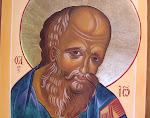
Harris’ last statement might not be too far from the mark. God revealed those truths about the end times to the Holy Apostle John in the cave on the island of Patmos, Greece, where St. John wrote the Book of the Apocalypse, of Revelation. I saw the place where he heard God’s voice in that cave when I visited Patmos this past October, and my faith was enlarged by that pilgrimage.

And I’m finding comfort at this moment in a very different but interesting place. One day this week I was in my car and turned on the Sean Hannity radio show. A conservative caller to the show was panicky about the possibility of a liberal ending up in the White House. Now I don’t agree with everything Hannity, or any political analysis or politician, for that matter, has to say. I haven’t decided who to vote for two days from now. But I loved his response to this caller. It’s his trademark: “Let not your heart be troubled.” Life in these United States will continue as people struggle to find the truth in all areas of life.

It reminded me of something a dear friend said to me during a visit on Friday. The friend said, “I’m happy. I’ve decided to be happy.” We talked about what that meant. It’s not a passive resignation to things going on in the world. It’s not a decision to bury our heads in the sand and not work for things that we care about. But it’s also not a decision to allow our circumstances, and those in the world at large, to determine our state of mind, heart and soul. This friend is an Orthodox Christian. He understands that God’s Kingdom is not of this world.

As I continue to read Harris’ book and discuss it with another friend, the one who asked me read it, the one who has embraced it with so much enthusiasm, I’ll read it with faith in the God who said those favorite words of Hannity’s: “Let not your heart be troubled.”

Friday, February 1, 2008

Pinky and The Blue Boy


I couldn’t write about this yesterday. January 31 was the one year anniversary of my brother’s death. Mike was only 58 when he died of lung cancer. We were fifteen months apart in age. This is us when we were about 9 and 10, dressed up for a cousin’s wedding . I marked the anniversary the way I often deal with unresolved pain: I drank three glasses of wine and wept until about 2 a.m. The pain is still raw because there were so many unresolved issues in my brother’s life… things that didn’t get healed. This photograph of us hangs on the walls in our guest room.

While I’m recovering from foot surgery, I’m camping out in that guest room, which has nice windows with a view out onto the street and a really really comfortable bed. We set the room up for my mother a few years ago when we invited her to come live with us. She declined, but I’ve never changed the room from the way I set it up for her:

From my perch in the bed I’m looking at lots of memorabilia from my childhood home… things I arranged on the walls and what-not shelves to make Mom feel more at home had she come to live here. The antique lamps on the bedside tables were my grandmother’s. The chairs at the foot of the bed were my parents’. But the pieces that almost jump off the walls at me are the two framed prints directly across the room from the bed: the famous images known as “Pinky” and “The Blue Boy.” Like the black and white formal photograph of Mike and me, these pictures were on the walls of our living room in the house I grew up in from age 7 until I was married at 19. As I’ve gazed at them, or watched them gazing at me, over the past three weeks, I’ve been flooded with memories … of things that Pinky and Blue Boy observed in that tiny living room in the house my parents built in a brand new subdivision in Jackson, Mississippi.

Our house had one of the trendy new open kitchen-den arrangements later known as a “great room.” That’s where we had the television, couch, eating areas, Christmas trees, birthday parties, etc. But in the front of the house, the tiny “formal” living room was like this: light blue shag carpet, a picture window with lined drapes, two swivel rockers, and a piano. It was removed from the more active part of the house, so that Mike and I could practice the piano, and it made a great place to play cards on the floor with our friends. And eventually, it became my “courting room.” Pinky and The Blue Boy witnessed some pretty interesting moments with boyfriends and inspired some of my early writing. (Okay, those are two separate things. My early writing was not about my boyfriends.) I wonder if Mike ever thought about Pinky and The Blue Boy when he was in that room.

Pinky’s modest but free-flowing dress… her hand just above the bodice of her dress and the pink ribbons of her bonnet flying in the wind from her perch above the sea. Storm clouds surround her and I wonder if she allows the storm inside… or how hard she is working to maintain her balance.

The Blue Boy’s pose is more guarded, formal. He looks as though he chose the clothes for the portrait, whereas Pinky’s clothes were chosen for her. But maybe I’m projecting a bit from my own life onto these images.

Last week I started a series of essays which I’m considering as early drafts of chapters for a book. A memoir. I’ve outlined the book and chapter titles, and I’ve drafted the first two essays. Researching titles I came across an amazing book called Finding My Voice (my first choice for a title, but I've already thought of a better one) by Diane Rehm. Diane was a popular radio personality for many years and struggled with a vocal cord disorder called spasmodic dysphonia. I have a paralyzed vocal cord, and had already written about it before finding Diane’s book. It’s interesting that she was born and baptized in the Syrian Orthodox Church (which I converted to) but later was active in the Methodist Church. But it’s her childhood stories that fascinate me. Because I’ve found so many parallels in my own life. (We both played the part of a witch in a school play, for starters!) At first I was bummed out to find the book because I wanted the title for myself, and also because I wasn’t sure how it would go over to write a memoir with similar themes. But the more I read the more I realized that it’s exactly because of these shared, universal truths in our lives that we like to read each other’s stories. And mine are really quite different in many ways. So, she’s inspiring me.

At the same time I’m reading an unpublished manuscript in progress, another memoir from a similar era—a childhood in the 50s and 60s. I have more in common with this person’s journey spiritually--although my suffering pales in light of theirs--but since I’m weaving my spiritual journey throughout my personal essays, I’m also inspired by this work.

In both instances, as I’m reading these memoirs, I keep asking myself why I like to read them and why I want to write my own. The answers to both questions have something to do with healing. Shared suffering can heal. Stories can heal. I think that’s it. I want to write stories that can heal.

Four weeks from now I’ll be in Oxford at the Creative Nonfiction Conference… and specifically at a two-day pre-conference workshop to which I’ve submitted another memoir-in-progress. One that sprang from my blog posts about "watching" a number of people I love as they are dying. (You can read my blog posts about this here and here.) The class, with direction from the instructor, Dinty Moore (above, left) will critique each other’s work one day, and the next day the Moore will give craft talks. Dinty is an editor, professor, and author. I'm ordering his memoir, Between Panic and Desire soon. Keynote speakers will highlight the weekend sessions. I can’t wait to participate, with three of my writer friends who also have stories to tell. Stories very different from mine, but stories with the potential to entertain, to enlighten, and to heal.

Wednesday, January 30, 2008

Crossing the Aisle: A House Divided?

My friend and fellow iconographer, Kerry, came over Tuesday to work on the icon of the Mother of God, Directress. It’s the one she and I have been working on together for a while…. one of two icons that will go in the front of the nave at St. John Orthodox Church, our parish here in Memphis. The other icon is Christ, the Lifegiver. Here’s Kerry, putting the finishing touches on the icon─she’s really good at the details, like this gold trim on the Holy Virgin’s sleeve.

And here’s the finished icon. Well, we still have to varnish it, which we’ll do when the icon of Christ is complete. The icon of the Mother of God will be placed on a stand in the front of the church, on the left side of the aisle. The icon of Christ will go on the right side. Worshippers will light candles and offer prayers before these icons… no matter which side of the aisle they sit or stand on during services. It’s not like the people on the left side are followers of the Mother of God and the people on the right side are followers of Christ. We all embrace the Son and His Mother and we have to cross the aisle in order to do so.

Watching President Bush deliver his State of the Union message Monday night reminded me of the another President’s warning, in 1858… that a house divided cannot stand. The partisanship was so vivid, with Democrats and Republicans seated across the aisle from eachother, and with standing ovations limited almost exclusively to one side. Whether or not one believes the two-party system is a good idea, who can deny the damage done to the House─the United States of America─by the hurting things said and done to fellow Americans across the aisle.

I’ve been standing and sitting on the left side of the aisle in my church for many years. I’m not sure why this is, but we are all creatures of habit, and this has become my habit. As far as I know, it was never a decision that I made based on the choices of other parishioners that I did or did not want to be near during worship services. But this past Sunday when I went into the nave for the Divine Liturgy, I sat on the right side of the aisle… on the far right end of a pew, so that I could put my left leg, the one in the cast, up on a pillow on the pew during the service and be able to face the front more easily. It was strictly a move dictated by physical disability. It worked well, so I’ll be sitting on the right side for the duration of my cast-wearing experience. And then I’ll probably cross the aisle back to my “regular” pew… where my five-year-old Goddaughter can find me easily when it’s time for Communion. And where, well, where I’ve become comfortable.

So, after Liturgy, during Coffee Hour downstairs in the fellowship hall, I laughed when a friend said to me, tongue in cheek, “Are you mad at someone on the left side of the aisle?” We shared a knowing look, and then I explained the reason for my move. We laughed again, but also commented briefly, that we both know people who have, indeed, crossed the aisle to avoid sitting near people with whom they have unresolved issues. And yet we exchange the “kiss of peace” before receiving the Body and Blood of Christ during the Sacrament of Holy Communion… a physical expression of the spiritual reality of our unity. Don’t get me wrong…I’m no stranger to anger. And I’ve refrained from receiving the sacrament for weeks at a time due to my sinful anger. Almost every time I offer my confession at the Sacrament of Confession, my confessor asks me this question: “Are you at peace with those around you?” It’s an important question. We compromise the unity of the church when we refuse to let go of anger… when we refuse to forgive.

Again, I’m speaking to myself first here… forgiveness doesn’t always come easy for me, when I feel that I’ve been wronged. I even wrote an essay about it called “Blocked.” I was blocked from writing─not writing prose, but writing icons─because of my unwillingness to let go of this destructive anger. Finally I was able to forgive and to ask forgiveness, and the healing could then begin.

I’ve been asking friends who they will vote for in the upcoming presidential election. Friends on both sides of the aisles at St. John Orthodox Church. Which seems to have nothing whatsoever to do with their political choices. I have dear friends on both sides of the issues at stake, and I am still undecided. Yes. But this much I know: my decision to vote for one or another political candidate won’t change these friendships, which aren’t based on our politics. These friendships are based on our mutual love and commitment to the well-being of the other. I’m so thankful for friends like these.

Like Daphne and Nancy, who both visited and signed my cast recently. These are both Southern gals… and yes, I’m sure our friendships are more natural because of shared cultural roots. I was reminded of this fact recently when a transplanted Northerner shared with me her struggle to make friends here in the South. I agreed with her that “Southern hospitality” can be very superficial… that just because someone will cook you a meal and run errands for you when you’re sick, doesn’t also mean they want to let you into their “inner circle.” Intimate friendships without shared history are probably rare, and certainly take lots of work and desire on both parts. This was a lovely woman who has lived in the South for ten years and is still lonely and isolated. It seems that her struggle has to do with people being willing to cross a different “aisle” … the Mason-Dixon line.
Later I thought about my mother-in-law. She was from New England and was a military wife who made friends easily wherever she lived. Of course, making friends on military bases with other officers’ wives isn’t the same and trying to break into a cultural “click.” But I watched as Ginny reached out to people in her church and in her neighborhood after her husband retired from the military, and even in the South (Georgia and Mississippi) she always made friends. I guess she was fortunate to find folks who were willing to cross the aisle for her. And they were equally blessed by her friendship. Even though she wasn’t from the South.

Sunday, January 27, 2008

The End of Faith, Chapter 2, or Why I Didn't Get to Sleep at All Last Night

An old 70s song by the Fifth Dimension comes to mind as I begin my blog post today. You can listen to it here.

At 2 a.m. I was still tossing and turning. Well, with this heavy cast on my left foot, it’s more like scrunching and tugging and lifting. Ugh. But I’ve been sleeping with a cast on my foot for almost three weeks now, and this was my first near sleepless night. So… I’m thinking it was my mind and not my foot that was the culprit. When I was a little girl, I had to take tranquilizers to sleep at night for a while. (Yes, in the 50s.) And the doctor told my parents not to let me "watch TV or read anything stimulating for an hour before going to bed.” Even in grade school and junior high, I would lose the “off” button for my brain and end up sleepless in Mississippi, or worst, sleep-walking… even out of the house and down the street.

Yep. My pre-sleep ritual last night consisted of, you guessed it, reading Chapter 2 of Sam Harris’ book, The End of Faith. Disturbing stuff, if you take him seriously. And evidently thousands of people took him seriously enough to buy the book, making it a Best Seller. And even when lots of folks wrote letters to him, protesting his book, he answered with a second book, Letter to a Christian Nation. He’s on a roll. Usually I wouldn’t care. Wouldn’t even read the book. But as I said in my last post, there’s this friend I love very much who asked me to read the book.

Thanks so much to everyone who commented on my post about Chapter 1. And thanks to my friend, Josh, who shared the March 2007 issue of Touchstone Magazine with me, which has an article about Harris’ book by Graeme Hunter, philosophy professor at the University of Ottawa and author of Radical Protestantism in Spinoza’s Thought. I wish I could link to the article through Touchstone’s online archives, but it isn’t one the articles set up by them for linking to. So, I’ll share a few quotes here. The article is titled, “Faith of the Faithless: Why Sam Harris Can’t Stamp Out My Religion with His Own.” (If you want to read the article, send me an email and I’ll send you a photocopy.)

Harris makes a few interesting points, but I should confess to finding his book to be one of stupefying banality. To have come to such a globally negative judgment about a book is normally reason never to mention it in public, but I make an exception in this case because it has appealed to so many thousands of readers and so many learned reviewers in respected journals.

Hunter gives a glimpse into the later chapters of the book here:

It is not surprising that Harris gives few details about his plan for ridding the world of faith. He confines himself to a few words near the conclusion of his book. “It is a matter,” he writes, “of finding approaches to ethics and to spiritual experience that make no appeal to faith and broadcasting this knowledge to everyone.”

And one more:

One great weakness of The End of Faith is that Harris does not prove that the dangers posted by religion are any different from those posed by the police, doctors, or government—or aggressive atheists, for that matter—or that its benefits are not worth the risk in the way theirs are. He does not show why it is not sufficient that we scrutinize religious claims and reject them when they are false. Instead, he takes for granted that religions are always dangerous, and always wrong, and therefore that we would be far better off repressing them.

So… on to my brief quiver of quotes and comments on Chapter 2: The Nature of Belief

Right off the bat Harris tries to take away our freedom:

Believing a given proposition is a matter of believing that it faithfully represents some state of the world, and this fact yields some immediate insights into the standards by which our beliefs should function. In particular, it reveals why we cannot help but value evidence and demand that propositions about the world logically cohere. These constraints apply equally to matters of religion. “Freedom of belief” (in anything but the legal sense) is a myth. We will see that we are no more free to believe whatever we want about God than we are free to mean whatever we want when using words like “poison” or “north” or “zero.”

This coherence seems to be a theme in this chapter, as he tries to explain everything in terms of rational rights and wrongs, by his definition:

Belief, in the epistemic sense—that is, belief that aims at representing our knowledge about the world—requires that we believe a given proposition to be true, not merely that we wish it were true…. Here we can see why Pascal’s wager, Kierkegaard’s leap of faith, and other epistemological ponzi schemes won’t do. To believe that God exists is to believe that I stand in some relation to his existence such that his existence is itself the reason for my belief. There must be some causal connection, or an appearance thereof, between the fact in question and my acceptance of it. In this way, we can see that religious beliefs, to be beliefs about the way the world is, must be as evidentiary in spirit as any other.

Unless I misunderstand him here (and that’s quite possible, as this stuff is way over my head) I have to say I agree with some of what he says here. God’s existence is itself the reason for my belief. But I have no idea what he means by “evidentiary in spirit.” I welcome enlightenment here from my readers!

It should be clear that if a person believes in God because he has had certain spiritual experiences, or because the Bible makes so much sense, or because he trusts the authority of the church, he is playing the same game of justification that we all play when claiming to know the most ordinary facts. This is probably a conclusion that many religious believers will want to resist; but resistance is not only futile but incoherent. There is simply no other logical space for our beliefs about the world to occupy.

Resistance to his opinion is incoherent?

Later in the chapter, it’s interesting that he quotes Hebrews 11:1, which I would quote to him:

“Faith as the assurance of things hoped for; the conviction of things not seen.”

But then he says, of this passage:

Read in the right way [Harris’ way?—my comment] this passage seems to render faith entirely self-justifying: perhaps the very fact that one believes in something which has not yet come to pass (“things hoped for”) or for which one has no evidence (“things not seen”) constitutes evidence for its actuality (“assurance”). Let’s see how this works: I feel a certain, rather thrilling “conviction” that Nicole Kidman is in love with me. As we have never met, my feeling is my only evidence of her infatuation. I reason thus: my feelings suggest that Nicole and I must have a special, even metaphysical, connection—otherwise, how could I have this feeling in the first place? I decide to set up camp outside her house to make the necessary introductions; clearly this sort of faith is a tricky business.

Here Harris is equating belief with feeling. This is not the Christian definition of belief or faith, but something he has come up with himself.

Harris’ section on “Faith and Madness” might be what disturbed my sleep the most last night. A sample:

It takes a certain kind of person to believe what no one else believes. To be ruled by ideas for which you have no evidence (and which therefore cannot be justified in conversation with other human beings) is generally a sign that something is seriously wrong with your mind. Clearly, there is sanity in numbers. And yet, it is merely an accident of history that it is considered normal in our society to believe that the Creator of the universe can hear your thoughts, while it is demonstrative of mental illness to believe that he is communicating with you by having the rain tap in Morse code on your bedroom window. And so, while religious people are not generally mad, their core beliefs absolutely are. This is not surprising, sine most religions have merely canonized a few products of ancient ignorance and derangement and passed them down to us as though they were primordial truths. This leaves billions of us believing what no sane person could believe on his own. In fact, it is difficult to imagine a set of beliefs more suggestive of mental illness than those that lie at the heart of many of our religious traditions.

So, he ends Chapter 2 by declaring that people of faith are mentally ill. Again I ask, who made Harris the expert on mental health? Who appointed him to set the standard? And perhaps more importantly, why are thousands of people excited about what he has to say?

When I couldn’t sleep last night, I read two other articles in the March 2007 issue of Touchstone, looking for something to calm my disturbed spirit. The first was by a favorite writer of mine, Thomas Howard. But he was writing a soul-searching article about approaching old age, learning detachment, caring less about the world’s pleasures and comforts… things that yes, I want and need to learn and have read much from the Orthodox Church Fathers about, but … somehow his words didn’t quench the disturbance created by Harris in my mind.

It was another article in the same issue, “Simply Lewis,” about C. S. Lewis’ classic book, Mere Christianity¸ that helped. Like these words, from a section of the article (by N. T. Wright, Anglican Bishop of Durham, England) on “Faith and Truth”:

First, faith matters more than feelings; faithfulness to the high and hard standards of Christian behavior matters more than doing what you feel like at the time….Second, you can understand falsehood from the standpoint of truth but not the other way around, just as someone who knows light can understand darkness but not vice versa….

Perhaps Sam Harris only knows darkness, and therefore can’t understand the Light. And he defines that which he can’t understand as madness. Otherwise, how could he sleep at night?

And speaking of sleep… I’m going to find me a good Southern fiction novel to read tonight! And I promise my next post will be about something entirely different... I need a break from Harris! But please leave your comments!

Wednesday, January 23, 2008

The End of Faith, Chapter 1

Someone I love very much asked me to read the book, The End of Faith: Religion, Terror, and the Future of Reason by Sam Harris. It was on the NYT Best Sellers list a while back. And now Harris has written a follow-up book. Anyway, as I was remembering some of the things that were discussed at the women’s retreat this weekend, especially about whether or not genuine friendships could exist between people of different political or religious beliefs, I thought about this person who has recently shifted (again) from Christian to agnostic. At the retreat, I had made the statement that yes, I have friends that I don’t agree with on either of these accounts, and they are still dear friends that I love and enjoy being with. I stated that we are supposed to see people as God sees them, as people, made in His image. People to be loved. Period. Not as people to be converted or changed or “fixed.”

So, when this friend asked me to read The End of Faith and to engage in a “non-emotional, rational discussion” about it, I agreed. With one caveat: that they read a book of my choosing (Patmos: A Place of Healing For the Soul by Peter France.) and show me the same respect. They agreed. Game on. (I wrote about the Patmos book here.)

I thought I might do a little “book review in progress” from time to time here on my blog. I’m also writing personal letters to my friend as we discuss these books, but I won’t include the personal aspects here. I would love to hear any thoughts from my readers…. You can post a COMMENT at the end of this post, or send me an email at susanmaryecushman@yahoo.com. If you send me an email, please let me know if you prefer that it remain private, otherwise I might quote from it in a future blog.

Chapter 1: Reason in Exile

Pretty soon into his first chapter, Harris states:

Your beliefs define your vision of the world; they dictate your behavior; they determine your emotional responses to other human beings…. While all faiths have been touched, here and there, by the spirit of ecumenicalism, the central tenet of every religious tradition is that all others are mere repositories of error or, at best, dangerously incomplete. Intolerance is thus intrinsic to every creed. Once a person believes—really believes—that certain ideas can lead to eternal happiness, or to its antithesis, he cannot tolerate the possibility that the people he loves might be led astray by the blandishments of unbelievers.

Makes you stop and think, doesn’t it? Is it possible for me, as an Orthodox Christian, to hold my faith strongly and not judge others who belief differently? If I believe that my faith is the correct one (and the word Orthodox actually means right or straight belief) does that not automatically mean that I believe everyone else is wrong? Or that those I love who don’t believe as I do are missing the boat? And would this belief cause me to behave in certain ways towards those outside that boat? I think it did, and I did, when I was younger. I was probably, by Harris’ definition, a religious extremist.

Harris says that there are two types of religious persons, religious moderates and religious extremists. And then he begins to state his case:

One of the central themes of this book, however, is that religious moderates are themselves the bearers of a terrible dogma: they imagine that the path to peace will be paved once each of us has learned to respect the unjustified beliefs of others. I hope to show that the very ideal of religious tolerance—born of the notion that every human being should be free to believe whatever he wants about God—is one of the principal forces driving us toward the abyss.

He continues to argue that religious moderates are basically not being honest. And maybe they’re not. He calls them “failed fundamentalists.” Interesting observation. And maybe that’s the path I was on in the early years of my conversion to Orthodoxy. But then he says:

Religious moderation is the product of secular knowledge and scriptural ignorance…. By failing to live by the letter of the texts, while tolerating the irrationality of those who do, religious moderates betray faith and reason equally…. Religious moderation… closes the door to more sophisticated approaches to spirituality, ethics, and the building of strong communities….moderates merely ask that we relax our standards of adherence to ancient superstitions and taboos, while otherwise maintaining a belief system that was passed down to us from men and women whose lives were simply ravaged by their basic ignorance about the world.

I don’t know what men and women he’s referring to… the early Christians, Christ’s disciples, “men who turned the world upside down?” Or the Church Fathers of the following centuries? Men like Ignatius of Antioch, Ambrose of Milan, Basil the Great or Gregory the Theologian? These men’s lives were hardly “ravaged” nor were they ignorant about the world. Maybe Harris would consider me (and other Orthodox Christians) to be religious extremists. By his definitions, I am neither an extremist or moderate. And although his bibliography is impressive, I can’t really believe that he understands the heart of Orthodoxy. Harris begins his apologetic with man, whereas an Orthodox Christian would begin with God. Here’s an example:

…most of us have emotional and spiritual needs that are now addressed—however obliquely and at a terrible price—by mainstream religion. And these are needs that a mere understanding of our world, scientific or otherwise, will never fulfill. There is clearly a sacred dimension to our existence, and coming to terms with it could well be the highest purpose of human life. But we will find that it requires no faith in untestable propositions—Jesus was born of a virgin; the Koran is the word of God—for us to do this.

Again, he begins with man. With man’s needs. Needs that he admits a secular understanding of our world will never fulfill. I’m interested to see where he goes with this… what he will posit as the fulfillment of those needs, if not God.

My apologetic begins with God. God reveals himself to those who seek Him. Whether or not he also reveals himself to those who seek to disprove him is something I have no knowledge of, so I can’t speak to that. (But Peter France speaks to it in his book, Patmos: A Place of Healing for the Soul, actually.)

Back to the religious moderates. Harris says that religious moderates “don’t like the personal and social costs that a full embrace of scripture imposes on us.” I can understand his point. If your reference for relating to others is sola scriptura, a theology limited to the written scriptures, then yes, it’s a high cost to pay. But relating to others based on the indwelling of the Holy Spirit, and a growing relationship with the Son, Jesus Christ, and a life lived seeking the God the Holy Father, isn’t always going to be socially acceptable, either. But it can be a life filled with love for all mankind. I’m certainly not a good example of this, but that doesn’t mean I can’t be…. The Saints we imitate and venerate were consumed with love for their fellow man, regardless of his race, religion, or politics.

The rest of Chapter 1 of Harris’ book deals mainly with the conflicts in Palestine, the Balkans, North Ireland, Kashmir, Sudan, Nigeria, Ethiopia, Sri Lanka, and the Caucasus, of which Harris says:

In these places religion has been the explicit cause of literally millions of deaths in the last ten years.

When he talks about conflicts, wars, genocide, and other horrible suffering caused by religious factions, he says that most Americans aren’t so different than Osama bin Laden, in that we “cherish the idea that certain fantastic propositions can be believed without evidence. Such heroic acts of credulity are thought not only acceptable but redeeming—even necessary.”

Scary accusation. But he spends most of the rest of the chapter quoting from the Koran. Not from Christian Scriptures.

And then he talks about spiritual experiences and psychic phenomena and the ability to “transform the character of our experience.” He states, near the end of his first chapter, that

Spirituality must be deeply rational… Even now we see the first stirrings among psychologists and neuroscientists of what may one day become a genuinely rational approach to these matters.

Reason. That’s where he’s headed next:

We must find our way to a time when faith, without evidence, disgraces anyone who would claim it. Given the present state of the world, there appears to be no other future worth wanting….It is imperative that we begin speaking plainly about the absurdity of most of our religious beliefs.

Whew. I’m going to have to take a breather before reading Chapter 2, “The Nature of Belief.”

For now, I’ll close with a quote that my friend, Doug, uses as his email signature:

"And those who were seen dancing were thought to be insane by those who could not hear the music." -- Fredrich Nietsche

Call me crazy… can you hear the music, Sam?

Monday, January 21, 2008

Toe Story 2: Damn Straight

Viewer Advisory: Some images may be graphic in nature. If you are squeamish, you might want to skip this post! Today was my first post-op visit to Campbell Clinic. They cut off my beautiful cast, and no, I didn’t save it. I’ve got photos of all the original art work. Odorless photos. Anyway, that part was fairly painless. Except for when this yucky bandage was kind of stuck to some of the stiches.

Then they pulled out the stitches. A couple of ouch! Moments, but again, not too bad. Then the moment of truth. Dr. Murphy said the surgery appears to be successful. I looked at my toe and said, “damn straight!” The toe, that is. It used to turn under the second toe and now look at it. (Well, don’t worry about the color… my husband says it looks like a morgue photograph. Remember it’s been inside a cast for two weeks.)

Next they put on new bandages, separating my toes and wrapping the area where the stitches had been… where they cut the bunion out. Then they showed me the color options for the cast. Pink. Camouflage. Blue. Green. Flowers. You name it. I asked for white. White? They couldn’t believe I wanted white. I’m an artist, I said. And my friends are artists. I’ve got two coffee mugs full of colorful Sharpies at home just waiting for a fresh white canvas. So… here’s my fresh, white cast… in my new cast shoe, ‘cause now I can put some weight on that foot, but still have to use crutches or a walker.

Two more weeks in the new cast, so come on over and decorate it, folks! Tonight John and Gabby came by with a delicious roast chicken meal from Kerry… so I got Gabby to get the new canvas art started. Here she is working on her masterpiece. And here it is… I love the crosses, especially. A good reminder that God is taking care of me.

God and my friends. This morning when hubby and I got to Campbell Clinic for my 10:15 appointment, they told me the appointment had been rescheduled for Wednesday. They forgot to call me. I said that wouldn’t work for us, that I needed to see the doctor today, please. So they said come back at 12:45. (Doesn’t always work that way, but I’ve learned to ask for what I want and go from there.) Only problem was although hubby was off work from the VA Hospital today (Martin Luther King holiday) he had a conference call scheduled in the afternoon. And the round trip to the clinic had already taken an hour and a half of his time. So I called my friend Sue, who lives near the clinic, to see if she could bring me home after the afternoon appointment if he drove me out. Instead, she invited me to spend the rest of the morning at her house, and she would take me to the appointment and drive me home afterwards. Basically, she just gave up most of her day for me on the spur of the moment. She even made homemade soup for our lunch.

With so many of the conversations of the weekend women’s retreat on Friendship still on my mind, I thought about how blessed I am. Sue is a real friend. When I tried to thank her, she insisted the blessing was hers. I thought about this song. Yes. That's what frirends are for.

P. S. Thanks for the yummy chicken, Kerry!

So... nothing very literary in this post... probably because I'm multi-tasking... watching the women's quarter-finals in the Australian Open while I'm posting. Serena just lost in straight sets to Jancovik. Maybe I'd better start paying closer attention. It's a nice change from the football play-offs... and warmer!

Sunday, January 20, 2008

Philia Has Embraced Agape

This will be short... I left the house for the first time in 10 days this weekend, and I'm worn out! So, here's the (brief) scoop:

At the annual women’s retreat hosted by the Women of St. John Orthodox Church in midtown Memphis this weekend, Fr. Paul O’Callahan gave several talks based somewhat on his book, The Feast of Friendship. He also divided us into “breakout groups” where we answered some thought-provoking questions, discussed them together, and touched on some important elements of friendship.

Hopefully we also enjoyed being together, as friends. I especially loved having my friend, Julia, from Little Rock, and her daughter, Anne Katherine, stay with us for the weekend. Here’s Julia, signing my cast. (The one that will be cut off tomorrow, when I get the stitches out. Yea! But then I get a new cast for a couple of more weeks.)

Anyway, I think we touched on some important things. And in a day and a half retreat, that’s a good start. But I also think we only skimmed the surface of a deep ocean of important truths about the feast that friendship can be. And if we want to dive deeper, we’ve got to be willing to risk being honest about some things that we struggle with. Loneliness. Feeling unappreciated and misunderstood. Loving people who are different from us, without wanting to change them. Creating an atmosphere where our friends can rest in the comfort of our unconditional love.

Today I re-read a few more parts of Fr. Paul’s book, and found a quote that kind of sums it up for me. He’s talking about “philia” (brotherly love) and “agape” (spiritual, Godly love):

We find that we share various values, perceptions and interests with a friend. This experience of mutuality causes us to be committed to the friend himself, and not just the things we share in common with him. Because of our commitment, we are devoted to the well-being of our friend in everything. We are ready to sacrifice of ourselves for the sake of our friend. At this point in our relationship, philia has embraced agape. The love of friendship is complete.

This type of friendship may be harder to develop because of the tendency to gravitate towards people who are like us. Who share our political views or child-raising techniques. Who see the world through the same prism. But isn’t it what we want most? To be loved, well, just because we are people?

I hope I can be this kind of friend to others. To see them, not as Christian or non-Christian, liberal or conservative, rich or poor, Orthodox or non-Orthodox, saint or sinner, but as my brother or sister pilgrim on this earth, made in God’s image.

Thursday, January 17, 2008

Beside Ourselves

Growing up in Mississippi in the 50s and 60s, I was privy to lots of colloquialisms. Some from Lillie Bell, the dear black woman who helped raise me from birth until I was a teenager. And from grandmothers and great aunts from rural parts, especially. It wasn’t until recently that I began to consider the root of some of those terms. Like this one: “She was just beside herself.” Which usually meant a person was upset. Out of their mind with worry about something.

I found that very expression in an unexpected place this morning─a short book by Metropolitan Anthony Bloom called Meditations on a Theme. I’ve quoted from Met. Bloom’s work before. From one of his books on prayer. A physician and priest, he was Exarch of the Russian Orthodox Church in Europe at his death in August of 2003. Anyway, I often turn to his writing when I am “beside myself” over something. Or in this case, when a dear friend is “beside herself” with worry about something really hard that has happened to her family. How surprised I was to find this very phrase used in Met. Anthony’s words:

We are encompassed on all sides by worries, concerns, fears and desires and so inwardly perturbed that we hardly ever live within ourselves─we live beside ourselves. We are so much in a state of befuddlement that it takes either acts of God or a deliberate discipline to come to our senses and begin that inward journey which will lead us through ourselves to God Himself…. We seldom perceive God’s mercy when it is expressed to us through illness, bereavement or loneliness, and yet how often it is the only way in which God can put an end to the inner flood and outer turmoil which carries us away like a flood! How often we do exclaim, “If only I had a short period of peace, if only something made me aware that life had greatness, that eternity exists!” and God sends us such moments when are brought up short by illness or accident; but instead of understanding that the hour of recollection, of withdrawal and renewal has come, we fight desperately to return as fast as possible to our former state, rejecting the gift concealed in that act of God which frightens us.

As I’m writing these words my friend just called to say her situation just improved and to thank me for praying. Thank God. Her troubles are far from over, but the immediate emergency is calmer. But we don’t always get a quick resolution to a big problem or hurtful situation. Sometimes God lets us stew for a while, giving us a different venue so that we can choose to turn inwards.

I’m thinking of the words in the parable of the prodigal son. After slogging around in the mud and misery of his own choosing for a while, he finally decides to return home. The words are “he came to himself.” While he was wallowing in the mud, he was beside himself.

I’m thinking now about my own self and how and why I often choose to live beside myself instead of within. I think one reason is because I don’t like the home I’m building in there. I prefer the one out here, where I can substitute quick fixes for the real thing. As I think back over the past twenty years or so of my life, I realize that the times I was most “at home” with my interior life were the times that I was praying more. Imagine that. It’s like prayer is the interior designer of our inner houses. The more we use her, the more desirable the interior space becomes.

As I spend more and more time in this chair, or in my bed, recovering from my foot surgery, I realize that God has given me yet another opportunity to work on those inner rooms. Losing the contract on the house we wanted to buy last week was another of God’s gifts. Another chance to focus on the beauty within.

So… in between my times of stillness, sitting here trying to go within, I had two wonderful visitors today. First, Mindy brought baby Nicholas (9 weeks old) to see me. She did her cast art while Nicholas and Oreo napped by the fire and I sipped the latte she brought me from Starbucks. I taught Nick to make some cool faces, like this one. Yep, he’s got potential. Mindy also brought us a(nother) home-cooked meal, so we’re still eating quite well here at Chez Cushman. Thanks, Mindy!

And speaking of eating well, Anna-Sarah brought us lunch today… a yummy Mediterranean tuna salad, fresh clementines (that she peeled for us, hard as that is!), yummy cheese and pita bread, and homemade lemon squares. We had such a delightful visit that I forgot to ask Anna-Sarah to do any cast art. We had so much fun looking at her pictures from a recent trip she and her husband made to Switzerland. Gorgeous.

In fact, while Anna-Sarah was still here, another friend called to tell me that Melinda Rainey Thompson was being interviewed on Book Talk on TV (from our local public library)… so I switched it on for part of the show. My friend said that Rainey reminded her of me…or the things she was saying about her book reminded her of my current direction with my writing. Rainey got started with a family newsletter that grew into a blog with a huge readership. So, when she queried an agent or publisher about publishing her first book, one of her selling points was the built-in readership she would be bringing with her. (An aside: I celebrated 5000 hits on my blog today, which I started five months ago. So, let me pause and say THANKS to my readers!)

Anyway, Rainey’s new book of essays, The Swag Life, sounds so good I ordered a copy online right away. (btw… SWAG stands for Southern Women Aging Gracefully.) She also teaches writing, so her approach is serious, literary style, even when her topic is light or even humorous. Can’t wait to read it!
And yes, I got some editing done on an essay this morning, which felt good. It’s looking like that fiction novel might be taking a back seat for a while. Sorry, Sweet Carolines. Maybe I’ll get back to you some day. Don’t give up on me. It’s just that I’ve got other stories to tell right now…..

Wednesday, January 16, 2008

The Feast of Friendship

Back in September, I wrote a post about friendship, “Risking Friendship, The Secret of Happiness,” here. In the same post I mentioned our church’s annual women’s retreat, which was scheduled for November, but had to be re-scheduled because of a death and funeral. Now it’s this weekend: Friday & Saturday, January 18 & 19, at St. John Orthodox Church here in Memphis.

Conversations with two dear friends last night and this morning have spurred me to post about this topic again.

First, about the retreat. The speaker is Father Paul O ‘Callahan from St. George Orthodox Cathedral in Wichita. (Here is he, with his family.) He’s the author of the book, The Feast of Friendship. I used his book as the primary source for one of the talks I gave at a women’s retreat in Austin about two years ago. Titles for his talks are:

“Eternal Communion: Friendship and the Meaning of Salvation”
“A Barren Field: Modern American Individualism”
“Real Friendship: What it Looks Like” and
“Soul Friend: The Role of Spiritual Father”

When I first read Father Paul’s book, I thought, “oh, my. I can’t believe this was written by a man. He’s so in touch with his feminine side!” (For those of you not familiar with Jungian psychology, that’s a good thing.) I’ve met Father Paul personally, when I visited Wichita a number of year ago, But I’ve never heard him speak, so I’m looking forward to the retreat. But not just to have my ears tickled by a good speaker. As I told someone on the phone today, I’m looking forward to what God has for all of us in the way of learning how much our salvation is wrapped up in one another… how much we need each other… and how to have healthy, salvific friendships. Some of us in this parish have known each other for 40 years. Other friendships are new. All are priceless.

In preparing for the retreat, I re-read several passages of Fr. Paul’s book today, and I’d like to share a few quotes here, and a few of my own reflections. From 3 sections of the book:

(1) The Achievement of Personhood

Love, freely given, manifests the essential relatedness of a person to others. Thus, the individual who cannot love fails to develop true personhood…. the one who loves fully becomes his own identity through communion with others….The achievement of human personhood therefore is unthinkable apart from the drive for communion. It is undeniable that relatedness is a fact of human existence from the moment of our conception. We are conceived in the fire of passionate relations between two people. We develop in the nurturing womb of our mother. We experience our relatedness first at her breast, and then with our father and siblings, relatives and neighbors. We find out soon enough that our existence has occurred in the nexus of particular communities, and then discover the place of those communities in the larger realm of the human race in the world. We venture into friendships, integrate into all kinds of associations, find lovers, marry, and beget children. Even the most distinctly biological aspects of our generation and socialization do not and cannot occur apart from personal relationships. When one becomes fully conscious, one recognizes the dimension of communion that is possible, may actually underlie, and is often manifest in such relationships. The highest and most fulfilling are those in which a genuine experience of communion between persons takes place in utter freedom: friendships and marriage.

I know there’s a lot in there. Read it again, if you have time. I’m big on the aspect of freedom that he talks about here, and in much greater detail later. We choose our friends and our spouses, but not our parents or our children. But then they become part of our “tribe” in a sense. Part of who we are as persons. Part of the realm in which our personhood develops. They’re not optional, if we want to develop into whole, mature persons.

(2) The Creativity of Friendship

Because we allow our friends access to the intimate spaces of our hearts, we place them in a position to deeply affect us…. They discern and seize upon our deepest spiritual aspirations and encourage us to strive more mightily to realize them than we could ever do alone…. They recognize our genuine gifts and talents, and embolden the humble expression of them….Fundamentally, genuine friends grant us access to the most creative dimensions of our souls by receiving us and reflecting us back to ourselves.

I have a friend that does this, and it is a beautiful and sacred gift. Without her love, I am sure I would never have believed in myself enough to paint an icon. Or write a book, or even an essay. Or speak at a women’s retreat. Or face down some of my demons. She teaches me how to be a friend, and hopefully, I can learn to be that to others.

(3) Issues and Problems in Friendships: Needs, Possessiveness, and Expectations

If perfect intimacy is to be attained and preserved in a friendship… certain basic principles must be honored. The first is the absolute necessity of maintaining distance in the relationship. We may imagine that the common dimension shared by friends exists in the delicate space in between them…numerous forms of over-identification can collapse it, such as possessiveness, inappropriate expectations….The freedom and autonomy of real persons are precisely the prerequisites of genuine friendship….one trusts the character of his friend and thus setting rules for his behavior is out of the question…. The development of highly specific sets of expectations among friends… at bottom… betrays a lack of trust. It reveals the desire to regulate and control the other…. True friends relish the distance between them as much as the communion that unites them. This is because they recognize that the distance between free, whole, autonomous persons is the essential precondition of their relatedness.

Okay, I could talk about this forever, but I’ll try to be brief. I have parents who told me what to do while I was growing up. And then some. But they were supposed to tell me what to do. They were my parents. Not my friends. I had teachers growing up, and even now, iconography instructors and writing instructors, who tell me what to do, although sometimes they only make suggestions, but they’re supposed to tell me what to do. They are my teachers. Not my friends. I have a spiritual father who only tells me what to do if I ask him to. Thank God. Sometimes I want him to be my friend. But I need him to be my father. It gets confusing at times. But I trust him. And he trusts me and never tries to control me. So I guess he’s also my friend.

I was part of a cult for seventeen years. We were taught to control each other’s behaviors. It wasn’t a healthy place to learn friendship. But some of us who survived and came into the Orthodox Church together in 1987 have been re-learning it together. Trying to figure out how to preserve that precious space that must exist between two Real Persons in order for them to become Real Friends.

I think Father Paul O’Callahan understands these things. I’m looking forward to his talks this weekend. And to spending time with my friends.

Speaking of friends. Two more came over today. First, my friend Nancy. The one I actually met at Starbucks about four years ago. She signed my cast “Starbucks Nancy” and cheered me up with this beautiful butterfly on my cast. And a latte.

Later my realtor, Linda, dropped by with yet another latte, and our earnest money on the house we lost because ours hasn’t sold yet. Not her fault. Or Saint Joseph’s. An Theli O Theos. As God wills.

Thank God for friends.