Wednesday, November 11, 2009

When You Come to Love: Poetry on the Eve of Veteran's Day

This must be my week for all things poetic. After the amazing spiritual writing workshop on Saturday, led by the poet and prose writer, Scott Cairns, I found myself returning to Oxford again on Tuesday night, this time for “Harvest Writers Reading” at Roosters Blues House on the Square. In addition to the fact that they raised lots of money (and received canned goods) for a local food bank and the national organization, Share our Strength, which works to feed hungry children across the country, the evening was, well, magical. Danielle Sellers, volunteer organizer for the event, posted this on Facebook after the evening:

“Thank you to everyone who came the to event tonight. It was a great success. We made over 300 dollars for hunger relief and I have a truck full of cans which will be delivered to The Pantry in the morning. Good work Oxford! And thanks to all who made the drive down from Memphis!”

While I very much enjoyed the readings of my friends and mentors, Beth Ann Fennelly, her husband, Tom Franklin, and Jack Pendarvis, it was my introduction to Ann Fisher-Wirth that made the evening so magical for me. Ann is a Professor of English at the University of Mississippi, and Beth Ann Fennelly considers her a mentor. Their friendship is obvious in Ann’s volume of poetry, “Five Terraces,” which include a poem dedicated to Beth Ann: “Sphinx, Star-Gazer, Mountain: Leading yoga. For Beth Ann Fennelly.” (Ann also teaches yoga. It shows in her body, in her carriage, in her spirit.)

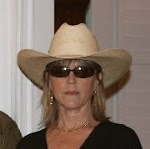
I forgot my camera (if you can believe that) and took a few snapshots with my cell phone, but the quality is so bad that I will spare you. This picture of Ann is from the internet, and it’ s much better than mine. Here’s an interview with her at The Best American Poetry. You can read some of her poetry here.

Ann was an army brat, and I love the poems she read about her military childhood. They seemed especially appropriate on the eve of Veteran’s Day. And after the readings were over, when I went downstairs to leave Rooster’s, I was stopped in my tracks by a group of Marines, standing at attention in the downstairs bar, singing The Marines’ Hymn with vigor and reverence. It brought tears to my eyes. Afterwords, I said to one of them, “My son just got to Afghanastan this week. He flies helicopters for the Army.”

“Tell him we’ll be joining him as soon as we can, ma’am. We’ll have his back.”

I gave him a hug, and then looked around at the circle of young men with crew cuts and shining faces. They were beautiful young men, all of them. And I wept as I left the restaurant and got into my car to drive home to Memphis.

The next day I picked up Ann’s volume, Five Terraces, and found a few of the poems she had read the night before. The one that I found myself returning to again today is called, “When You Come to Love.” I hope I’m not infringing on any copyright laws by sharing it here, and I hope it will inspire my readers to find this book, and others of Ann’s, and buy them and enjoy them for yourself. Or give them as Christmas gifts to people you love. I’ll close with


When You Come to Love


by Ann Fisher-Wirth

When you come to love,
bring all you have.

Bring the milk in the jug,
the checked cloth on the table—
the conch that sang the sea
when you were small,
and your moonstone rings,
your dream of wolves,
your woven bracelets.

For the key to love is in the fire’s nest,
and the riddle of love is the hawk’s dropped feather.

Bring every bowl and ewer,
every cup and chalice, jar,
for love will fill them all-

And, dazzled with the day,
fold the sunlight in your sheets,
fold the smell of salt and leaves,
of summer, sweat, and roses,
to shake them out when you need them most,

For love is strong as death.

Monday, November 9, 2009

Prehistoric Hypertext

Annie Dillard says he’s one of the best poets alive. And on Saturday, I sat around a table with seventeen other participants at a spiritual writing workshop hosted by St. Peter’s Episcopal Church in Oxford, Mississippi, learning from him. His name is Scott Cairns, and he teaches at the University of Missouri. His poetry and nonfiction have been included in Best American Spiritual Writing and other anthologies, and his poems have appeared in The Atlantic Monthly, The Paris Review, The New Repubic, Image, Poetry and other journals. So, how did I find myself in this intimate group of spiritual writers on Saturday?

It began sometime last year, when I walked into Father John Troy Mashurn’s office at St. John Orthodox Church here in Memphis. Father John is our pastor. His coffee table is often laden with beautiful books from monasteries all over the world, some with beautiful iconography. No matter what spiritual urgency leads me to his office, my eyes always scan the table when I first sit down. On that particular day, they fell on a small volume of poetry by Scott Cairns—Love’s Immensity: Mystics on the Endless Life. Picking it up, I asked Father John, “What’s this?”

“Oh, that’s a book of poetry. Cairns is Orthodox… he took a number of mystical writings and adapted them in verse. You’d probably enjoy it, although I prefer the original texts myself.”


Thumbing through, I find familiar ground, like one of my favorites, Saint Isaac the Syrian. “Can I borrow this?”

“Sure. He’s also written a book about his pilgrimage to Mount Athos. I actually like that one better.”


The conversation held no surprises. Father John holds tenaciously to the words of Holy Scriptures and the Holy Fathers of the Church, and doesn’t like people messing with them too much. We both share a deep love for Saint Nikolai Velimirovich, for example. Many years ago Father John shared Saint Nikolai’s Prayers by the Lake with me. They are probably the most beautiful spiritual poems I’ve ever read. So, it’s not that he doesn’t like poetry. I think it’s more that he prefers the original to an adaptation.

That conversation was on my mind as I listened to Cairns on Saturday at the workshop. Although he spoke about various aspects of poetry, his emphasis on a form which I wasn’t familiar with made the biggest impression on me. It’s called ekphrasis. It’s a Greek word, and it refers to poetry that’s written about a prior text or a work of art. Cairns said ekphrastic poetry should “give voice to an artifact… making meaning with narrative about something the piece of art might be saying.” Here’s another link with some examples. And yet another.

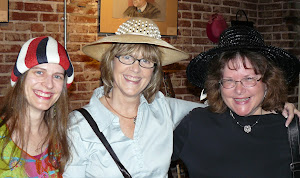
Later, when I was having lunch with my friend, Michelle Bright, (in the center in the picture) a graduate of the journalism program at Ole Miss, I found that this is a fairly well-known entity—Michelle had a teacher in junior high school who taught her students about ekphrastic poetry. I was impressed and a bit envious. Another of our writing group friends, Patti Brummett, also joined us for lunch. Patti is just a freshman at Ole Miss, but spent her junior and senior years of high school at the Mississippi School for the Arts in Brookhaven, where she focused on literary art. She blew us all away with her lyrical prose writing at the Yoknapatawpha Writing Workshop back in June. One night, at open mic, she gave a performance akin to da-da poetry, keeping the beat with quiet finger snapping. She could have been a beat poet in Greenwich Village in the 60s.

During the workshop, Cairns read examples of poetry—his and others—written about passages of Scripture. He was drawn to Judaism early in his spiritual journey, “because of the Rabbinic attitude towards language.” There’s a genre called Midrash, which Cairns describes as “humble and earnest,” which “presses the different Biblical passages for new revelation.” He said that Christ’s parabolic explications of Scriptural truth are very much like this. But, I’m thinking, Christ can do what he wants with Scriptures because, well, He’s the Son of God, right? But for mere mortals to mess with God’s word in this way…. I’m not sure how I feel about it. But I listened with an open mind as he continued.

“Language not only operates retrospectively, but also operates prospectively.” He talked about how we “write to discover—we collaborate with God for the future.” Using the modern day image of computer links that we click on to open another page, he said: “Opening the Scriptures, opening the Word, is like pre-historic hypertext, where each word has that kind of agency, to open another page.”

The concept of “opening” intrigues me. Cairns spoke of its use in Scriptures, like in the Gospel of Luke (24) when Jesus encounters two disciplines on the road to Emmaus and later one of the disciples says, "Were not our hearts burning within us while he talked with us on the road and opened the Scriptures to us?"

He “opened the Scriptures to them.” In the Orthodox Church, only a priest can preach the homily (sermon) in the Divine Liturgy. I once asked why, and was told that since the homily is supposed to be about the Gospel reading for the day, only a priest can preach on the Gospel. It’s a sacramental aspect of the Liturgy, I think, and this reading and preaching on the Gospel is called the “washing of the water with the Word” (Ephesians 5:25).

Remembering that Cairns is, like me, a convert to Orthodoxy, I couldn’t help but wonder how our Church would view some of his thinking. Sitting around a table with mostly (exclusively?) Episcopal writers, I thought about how the two Churches view art in different ways. I felt a sort of freedom in their company that I sometimes don’t feel in my own church. It’s not that I want to make a change—I love my church—it’s just that I felt such camaraderie there. I was sitting next to Taylor Moore, the rector of St. Peter’s. Taylor was dressed in blue jeans and a tweed-ish blazer, looking for all the world like an author at a book signing. (Orthodox priests, on the other hand, always wear either their black cassock or a black suit with a collar.) Next to Taylor was his wife, Nancy, whom I met at a Creative Nonfiction Conference in 2008, when we were both in Dinty Moore’s critique session together. Nancy and I had an immediate bond… and I don’t think it was just because we are married to ministers. We’re both artists, writing memoir. Her husband, Taylor, was given a Lily Foundation Grant to travel and read poetry. And some of the money from the grant enabled him to invited Cairns to lead a workshop at his parish. I love the way the Episcopal Church honors art.

As Cairns spoke, I thought about one of my favorite books, The Return of the Prodigal Son, by Henri Nouwen, in which Nouwen has a chance encounter with a reproduction of Rembrandt's The Return of the Prodigal Son, sending him on a long spiritual adventure. His reflections were in prose, rather than poetry, but I think his interactions with the art were ekphrastic.

In another of Nouwen’s books, Beyond the Beauty of the Lord: Praying With Icons, he chooses four famous Russian icons: the Holy Trinity, the Virgin of Vladimir, the Savior of Zvenigorod, and the Descent of the Holy Spirit, and spends time with each of them in an interactive way.

And so I posed the question that’s been on my mind for some time, to Scott, at the workshop: “As an iconographer, I’ve thought about trying to write prose reflections, or maybe even poetry, about my own personal encounter with icons. As Orthodox Christians, how should that be approached, or should it be?”

This is where Scott explained more about our interaction with art, and the importance of synergy—where we work together with the Church and Christ to bring about redemption. I was thrilled to learn that Cairns has written, and published, a poem about icons. “Two Icons,” which is in his volume Compass of Affection: Poems New and Selected (which has icons on the cover.) “Two Icons” is his reflection on the icons of the Nativity of Christ and the Dormition of the Mother of God. I read the poem later, after purchasing the book at Square Books and getting Scott to sign it for me. “Two Icons” was truly a gift to me. It’s difficult to capture Cairns’ art with just an excerpt from this poem, but here’s a taste: (please get the book and read the entire poem… and all his poems!)

“…even here the radiant
compass of affection
is announced, that even here our several
histories converge and slip,

just briefly out of time. Which is much of what
an icon works as well,
and this one offers up a broad array

of separate narratives
whose temporal relations quite miss the point…."


I’m not sure how I will proceed in my own efforts at ekphrasis, but I will proceed.

I actually made a stab at this a few years ago, but I didn’t know it was ekphrasis. I had fallen in love with a painting at an art auction on a cruise boat. It was by an Armenian painter, Martiros Manoukian, who also did icons. The painting was an angel, with half of its face and body done very much in the style of a Byzantine icon, and the other half in abstract. The “iconic angel” is holding a paintbrush, and appears to be painting the abstract side of himself. The name of the painting was, “Yesterday, Tomorrow.” I asked the broker, who knew the artist, what Manoukian’s interpretation of the work might be. She said she thought Manoukian was trying to capture the spirit of art in Russia, and how it’s changing. While I found that interesting, it was not at all the same thing I felt as I gazed at the painting. Please indulge me here, as I share my “ekphrastic poem” about this painting. It’s not good writing (I have no training in poetry) but it will illustrate, I think, this idea of interacting with art in the way that Scott was teaching us on Saturday. I’m including a picture of the painting that I got off the internet later.

The Angel's Shadow
©Susan Cushman, 2005

Bodiless creatures without human form
Have never had shadows
Have always been bright
In the light
Of the Son.

Like Byzantine icons of angels and saints
Of Christ and His Mother
And others whose fight
For the right
Has been won.

Jungian wisdom has taught us to own
Our shadows, our dark sides
To help us delight
In our plight
'Til we're done.

Until we have faces, until we can see
We still need the contrast
To balance the light
It just might
Help us run.

Restoring the image that broke when we fell
Artists and poets must
Work through the night
And the blight
Of each one.

Martiros' angel did not feel complete
So he painted his shadow
And then he felt right
For his flight
Had begun.

Holding our opposites, loving both sides
Manoukian teaches us
To make it right
Not to fight
But be one.


At one point in the workshop, Scott made a reference to Rilke, whose poetry I love. In my research for this blog post, I ran across an article, ironically by a woman named Jenifer Cushman, called, “Beyond Ekphrasis: Logos and Eikon in Rilke’s Poetry.” Rainer Maria Rilke was greatly influenced by the Orthodox Church in Russia, and especially icons.

A brief excerpt from (Jenifer) Cushman’s article:

“The claim that Rilke’s poems can be read like Orthodox icons assumes a deeper kinship between the written and visual arts than simple ekphrasis…. The potential for art to impact life directly links theories of ekphrasis to Orthodox icon theology, for the function of the icon is to make the scriptural word palpable, to occasion a change in perception, and ultimately the behavior of the believer. It was this aspect of Orthodoxy in particular that appealed to the young Rilke, charged with enthusiasm for spirituality he attributed to the so-called ‘Slavic soul.’”

Cairns didn’t really talk much about music, but I was thinking about it as he spoke. Especially about one of my favorite CDs, Kris Delmhorst’s, “Strange Conversation.” This album seems to me an ekphrasis-in-reverse, in that she takes the works of well-known poets like Herman Broch, e.e. Cummings and George Eliot, and interprets them as song. When Cairns spoke about ekphrastic poetry as “listening in on the prior conversation and then joining it,” I immediately thought about Delmorst’s song, “The Invisible Choir,” adapted from George Eliot’s poem, “The Choir Invisible. First, I’ll give you an ecerpt from the Eliot poem:

“This is life to come,
Which martyr’d men have made more glorious
For us who strive to follow. May I reach
That purest heaven, be to other souls
The cup of strength in some great agony,
Enkindle generous ardor, feed pure love,
Beget the smiles that have no cruelty,
Be the sweet presence of a good diffus’d,
And in diffusion ever more intense!
So shall I join the choir invisible
Whose magic is the gladness of the world.”

-George Eliot (1867)


And now, here are the lyrics to Delmhorst’s adaptation:

Invisible Choir
lyrics adapted from: George Eliot, "The Choir Invisible"

Oh may I join that invisible choir
I want to join that invisible choir
Made of those sweet immortal voices
That lift our hearts up higher
I want to live after I die
I want to make a bit of beauty
And leave a little light behind
Or be the balm to someone’s sadness, the song for someone’s gladness,
A cup of strength to someone in their fight
Or maybe sweeten an existence, inspire a persistence,
Or breathe the breath that makes the spark of love burn bright
Oh may I reach the heaven most high
I want to reach that heaven most high
And be a little star a shining
In someone’s darkest night.


I have these lyrics printed off and taped to the wall by my computer. I read them almost every day, kind of like a prayer. They are a reminder to myself that my life, and more specifically my writing, can be, as Delmhorst says, “the balm to someone’s sadness, the song for someone’s gladness, a cup of strength to someone in their fight.”

Scott Cairns and the dear group of writers at St. Peter’s Episcopal Church in Oxford, Mississippi, were that for me on Saturday. They were indeed “the song for someone’s gladness,” and they did, indeed, “sweeten an existence” and “inspire a persistence.”

And let me not forget to thank my dear friend, Neil White, for inviting me to this intimate gathering. The workshop wasn’t really open to the public, but Neil said he invited me “because you’re Orthodox and you’re a good writer.” I’m humbled by Neil’s words, and grateful for his friendship. It was great being with him and his wife, Debbie on Saturday. We enjoyed a stroll around the square after the workshop, and I am re-charged for the work at hand, whether it be the next chapter of my memoir-in-progress, another essay, or…. Maybe an ephrastic poem about one of my favorite icons. Hmmmm

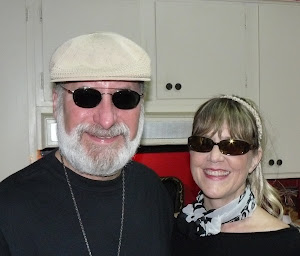
And now for a postscript to this (already long) post: at The Maker's Market in front of the Lyric Theater, I met Dawn Delatte (yes, that's her real name!) and purchased the lovely "cityscape" votive holders from her. Here we are at the Market. We became Facebook "friends" and I learned that Dawn and her husband have been visiting Holy Resurrection Orthodox Church in Clinton, Mississippi. What a small world. I felt a bond with Dawn, instantly. I'm sure her art was part of it, but a big part, I believe, was her spirit. Maybe those are the same thing. Anyway, It was a gorgeous day in Oxford, and I'm thankful for the writing workshop and friends, both old and new.

And here are the cityscape votives on our mantle.

Wednesday, November 4, 2009

Until the Real Thing Comes Along

I've been struggling with what to write today. There are lots of reasons for my hesitancy—traveling, house renovations, depression—and honestly, I think I’m just bored with my own words. And so I think, if I don’t like my writing, why would anyone else want to read it?

But there’s more to it than that. At the bottom of my emptiness is a beast roaring to be fed, and I think his name is Ego. Ego is always starving for something—attention, food, drink, praise. And Ego has found a new drug. It’s name is Facebook.

All this came strongly to mind during a conversation I had with two friends his past Saturday. We were talking about the social media. Here’s how it went:

Friend 1: I think you should write shorter status updates on Facebook and save your energy for your blog posts.

Me: That’s probably true… in fact, I should probably write shorter blog posts and save my energy for my essays and memoir-in-progress. But writing is such a lonely task, and I crave the instant gratification I get from Facebook.

Friend 2: But does it isolate you even more from friends? How many people that you correspond with on Facebook are people you talk with on the phone or see in person regularly?

Me: Very few. In fact, my phone rarely rings, unless it’s a salesman or repairman, or an out of town friend or relative. And almost all of my personal interactions with people are initiated by me. So, basically I’m lonely and feel unloved and so I reach out on FB because it gives a sense of intimacy.

Friend 2: But is it real?

Me: Sometimes. Like when people I would never see in person (because they have lots of little kids and live far away, for example) and I have chats on FB… that’s kinda nice.

Friend 1: I like it for that reason, too. I’m not saying not to do FB, but not to write such long posts or so many. I’d rather read your longer pieces on your blog.

Friend 2: But do you think people spend all this time on FB instead of having personal encounters?

Me: Hmmm. Possibly. But I think the greater question is still one of real vs. false intimacy. Of course you can have false intimacy in person as well, but I’m wondering if an imperfect personal relationship isn’t better than the isolation that internet addiction can bring. I mean, after I spend hours on email and FB (and sometimes Twitter) I don’t come away feeling better. The “feel good” only lasts briefly, kind of like a sugar or carbohydrate high.


Now, if Friend 1 and Friend 2 are reading this, they might be thinking that’s not exactly what they said, but I think I’ve captured the gist of the conversation. And their words have been in my mind all week. But I don’t know if I’m going to be able to make a clean break with the sugar and carbs. I might have to come down gradually… setting limits on how many times a day I get on FB, or how long I spend each time. And get back to writing a serious blog three times a week. And I want to write two more essays for publications with due dates at the end of November and December. And then there’s the book, the most difficult task at hand. Well, next to personal relationships of course, including my relationship with God.

As I was starting this post, for some reason the old song, Until the Real Thing Comes Along,” came to mind. I love the way Billie Holiday sings it. I wonder if the way I feel about the social media isn’t a bit like her words:

“If that ain’t love, it’ll have to do, until the real thing comes along.”

Sunday, November 1, 2009

Traveling With Pomegrantes

“Persephone ate the pomegranate seeds that Hades offered her in the underworld; this guaranteed she and her mother would be separated a third of every year; and that was how winter came into the world.”

If you’re not into mythology, these words of Sue Monk Kidd’s in her latest book, Traveling With Pomegranates, might be a turn off for you, but I’m finding diverse treasures in this wonderful volume which she penned with her daughter, Ann Kidd Taylor.

I’ve been a fan of Kidd (the mother) for several years now, finding inspiration, even if I didn’t agree with everything she wrote, in The Dance of the Dissident Daughter. And her novels, The Secret Life of Bees and The Mermaid Chair are both favorites of mine. And then I read an essay she wrote for All Out of Faith: Southern Women on Spirituality, in 2006 and I continued to feel a strong connection with her.

So when I heard that she and her daughter, Ann Kidd Taylor, had written a book together, I was intrigued. They traveled to Greece and later to Paris together, but the book is more than a travelogue… it’s a candid journal of their spiritual lives and their relationship as mother and daughter.

Sue writes about her struggles with moving into middle age, concerns about her future, her writing, her changing place in the world as an “older woman,” in mythological and spiritual terms:

“As I contemplate the fertility I hope for in my fifties and beyond—the regeneration of my creativity, the refinement of my spirituality, a new relationship with my body, the rediscovery of my daughter, indeed an inner culmination I cannot fully articulate to myself—I realize it cannot be plotted, orchestrated, controlled, and forced to bloom.”

How many middle-aged women (like me!) have felt this same way. Feel this same way right now? But who would think to tie it into a piece of fruit?

“The pomegranate in the myth symbolizes both death and life…. Maybe it is a feminine thing, I don’t know—but whenever I’ve managed to find new consciousness and renewals of my work, my relationships, and myself, it has been by going down into what seemed like a holy dark.”

A holy dark. The prophet Moses met God in a cloud of darkness. He doesn’t always appear to us in shining light. And He often appears to Sue in symbols…in peacocks and pomegranates and old women and green journals.

While reading the book, I began to be drawn to pomegranates, and bought some at the grocery store, along with a little pamphlet that shows how to “open” them. My friend Caitlyn cut them open and carefully removed the seeds from the membrane, and rinsed them for me. I sprinkled a little sugar on them and devoured them over the next couple of days. Tart and sweet at the same time. And, they have three times the antioxidant ability of green tea or red wine! (Here’s a little more about the history of pomegranates if you’re really curious.)

I even bought a pair of earrings when I was in Oxford this past Tuesday because they reminded me of pomegrantes, and of the necklace that Ann bought in Greece, which she writes about in the book. (The earrings are hanging on the side of the cup of pomegranate seeds in the picture on my kitchen counter.)

And maybe I’m taking this too far, but on Friday when I chose my Christmas cards for this year, I noticed that they come from a publisher named Pomegranate!


It was fun to read that Ann worked for skirt! Magazine in Charleston at one point, since skirt! has published three of my essays, my favorite of the three being “Super-Sized Enightenment.”

I’m intrigued by Sue’s relationship with the Mother of God, and how it has changed and grown throughout her writing. In her travels she visits the house in Ephesus where Mary, the Mother of God, is said to have lived after Christ’s crucifixion and ascension. She writes about the “human Mary” and the “divine Mary” and how she has been coming to “understand her not only within a biblical and human context, but also as … a spiritual presence able to hold large archetypal mysteries.” Gazing at paintings of the various stages of Mary’s life on in the Louvre, she makes parallels between those stages and the stages of all women’s lives, and of her life as a writer. I love the meaning she draws from everything… it’s like she experiences life through an amplifier or a magnifying glass, hearing and seeing it louder and larger than most of us do, and bringing that vision to her work as a writer for all of us to enjoy.

And her spiritual journey encourages me to be open to the different ways in which God works in our lives. Watching others approach an altar, make the sign of the cross and pray in the “Mary house” in Ephesus, Sue writes:

“It has been a long while since I’ve made a concrete petition, but as I linger, waiting for my own moment with Mary, it is faith I wish for. I wish to shape my needs into specific, well-considered words and offer them to my own particular image of the Loving Mystery, believing like a wise child.” She’s struggling with a desire to learn to be still, to just “be,” and yet an almost manic need to always be writing, always be “doing.” But there in “Mary’s house” her opposites come together and she prays for courage to find a new creative voice: “the words contemplative writer form in a slow, measured way….they give me the barest glimpse of a wholeness shining behind my divisiveness, the possibility of union.”

There it is again… that wholeness that I also desire, that Madeleine L’Engle wrote about so eloquently.

Joy. Depression. Darkness. Light. Mystery. Intimacy. Boundaries. Dreams. Poetry. Creativity. Spirituality. It’s all in there.

Oh, and Sue also talks about certain things that inspired her novel, The Secret Life of Bees, and I was fascinated by that… by the way the bees and the Black Madonna and the story of the little girl and the three strong Black women in the house and all that came together. She sees symbols in every day life and brilliantly turns them into stories. Great reading for writers. Great reading for anyone. Enjoy.

Tuesday, October 27, 2009

What Kind of Children Do You Have?

I fell in love with Três Taylor’s work about ten minutes before I met him. I was at the River Arts Fest in the South Main district of downtown Memphis on Sunday, with my friends Caitlyn Manning and Brandon Maas. Cruising up and down South Main, enjoying the music and wine and gorgeous weather, I was drawn to Três’s booth by the colorful panels on the outside of his tent. Tall, skinny, primitive images of men, women, and monks. Yes, monks. Some were painted on boards and others on roofing paper.

Once inside the booth I met Três and his lovely wife, Helene, and that sealed the deal for me. Helene was beautiful, gentle and energetic at the same time, and began to pull panels from here and there and arrange them on the ground to help me with my selection. And then Três appeared and smiled at me and I felt like I had stepped onto a stage where the musical “Godspell” was being produced and Três played the part of Jesus.

You can read his story on his website, but let me just say that he was a biochemist for twenty years before a spiritual experience moved him to become an artist. His works show all over the world, but I love that he and his wife give back to the community by organizing group mural projects in some of the poorest communities in the country, in rural Alabama. You can read about them here. I just had this soul connection with the Taylors immediately.


I’ve been looking for some sort of “representational family portrait” for a long time, and these panels are the closest thing I’ve found. I chose one to represent each member of our family, which was so much fun.


When I explained my quest to the Taylors, Helene asked, “what kind of children do you have?” and I said, “two Asian and one white,” which seemed to double everyone over with laughter. I didn’t get it, until Helene caught her breath and said, “I meant how many girls and how many boys! I’ve never had anyone give an answer like yours before… it just never occurred to me!”

I guess I don’t think of gender as a “kind” of child, or adult for that matter. But maybe race isn’t a “kind” of person, either.

So what kind of children do I have? Hmmm….

I have a beautiful, smart, generous, intuitive, artistic, athletic daughter who happens to be South Korean in race and female in gender. But even as I write these words, I’m thinking that being Korean and female are part of what “kind” of person she is. It’s just that those aren’t the aspects of Beth that come to mind when I first think of her. If someone says, “Beth,” I don’t think: “Asian” or “girl” …. I think beautiful, smart, generous, etc. Beth is in her final year of architecture grad school, having majored in biomedical engineering in undergrad….

One of my sons, Jason, is charming, witty, loyal, kind, protective, loving, spiritual, artistic, athletic… and he also happens to be Korean in race but is male in gender. Jason is married to a beautiful woman named See, and has a precious three-month-old daughter, Grace.

My oldest son, Jonathan, is handsome, intelligent, literary, athletic, strong, and affectionate, and he happens to be white and male. (And on his way to Afghanastan soon… he flies helicopters for the Army… please keep him in your prayers this next year!)

I didn’t start out this blog post thinking I would write so much about my kids, but it just sort of happened organically☺

After the selection of my five art panels was complete, Caitlyn found another artist she was drawn to, so Brandon and I helped her select a painting for her new apartment. I didn’t really get a picture of it, just a shot of the artist showing her several options…

And Brandon looking on.


It was just a joy to be out in the sunshine watching the people on sidewalk cafes and looking down from their warehouse condo windows or riding the trolley or horse-drawn carriages. Musicians and artists and food vendors and neighbors and visitors.... a delightful festival!

The children’s activities were also wonderful.

Several artists were demonstrating their work, like Brad Troxel, whose paintings I really liked.


When I got home with the panels it took a while for my husband and I to figure out how to hang them… our headboard is curved, so I bought two long panels and three short panels with that in mind. We even hung the one that represents him (in the monk’s robe, since he’s a priest) over his side of the bed, and the one that represents me (woman with the red dress on!) over my side. The “little monk” is Jason because it reminds me of when he visited Korea and came back with a ceremonial robe. He put it on and made a customary bow to his father and I. The tall guy in the hat is Jon because it reminds me of his “cavalry” hat the helicopter pilots wear with their dress uniforms, and the body language looks like the playboy he sometimes can be. And then there’s the dark-haired mysterious beauty, Beth.


I’m thrilled with how they look in our newly painted bedroom. Can’t wait to get the bedspread made and it will all come together.


Like the bathroom, which is now complete with shower curtain ...


and art work. (This painting is by a Vietnamese artist. I bought it in Little Rock a couple of years ago.) Yep, this house is definitely getting some soul. And all kinds of people.


Here are a few more photos from the River Arts Fest. Enjoy!


Thursday, October 22, 2009

The Soul of a House

We bought our current home in 2001, three years after my father’s untimely death at age 68. My mother was already showing signs of Alzheimer’s, and I knew it was time to move her out of her home. Remembering how I felt twenty years earlier, when my folks moved my grandmother into a nursing home—I protested loudly that they should move her in with them—I told Mom I wanted her to live with us. I didn’t ask, I just told her. And then we bought a house with a mother-in-law suite for her, on the ground level and everything. Only problem was, she refused to move in with us.
Turned out to be a good thing for her and us… she lived happily in an assisted living facility for three years, making new friends as she was gradually forgetting old acquaintances. And then she fell and broke her hip and we had to move her to a nursing home, one year ago. This is old news… if any of you haven’t been keeping up with my blog for very long, there are lots of posts about “Granny Effie,” that you might enjoy… I think they are kind of summarized here.

That was a long introduction to what I started out to write about in this post…. our house. I’ve never liked it. At all. It’s well-built, in a nice neighborhood, a nice size, but… something’s missing. When I was trying to describe this to a friend once, I said, “it has no soul.” The architectural design (or lack thereof) is part of the problem. But I think over the eight years that we’ve lived here, my attitude of dislike has rubbed off on the house.

About two years ago we found another house in the same neighborhood with lots of soul and tried to buy it, but we couldn’t sell this one, so we had to let it go.We decided to watch the market for a while, and eventually do some upgrades to make it competitive with other houses for sale in its price rang and try again.

So here we are…. Replacing formica countertops with granite (it’s called “Verde Peacock”) and the old sink with a single under-counter stainless sink and brushed nickel faucet. The old electric oven was replaced with a new GE Profile Convection oven and gas stove top and ta-da! New kitchen.

The master bathroom only had a shower, so we had a jetted tub installed, new tile floor and shower wall, old brown vanity cabinets painted white, all fixtures replaced with brushed nickel, and again, ta-da! New bathroom. (Not finished yet, so pictures will come later. Here's a "before." Notice the brown cabinets, no cabinet above toilet, and the shower which you can see in the mirror.)

Oh, and we had the walls painted in the bath, bedroom, den, kitchen and below the chair rail in the dining room and front hall. The colors have cheered my heart as much as the new countertops and appliances… most of the walls were off white for eight years, and I LOVE COLOR!

In the den we chose “Dusty Miller” and in the kitchen a lighter but similar shade… sometimes looks grey, sometimes green, sometimes blue.
For the bedroom we chose “Palomino Gold” and for the master bathroom, “Island Sand.” It all flows together beautifully! Tomorrow they’re painting the front door a deep green… the exterior is red brick and the door has a glass panel, so the green will frame it. It’s in the same family as the green beneath the chair rail in the front hall, so the door “introduces the interior of the house” as you enter. That’s what Bob Graham, one of our builders told me, when he helped me choose the color.

Bob and his partner, Barry Cantrell, have been fabulous. They did the “demolition” work and most of the “heavy work” while we were in Florida last week. At the end of every day, Bob sent me an email with an update of the day’s work. He always included a line or two about Oreo, our 20-year-old cat, and how she greeted them at the door, followed them from room to room checking on the work in progress, and then finally settled for a nap in my yellow chair in the den or up front on the guest bed. I had been worried how she’d do with all the construction and us being gone, even with Caitlyn “house-sitting” … she dropped by every morning and evening to give her food, water, clean litter box, brush her, bring in mail and paper, etc. It takes a village.

So when we got home from Florida Monday night we were blown away by the dramatic difference the work was making. The next day when Bob came over with paint samples for us to choose for the bathroom, we did a walk through together and he smiled gently and said, “It’s getting some soul, don’t’ you think?”


I smiled back and nodded.

It’s not that I think we’ll want to stay here instead of looking for a different house with more office and living space and less bedrooms, on a different street, with an attached garage, etc… it’s just that I’m through putting the house down. It’s like the Skin Horse said when the Velveteen Rabbit asked him about being real:

"Real isn't how you are made," said the Skin Horse. "It's a thing that happens to you. When a child loves you for a long, long time, not just to play with, but REALLY loves you, then you become Real."

Maybe that’s also how houses get souls. I think I’m starting to love my house.

Yesterday and today I was out shopping for new towels, bath mats, kitchen stuff, and fabric samples for a custom-made bedspread. Came home with over a dozen samples! Oreo is helping us decide.

I think her favorite is the same as Bob's. Husband hasn't weighed in yet.

Found this precious canvas painting of a cat that matches all our colors... she'll probably end up in the bathroom, right over Oreo's water bowl.

Here are a couple more shots of the kitchen and front hallway. Will add the bedroom and bath later. Thanks for reading!